Shoppers checking the wholemeal content
You want to know whether your breakfast bread is genuinely sold as wholemeal bread. Check the name and, for packaged products, the ingredients list instead of relying on the colour or grains on the crust.


When choosing wholemeal sourdough bread for a sweet breakfast, start with the bread’s name and ingredients, not its dark colour or visible grains. According to Lebensmittelklarheit, German guidelines for wholemeal bread specify at least 90% wholemeal flour in the cereal content. The type of grain, other ingredients and whether you want a ready-to-eat loaf or a bread mix will also determine how well it suits your toppings and routine.
You want to know whether your breakfast bread is genuinely sold as wholemeal bread. Check the name and, for packaged products, the ingredients list instead of relying on the colour or grains on the crust.
You’re looking for bread to pair with jam, honey, nut butter or cream cheese. Compare the type of grain and texture to decide how much the bread’s flavour should come through alongside your topping.
You want to check the types of grain, yeast or seeds, and decide whether a ready-to-eat loaf will suit your morning better than a bread mix that needs preparing first.
First, check whether the bread meets your wholemeal requirements. Then compare the ingredients and flavour with your topping, and decide what quantity and preparation method will work for your routine.
| What to look for | What to check when buying | Who it matters to |
|---|---|---|
| Wholemeal status | Look for the name ‘wholemeal bread’ and check the ingredients list on packaged products. According to Lebensmittelklarheit, German guidelines specify at least 90% wholemeal flour in the cereal content. | If I specifically want wholemeal bread, a dark crust isn’t enough to convince me. For around 40% of consumers, being able to verify the wholemeal content would come first. |
| Flavour and texture | Compare the type of grain, meal and seeds used in each loaf; the word ‘sourdough’ alone doesn’t fully describe its flavour. | With jam or nut butter, I want to choose whether the bread should have a subtle or robust flavour. Around 30% of consumers would first consider how well it goes with their topping. |
| Ingredients and allergens | Check the ingredients and allergen information for the specific bread; sourdough can be used alongside added yeast. | If particular grains, seeds or yeast matter to me, I need to assess each loaf individually. Checking the ingredients would be the main concern for around 20% of consumers. |
| Quantity and effort | Choose a pack size that suits how much you eat and check the storage instructions; if you’re buying a bread mix, allow time to prepare it. | If I only need bread for a few breakfasts, I don’t want to choose a loaf I can’t finish in time, and a bread mix needs to fit my schedule. Around 10% of consumers would mainly prioritise quantity and effort. |
The colour and a few visible grains don’t tell you what proportion of the cereal content is wholemeal. Lebensmittelklarheit explains that German guidelines for bread labelled ‘wholemeal bread’ specify at least 90% wholemeal flour in the cereal content.
Check the exact name of the bread and read the ingredients list on packaged products. For unwrapped bread, you can ask for product information.
Sourdough doesn’t rule out other ingredients: the Seitenbacher wholemeal bread mix described by REWE contains both sourdough and dried baking yeast, as well as rye and wheat.
Check the ingredients and allergen information for every product. If you need gluten-free products, don’t rely on the word ‘sourdough’ alone.
The EDEKA Bio bread selection includes several varieties, such as wholemeal rye, spelt and seeded breads. The ingredients for one variety don’t automatically apply to the others.
Check the information for each variety individually, especially if seeds or sweetening ingredients affect your choice.
A large loaf can go stale before you finish it. The Verbraucherzentrale also points out that bread usually dries out faster in the fridge.
Choose a suitable quantity and freeze any slices you won’t need soon in individual portions.
Seitenbacher offers a wholemeal bread mix for home baking. According to the product description on REWE, it contains wholemeal rye and wheat meal, rye sourdough, dried baking yeast and sea salt.
The EDEKA Bio bread selection contains five individually portioned varieties, including wholemeal rye, spelt, linseed and sunflower seed bread. EDEKA says the range is made with natural sourdough.
Lidl says several of the breads from its bakery are made with natural rye sourdough. That alone doesn’t mean a particular variety is wholemeal.
For the Seitenbacher wholemeal bread mix described here, REWE is the retailer, not the manufacturer. The product description lists the ingredients, making it possible to compare the mix with ready-to-eat bread.
This spelt wholemeal bread mix is for households that want to bake their breakfast bread themselves in advance. If sourdough matters to you, check the ingredients for the specific product before choosing it.
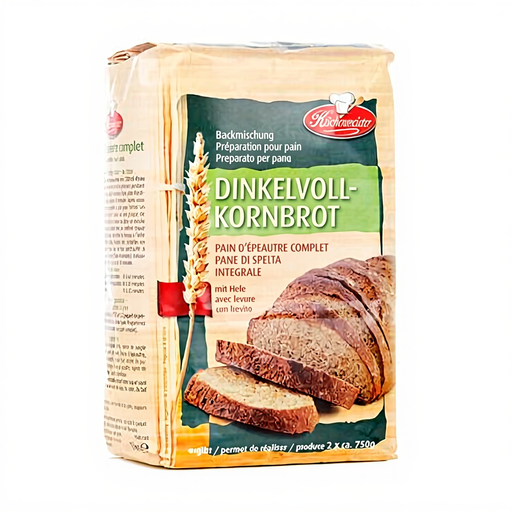 No image available
An option if you’d like to bake your own spelt wholemeal bread and can fit the preparation in before breakfast.
Pack size: 1 kg. Check the ingredients list if sourdough, added yeast or specific allergens are important to your choice.
No. Under German guidelines, the name doesn’t require the bread to be 100% wholemeal. Lebensmittelklarheit explains that at least 90% of the cereal content in wholemeal bread should be wholemeal; the ingredients list can help you compare individual products.
No. The Seitenbacher wholemeal bread mix described by REWE contains both sourdough and dried baking yeast. If you want to avoid added yeast, check the ingredients list for the bread or bread mix in question.
Ask at the counter specifically about the allergens and ingredients in the variety you’re considering. Lebensmittelklarheit notes that a full ingredients list isn’t always available for unwrapped bread, so the name of the variety alone may not answer all your questions about its ingredients.
Where possible, store bread at room temperature in suitable conditions and freeze any slices you won’t need soon in individual portions. The Verbraucherzentrale generally advises against keeping bread in the fridge, as it dries out and goes stale more quickly there.
No. ‘Wholemeal’ and ‘sourdough’ don’t mean gluten-free. The Seitenbacher and EDEKA products described here include varieties containing rye, wheat or spelt. If you need gluten-free products, check the relevant labelling and information for the specific product.