
Lieferung heute & morgen

Qualitätsgarantie

Willkommens-Angebote freischalten: KOSTENLOSE Lieferung | Bis zu 80 % RABATT | Kostenlose 30-Tage-JoyPlus-Testphase
App herunterladen
A big-screen experience in your own home, flexible and without the footprint of a giant TV—that's the promise of modern projectors. But the market is flooded with devices whose marketing claims often obscure more than they clarify. Anyone looking for a projector with Wi-Fi and Bluetooth faces a deluge of technical specs and tempting offers. Before you make a decision, it's crucial to understand the most common pitfalls that can lead to disappointment and a bad buy.
As your Joybuy Product Recommendation Officer, I'm here to help you separate the wheat from the chaff. We'll focus on the facts and the features that truly matter for a successful home cinema experience.
The 3 Most Common Traps When Buying a Projector:
To avoid these traps, you should focus on three objective criteria. These are the key determinants of the quality and user-friendliness of your new projector.
Brightness determines whether you see a clear image or just a pale projection. Pay exclusive attention to the specification in ANSI lumens. This value is measured according to a standardised procedure and is therefore comparable.
The native resolution indicates how many physical pixels make up the projected image. Don't be dazzled by "supported" resolutions.
A modern projector with Wi-Fi and Bluetooth should enable seamless connectivity and easy operation.
Here are some models that, based on objective criteria, are suitable for different user profiles.
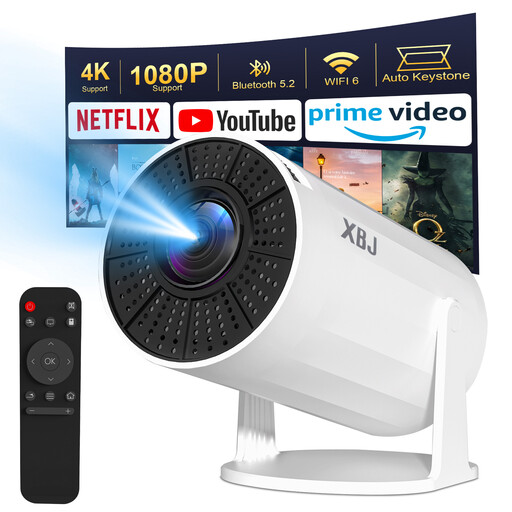
Why it's a good fit: Ideal for getting started or as a second device in the bedroom. This portable projector is compact, affordable, and ready for streaming services right out of the box thanks to its Android 11 system. The 180° rotation allows for easy projection onto the ceiling.
The brightness is listed as 200 ANSI lumens, a realistic value for use in dark rooms. The native resolution is 720p, which is fair for the price and size, while the Android system allows for direct app access.
WiFi 6 for stable streaming and automatic vertical keystone correction for a hassle-free setup.
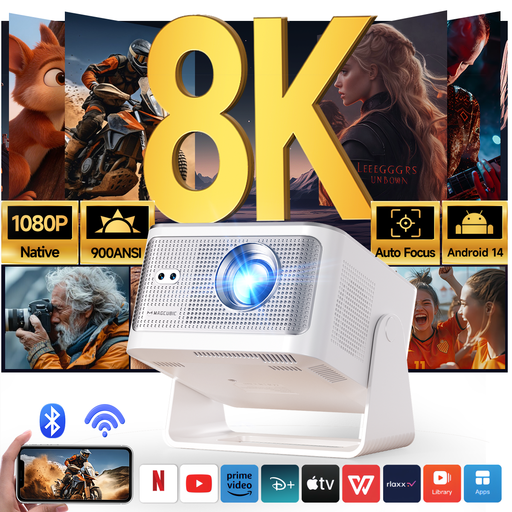
Why it's a good fit: For anyone looking for a powerful all-in-one solution for the living room. The high brightness and native Full HD resolution deliver a compelling picture even in rooms that aren't completely dark. The fully automatic image setup makes operation incredibly simple.
This model advertises a genuine 900 ANSI lumens and a native 1080p resolution. The modern Android 14 operating system ensures smooth performance and broad app compatibility, thus avoiding the "sluggish smart TV" trap.
Fully automatic autofocus and keystone correction, WiFi 6 for fast streaming, and a powerful chip for a responsive user experience.
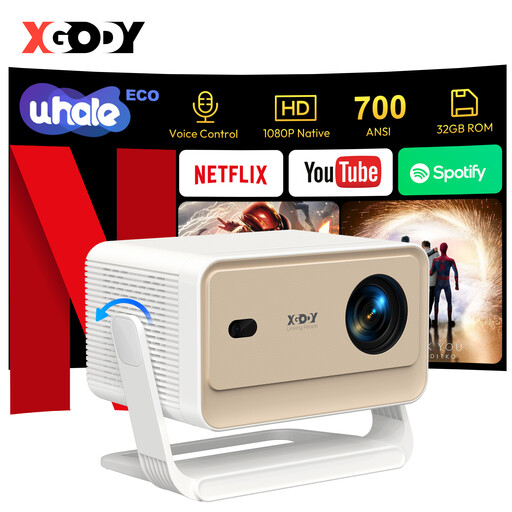
Why it's a good fit: Perfect for anyone who wants maximum flexibility. The gimbal design allows for effortless projection at any angle—on the wall, the ceiling, or even the floor. The official Netflix license guarantees a smooth streaming experience without any workarounds.
The specification of 700 ANSI lumens and native 1080p resolution is transparent. The biggest trap—incompatible apps—is elegantly solved by the official Netflix license and the WhaleOS operating system.
Flexible gimbal design for 360° projection, voice control for easy operation, and fully automatic image adjustment (focus, keystone, obstacle avoidance).
We have compiled a complete, up-to-date list of products that fully meet these strict selection criteria and local regulations.
For a typical living room that cannot be completely darkened, a value between 500 and 1000 ANSI lumens is a good guideline. In a dedicated, light-proof home cinema room, even 300 ANSI lumens can be sufficient. For outdoor use or in bright rooms, you should consider models with over 1000 ANSI lumens.
A projector with Wi-Fi and Bluetooth offers undeniable advantages like a huge, flexible screen size and portability. However, TVs often have a brighter, higher-contrast picture in bright rooms. For a movie night in a darkened room, a projector is an excellent alternative, but as a sole replacement for daily TV viewing in daylight, it is only suitable if it has very high brightness.
Many budget-friendly Android projectors use an open version of Android that is not certified by Netflix for HD-quality playback. The app might not install at all, or it will only stream in low SD resolution. To avoid this problem, look for models with a certified operating system (like Android TV or WhaleOS) or an explicit "official Netflix license." Alternatively, an external streaming stick (e.g., a Fire TV Stick) can be connected.