What to look for when choosing
First, consider how the connection will reach your study spot. A wireless extender needs to receive a good signal from the router itself, while a wired access point requires a suitable cable and the right operating mode.
Wireless extender
A good fit if: running a cable isn’t possible and you can find a spot with a usable signal from the router.
The trade-off: The extender needs to reach both the router and your study spot. Placing it close to your desk won’t help if it’s in a Wi-Fi dead spot.
Wired access point
A good fit if: a network cable runs from the router or a network socket to somewhere near your study spot, and the device supports the required mode.
The trade-off: The cable bypasses the wireless route to your study area, but you’ll need to run it. A LAN port alone doesn’t confirm support for a particular mesh setup.
| Priority |
What to look for when buying |
Who will find this especially important? |
| A usable wireless connection where the extender is placed |
Check potential socket locations and the router signal at each one, then test the connection at your study spot. |
If I’m extending the network wirelessly, I need a good signal from the router where I place the extender, as well as Wi-Fi that reaches my study spot. That’s why around 36% of consumers put a reliable wireless connection first. |
| A cable route to the study area |
Check for a network socket or a route for a cable, and confirm that the exact model supports access point or LAN bridge mode. |
If I can run a network cable to my study area, I want to bypass the wireless route through the walls. That’s why around 29% of consumers prioritise a wired connection. |
| Router compatibility |
Check your router model, the extender’s hardware version and the mesh feature you want. Check Ethernet backhaul separately. |
If I want to keep using my existing mesh network, the router and extender combination needs to support the feature I want. That’s why around 21% of consumers prioritise mesh integration. |
| Purchase and set-up effort |
Decide how the connection will reach your study spot first, then consider only the ports, modes and mesh features you need. |
If I only want to connect one study spot, I don’t want to set up features I don’t need. That’s why around 14% of consumers focus on the equipment and set-up required. |
Joybuy products for wireless and wired connections
The Joybuy products below include wireless extenders, devices with access point mode and an additional unit for extending an existing Deco mesh network. Choose the right operating mode for your router signal and access to a cable. Check mesh compatibility for your specific combination.
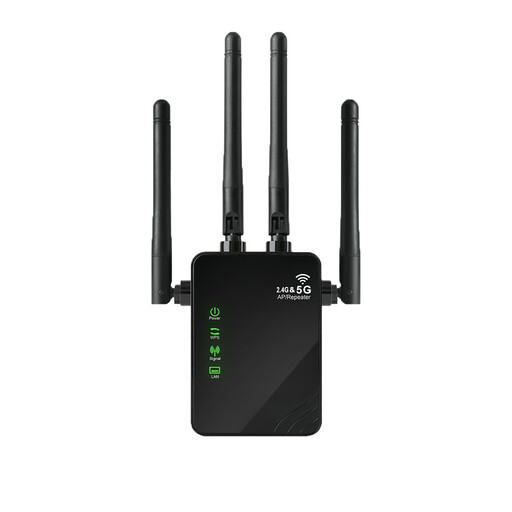 Image unavailable
1200 Mbit/s 5 GHz Wi-Fi extender
Could be suitable for a wired connection to your study area if you can use access point mode.
The product description lists dual-band Wi-Fi, two RJ45 ports, and repeater, access point and router modes.
View at Joybuy
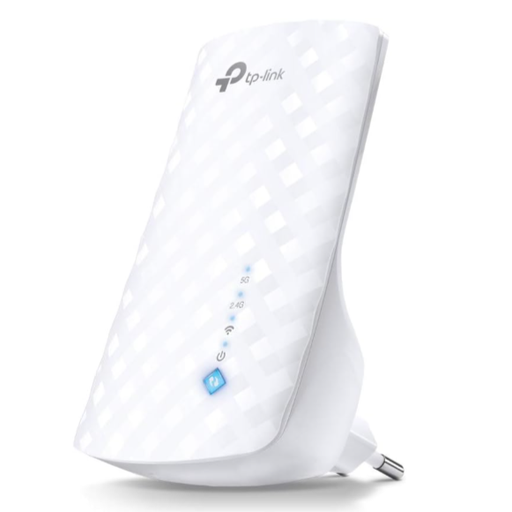 Image unavailable
TP-Link RE190 AC750 Wireless Repeater
A wireless extension could work if the router signal still reaches the extender’s potential location.
The product description lists dual-band Wi-Fi, WPS set-up and a signal strength indicator to help you choose where to place it.
View at Joybuy
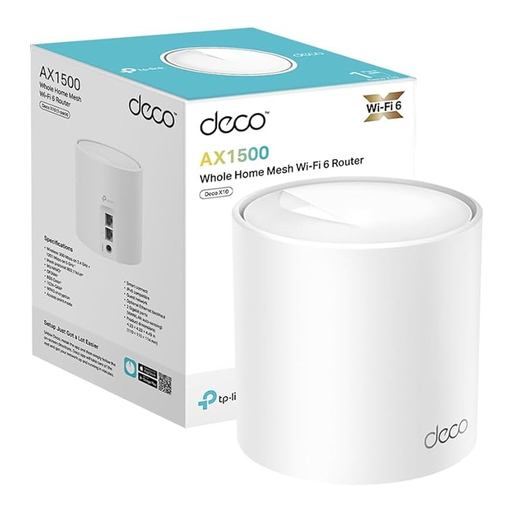 Image unavailable
TP-Link Deco X10, 1-pack, additional unit
This product is described as an addition to an existing Deco mesh network. Check that this system is compatible with your router.
Wi-Fi 6, AX1500 and two Gigabit Ethernet ports.
View at Joybuy
 Image unavailable
MERCUSYS ME80X Wi-Fi 6 Range Extender AX3000
Can be used in access point mode if you have a cable route, or wirelessly in a location where the router signal is still available.
Dual-band; data rates listed in the product name: 574 Mbit/s at 2.4 GHz and 2402 Mbit/s at 5 GHz. Gigabit LAN, access point mode and signal strength indicator.
View at Joybuy
 Image unavailable
TP-Link RE235BE BE3600 Dual-Band Wi-Fi 7 Range Extender
A wireless Wi-Fi extension could work if the router signal still reaches the extender’s location.
Dual-band Wi-Fi 7, 2.5 Gigabit Ethernet port and EasyMesh compatibility. Check that your router supports the mesh feature you want.
View at Joybuy
Frequently asked questions
Where should I place a wireless extender for lectures?
Place it somewhere that still gets a usable connection to the router and can also reach your study spot. Check both parts of the connection: a socket right in a Wi-Fi dead spot won’t necessarily be suitable.
Will a LAN cable help if the internal walls weaken the Wi-Fi signal?
Yes, if the cable connects your router or a network socket to a device in a supported access point or LAN bridge mode. This means the connection to the router doesn’t have to travel wirelessly through the walls.
Is a ‘mesh’ label enough to choose an extender?
No. Check your router model, the mesh feature you want and, if relevant, the extender’s hardware version and firmware. For example, TP-Link EasyMesh Ethernet backhaul requires both the router and satellite to support the feature.
What should I look for in a wireless device sold in Germany?
According to the Bundesnetzagentur, products covered by the relevant EU harmonisation legislation must carry the CE mark. Check the exact device version and its declaration of conformity. A description in the product listing alone doesn’t confirm that the version supplied complies.
What should I bear in mind after set-up and when maintaining the device?
Set up the device according to the instructions for your exact model and check for firmware updates. For its documented Speed Home devices, Deutsche Telekom warns that missing updates can lead to malfunctions and security vulnerabilities.


