Project teams working behind solid walls
You want to share files in a room some distance away. First, check whether there’s a usable wireless connection to the router there, or whether a wired connection is possible.


If there’s still a usable wireless connection to your router at the planned location, a suitably positioned extender could be a good option. If you can run an Ethernet cable to the far room, an extender in access point mode can bypass the wall on the connection to the router. What matters is the actual connection at the installation point, compatibility with your router and the ports you need—not just the advertised maximum Wi-Fi speed.
You want to share files in a room some distance away. First, check whether there’s a usable wireless connection to the router there, or whether a wired connection is possible.
You need Wi-Fi where you work and can connect it there by cable. A suitable device in access point mode can use this wired connection.
You want to connect several workstations and manage them together as a mesh network. Check that the specific extender model works with your router and the mesh mode you want to use.
First, assess the entire connection between the router and your project devices. A wireless model with a higher advertised speed won’t make up for a poor connection at the extender’s location or an unsuitable wired connection.
| What you need | What to check before buying | Who it matters most to |
|---|---|---|
| Connection through thick walls | Check reception at the intended location. If the signal is weak, consider a wired connection and access point mode. devolo describes a wired connection as a way to bypass Wi-Fi obstacles on the route to the router. | If I need to work in a distant room, I want to know whether the router and extender will stay connected there. Around 36% of consumers put a usable connection through thick walls first. |
| Transferring project files | Decide which devices will connect by Wi-Fi or Ethernet, and check the ports and connection at the intended location. An advertised Wi-Fi data rate doesn’t prove the actual file transfer speed. | Anyone sharing files between work devices needs a reliable connection all the way through. Around 29% of consumers prioritise usable file transfers. |
| Router and mesh compatibility | Check the router model, supported mesh technology, hardware version and operating mode. TP-Link requires a compatible router for EasyMesh; Telekom publishes compatibility information for its devices. | If I want to manage several access points together, the mesh feature needs to work with my router. Around 21% of consumers put router and mesh compatibility first. |
| Security and updates | Check the supported Wi-Fi encryption, firmware for the specific hardware version, and the labelling and conformity information for the version on offer. The BSI recommends suitable encryption and a sufficiently strong Wi-Fi password. | Anyone sharing project files over their home network wants appropriate security settings and clear information about the specific device version. Around 14% of consumers prioritise security and support. |
Manufacturers’ figures for combined maximum speeds across different Wi-Fi bands don’t automatically tell you how quickly project files will transfer through the walls in your home.
First, check reception at the planned location and whether an Ethernet connection in access point mode is possible.
Telekom’s Speed Home WLAN instructions warn about weak reception or positioning the device outside the router’s range.
Start somewhere with a usable connection to the router. If the walls block the wireless signal, consider a wired connection.
TP-Link’s EasyMesh feature requires a compatible router. A device’s mesh support doesn’t automatically mean it’s compatible with every existing system.
Check your exact router model against the information for the device you want and the planned operating mode.
Depending on your router, you may need a different network layout or additional compatible hardware.
The FRITZ!Repeater 1200 AX could be a good option if you want a compact Wi-Fi extender that can join an existing FRITZ! mesh network.
According to TP-Link, the RE705X offers Wi-Fi 6, Gigabit Ethernet and access point mode. EasyMesh requires a compatible router.
According to the manufacturer, the WiFi 6 Repeater 5400 can be used as an extender or, where cabling is available, as an access point.
Speed Home WLAN could be worth considering if you want to add a specific Speedport model to a mesh network.
The Joybuy products below include wireless Wi-Fi extenders, an addition to an existing Deco mesh system and an access point. Before buying, check that the operating mode, router and any required Ethernet or PoE connection are suitable for your setup.
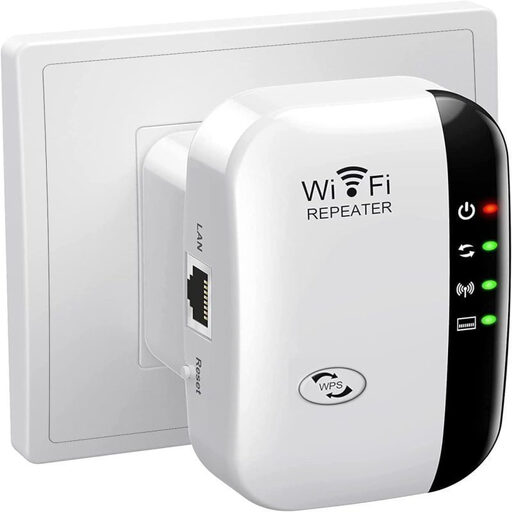 No image available
Described as a compact booster for extending an existing wireless network. For a wireless connection, the location must still be within range of the existing Wi-Fi network.
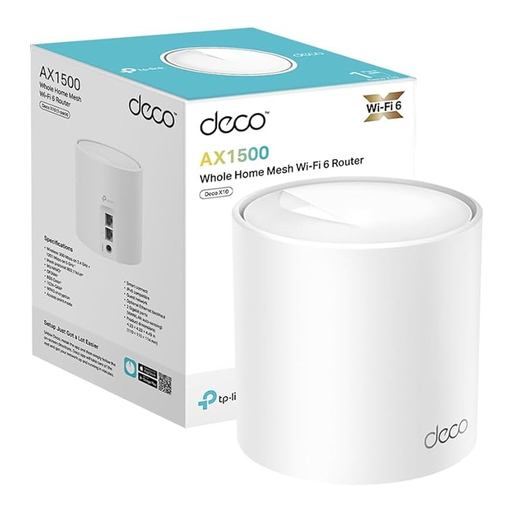 No image available
Described as an additional unit for extending an existing TP-Link Deco mesh network. Two Gigabit Ethernet ports are listed for wired devices at your workspace.
Wi-Fi 6, dual-band and WPA3 are listed in the product name. The mesh extension described is for an existing Deco system.
 No image available
Access point mode could be useful if you can connect your workspace to the router via Ethernet. Dual-band Wi-Fi 6 and a signal strength indicator are listed for wireless extension.
The product name lists 574 Mbps at 2.4 GHz, 2402 Mbps at 5 GHz and a Gigabit port. These data rates don’t guarantee file transfer speeds in your particular building.
 No image available
Described as a wireless network extender, with EasyMesh listed for use with a compatible router. For a wireless connection, the extender must be within the router’s range.
The product name lists a 2.5-Gigabit port and EasyMesh compatibility. Check that mesh mode works with your specific router.
 No image available
Described as a Wi-Fi 7 access point with a wired Ethernet uplink. The listed PoE power supply and integration with the UniFi Network system require suitable network infrastructure and setup.
The product name lists 5000 Mbit/s and Power over Ethernet; the stated data rate doesn’t guarantee a particular file transfer speed.
Not right where the router’s signal drops out. Check the connection at the intended location. According to Telekom’s instructions, different LED patterns on the Speed Home WLAN can indicate weak reception or that it’s out of range. These don’t tell you the actual data rate you’ll get in your home.
Yes, if the specific device supports a suitable access point mode and an Ethernet cable runs to the router or network. TP-Link describes this mode for the RE705X; devolo lists it for the WiFi 6 Repeater 5400.
Check which Wi-Fi encryption standards your router, extender and devices all support, and use a sufficiently strong Wi-Fi password. The BSI explains WPA2 and WPA3. For firmware updates, check the exact hardware version too, as TP-Link notes that model and hardware versions can differ by region.
Products covered by the relevant EU harmonisation legislation must bear the CE mark when placed on the EU market, as the Federal Network Agency notes as part of its market surveillance work. Check the marking and declaration of conformity for the specific variant. The CE mark is not an independent performance test.