
Lieferung heute & morgen

Qualitätsgarantie

Willkommens-Angebote freischalten: KOSTENLOSE Lieferung | Bis zu 80 % RABATT | Kostenlose 30-Tage-JoyPlus-Testphase
App herunterladen
Choosing a Wi-Fi security camera is a crucial step in protecting your home, family, or property. The market offers a vast array of models, but tempting offers often hide expensive drawbacks. Many buyers only realise after installation that essential features are locked behind costly subscriptions or that the advertised image quality is inadequate in practice. This guide will help you navigate these pitfalls and make an informed decision.
Before you decide on a model, you should critically examine the typical marketing promises. These three points frequently lead to disappointment and unexpected costs:
To make a future-proof choice, focus on the core technical features that determine practical value.
While 1080p (Full HD) was long considered the standard, higher resolutions like 2K (approx. 3-4 megapixels) or 4K (8 megapixels) are becoming increasingly prevalent. The advantage is clear: a higher resolution captures more detail. This is crucial when it comes to identifying faces or license plates, even from a distance. A 2K / 4K camera thus offers significant added value for security, as the recordings are more conclusive in an emergency.
The question of a security camera with recording is central. There are two main methods here:
The requirements for an outdoor security camera are fundamentally different from those for indoor use.
Here are some recommendations tailored to different needs and budgets.
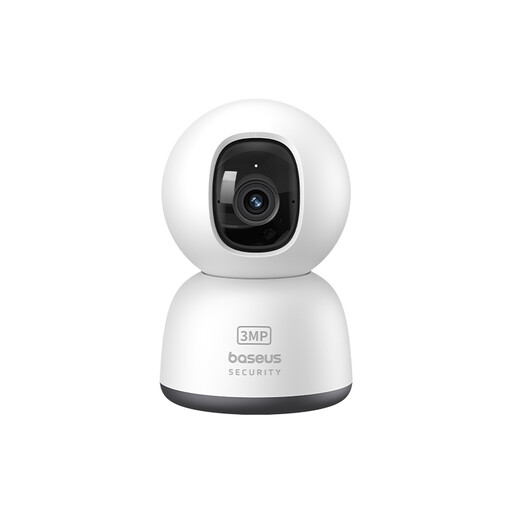
Why This Fits Their Persona: Ideal for users seeking reliable indoor surveillance with a clear picture, without being tied to a subscription. Perfect for monitoring living spaces, as a pet camera, or for keeping an eye on an apartment entryway.
Supports local storage on a microSD card (up to 128 GB), eliminating monthly recording fees. The AI person detection filters out irrelevant movements, preventing constant false alarms.
2K resolution for sharp details and a 360° pan-and-tilt function for complete room coverage. A physical privacy mode protects against unwanted viewing when needed.
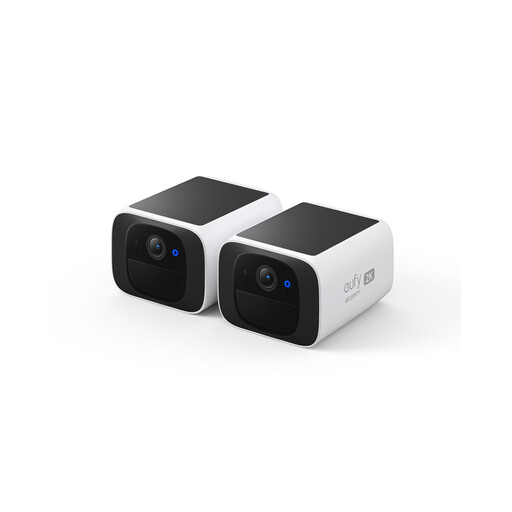
Why This Fits Their Persona: Perfect for homeowners looking for a low-maintenance and cost-transparent solution for the outdoors. The integrated solar panel eliminates the need for wiring and ensures self-sufficient operation.
This model is explicitly designed to be "subscription-free" and with "no monthly fees." All recordings are stored locally, completely bypassing the subscription trap. Power is secured by the solar panel.
Continuous power from solar makes battery changes obsolete. The 2K resolution ensures clear images outdoors. Installation is wireless and therefore very flexible.
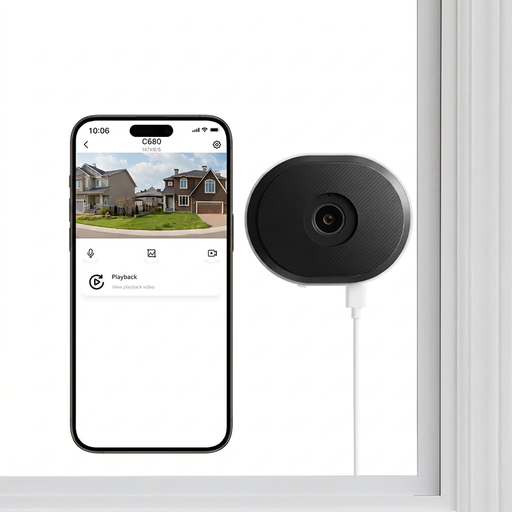
Why This Fits Their Persona: An excellent choice for apartment renters or users who can't or don't want to drill holes. The camera is designed for monitoring through a window and prevents the reflections that occur with normal cameras.
Special lens technology solves the problem of unusable night footage caused by glass reflections. Support for local microSD cards (up to 256 GB) makes a cloud subscription optional, not mandatory.
Glare-free monitoring through glass and drill-free installation with adhesive strips. Support for dual-band Wi-Fi (2.4/5 GHz) ensures a more stable connection than 2.4 GHz-only models.
We've compiled a complete, up-to-date list of products that fully meet these strict selection criteria and security standards.
No. Many modern cameras offer the option to save recordings locally on a microSD card. This is a one-time investment in the memory card and incurs no recurring costs. When shopping, specifically look for models advertised as "subscription-free security cameras" or those that explicitly state local storage capabilities.
With local storage on an SD card, the data remains physically with you, giving you maximum control. With cloud storage, the data is stored on external servers. Reputable providers use strong encryption for this during transmission and on the servers themselves. Check the manufacturer's privacy policy, especially the server location, if data privacy is important to you.
The IP (Ingress Protection) rating indicates how well a device is protected against the intrusion of foreign objects (first digit) and water (second digit). For an outdoor security camera, at least IP65 is recommended. The "6" stands for complete dust protection, and the "5" for protection against water jets from all directions. A higher class like IP66 offers protection against powerful water jets.