Students with a Wi-Fi dead spot
If your study area is on another floor, a wireless range extender may help, provided it still gets a good signal from the router where you place it.


For a single study area, a Wi-Fi range extender is a straightforward option, provided it still gets a good signal from the router at an intermediate location. For several separate study areas, a compatible mesh system may be suitable; if the wireless connection is weak and you have LAN available, a wired access point is a better option. When checking a specific listing, also look for the required CE marking and accompanying documents. These are not independent proof of the product’s range or performance.
If your study area is on another floor, a wireless range extender may help, provided it still gets a good signal from the router where you place it.
A network socket or a cable you can run to the area allows you to set up a wired access point, bypassing a weak wireless connection between floors.
If you need to cover several separate study areas, consider how many locations need coverage and whether your existing router is compatible with the mesh system.
A good fit if: mainly one study area has poor coverage and the extender can receive a good signal from the router at an intermediate location.
Keep in mind: A range extender cannot fix an already weak connection where it is installed.
A good fit if: you need coverage in several separate study areas and your router and nodes support the mesh features you want.
Keep in mind: Additional nodes need suitable locations and a reliable connection to one another.
A good fit if: there is a usable LAN connection in your study area, particularly if the wireless connection between floors is weak.
Keep in mind: The specific device must support access point or LAN bridge mode. You will also need a cable or network socket.
A good fit if: neither LAN nor a reliable wireless connection is available, and you want to test a connection over your existing mains wiring.
Keep in mind: Sockets and electrical devices can affect transmission, so assess the connection where you intend to use it.
| What you need | What to check before buying | Who is this most important for? |
|---|---|---|
| Signal at an intermediate location | Check the router signal and connection indicator at potential locations between floors. | If I want to extend the network wirelessly, I need a reliable connection to the router where I place the device. Around 36% of consumers put signal strength on this link first. |
| LAN instead of a weak wireless connection | Check for an existing network connection, a LAN port, and access point or LAN bridge mode on the specific device. | If there is a network socket in my study area, or I can run a cable there, I don’t want to rely on a weak wireless connection between floors. Around 29% of consumers prioritise a LAN connection. |
| Several study areas | Check the number and location of study areas, and whether the router and nodes support mesh. | If several separate study areas need coverage, I want to check that additional nodes will work with my router. Around 21% of consumers prioritise coverage in several areas. |
| Easy set-up | After checking the router’s location, compare the number of devices you need and the operating modes they support. | If I mainly want to cover one study area, I don’t want to set up a solution that’s more complicated than necessary. Around 14% of consumers prioritise the simplest possible set-up. |
A wireless range extender needs to receive a good signal from the router itself. In an area with poor coverage, it may not get the connection it needs to pass on.
Try potential intermediate locations. If the wireless connection is consistently weak there, check whether LAN is available in your study area.
Mesh features depend on the specific router and device system. The label alone does not tell you whether the devices can be set up together as you want.
Before buying, check the exact router model and the mesh features it supports.
Connections over mains wiring can vary depending on the sockets and sources of electrical interference.
Assess Powerline using the sockets you actually intend to use and at your study area.
Worth considering if you already use a FRITZ!Box with the mesh features you need, or want to connect a range extender over LAN.
Its product range includes Wi-Fi range extenders and Powerline Wi-Fi kits, offering different ways to connect a study area further from the router.
According to the manufacturer, the 3000 and 5400 range extenders can be used for wireless extension or wired access point mode.
Speed Home WLAN is worth considering if your household uses a Speedport listed in the compatibility overview.
The devices below include wireless range extenders, mesh kits and a wired access point. The German Federal Network Agency explains that products covered by the rules and placed on the German market must carry the required CE marking. Check the marking and required accompanying documents on the specific listing. CE marking is not an independent test of range.
 No image available
For one study area if the router signal still reaches the installation point; alternatively, use LAN with access point mode.
Dual-band, AX3000 and Gigabit LAN, with a signal strength indicator.
For wireless use, the installation point must still receive a signal from the router.
 No image available
For a study area with poor coverage, provided the extender’s location can still receive a signal from the router.
Wi-Fi 7, dual-band and a 2.5-Gigabit port; EasyMesh compatibility and Smart Roaming are listed.
EasyMesh requires compatible devices, and the extender must be within range of the existing router.
 No image available
For several study areas, if you can place additional mesh units in suitable locations.
Includes three mesh units; dual-band Wi-Fi and two Ethernet ports per unit are listed.
Connect one unit to the modem and place the others in different rooms.
 No image available
For two areas that need coverage, if the second unit can be placed within range of the first.
Wi-Fi 7 and three Gigabit ports per unit are listed.
The instructions recommend placing the second unit within range of the first.
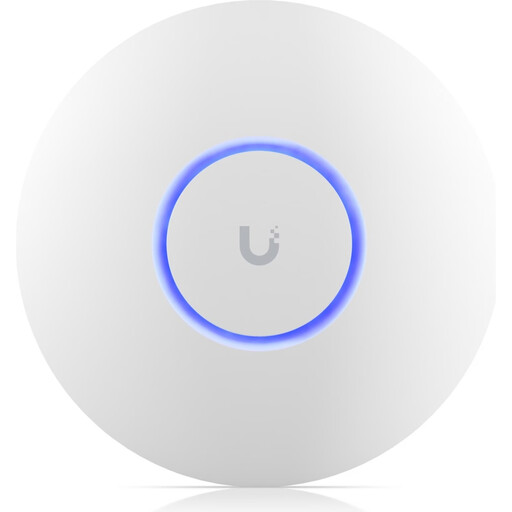 No image available
For a study area with a usable Ethernet connection, if the Wi-Fi link to the router is weak between floors.
Dual-band, Gigabit Ethernet and PoE to 802.3af are listed; it can be mounted on a wall or ceiling.
Requires Ethernet and PoE from a suitable switch or injector; set-up is managed through UniFi Network.
Don’t place it directly in a Wi-Fi dead spot. Choose an intermediate location where it can still get a good signal from the router, then check the connection in your study area.
Yes, provided the specific model has a LAN port and supports access point or LAN bridge mode. devolo’s instructions describe connecting through existing network cabling; AVM’s data sheets also list this operating mode for the FRITZ!Repeater 1700 and 2700.
For mesh, check compatibility with your existing router. Test Powerline using the sockets you intend to use; devolo warns that electrical devices may cause interference.
Products covered by the relevant EU harmonisation legislation and placed on the German market must carry the CE marking. The German Federal Network Agency explains that the manufacturer uses it to declare conformity under its own responsibility. It is not an independent quality mark for range or performance. Check the marking and required accompanying documents on the specific listing.