Families dealing with dead zones behind walls
You want to watch or share videos in a distant room and, above all, need a more reliable connection where you use your devices.


Don’t rush into buying a new router. First, check whether moving your existing device to a more open, central position improves reception, and whether Wi-Fi is actually the bottleneck when sharing files around the house. For a more distant room, you could consider wireless mesh, a wired access point or Powerline, depending on whether you have a good wireless backhaul, a suitable route for an Ethernet cable or compatible power sockets.
You want to watch or share videos in a distant room and, above all, need a more reliable connection where you use your devices.
Choosing the right way to transfer files between devices is important. If you’re uploading to an online service, the speed of your internet connection matters too.
You want to extend your home network without unnecessarily replacing your broadband equipment and network. The connection type, operating mode and cabling all affect which option is right for you.
The key is to identify which part of the connection is weak: reception in the target room, the link between network devices, or your internet connection when uploading.
Best if: Moving it to a more open, central position gives you adequate reception where you need it.
The trade-off: Changing the router’s position won’t eliminate all signal loss through walls. Telekom notes that certain materials can weaken or reflect Wi-Fi signals.
Best if: You can find a position between the router and the additional unit where the wireless backhaul is reliable.
The trade-off: The additional unit still needs a working connection to the rest of your network. It can’t simply replace one if it’s placed in a complete dead zone.
Best if: You can connect the units with a network cable and the wireless signal through the walls is unreliable.
The trade-off: The backhaul doesn’t need to pass through the wall wirelessly, but the cable route, connections and operating mode must work with your existing network. TP-Link documents Ethernet backhaul in Access Point mode, while FRITZ! describes LAN bridge mode with routers from other manufacturers.
Best if: You don’t have a reliable wireless backhaul or a practical route for an Ethernet cable, but can use suitable power sockets.
The trade-off: The connection runs over your electrical wiring, but your choice of sockets and electrical interference can affect performance. devolo highlights this in its guidance.
| Requirement | What to check before buying | Who is it most relevant to? |
|---|---|---|
| Reception in the target room | Check reception where you plan to put the unit and where you’ll play videos. First, try positioning your existing router in as open a space as possible, closer to where you use your devices. | If I want to watch or share family videos behind several thick walls, Wi-Fi needs to reach the room where I’ll use it. That’s why around 36% of consumers put reception in the target room first. |
| How videos are transferred | Check whether you’ll share videos locally between devices on your home network or through an online service. If cabling is an option, check Ethernet backhaul and the connections on your devices. | If I’m transferring videos between devices on my home network, I want to know whether the local connection is the bottleneck, or whether it’s my internet connection when uploading. That’s why around 29% of consumers prioritise a reliable way to transfer video files. |
| Connecting your existing router | Check your connection and modem, the router or access point mode you want to use, and the route to the first new unit. | If I want to keep using my existing router, I need to know before buying whether the new system will work with it as an access point. That’s why around 21% of consumers prioritise compatibility with their existing broadband equipment. |
| Management and security | Check for update features, WPA2 or WPA3 support that’s compatible with your devices, and any subscriptions required for the extra features you want. | If I want to manage my home network easily and keep it secure, I also consider updates and any ongoing costs. Around 14% of consumers prioritise easy management, security and manageable running costs. |
Manufacturers’ maximum speeds don’t tell you how well the wireless backhaul will work at your planned locations. A mesh system also needs a suitable connection between its units.
Plan the location and backhaul first, then choose the model and number of units. Depending on the layout of your home, you may also need another unit or a wired connection.
A system without a built-in modem won’t automatically replace your broadband equipment. CHIP specifically notes that the Deco BE25 doesn’t have a modem; TP-Link also explains how to use it behind an existing router.
Before ordering, check that your connection type is compatible with the router or access point mode you plan to use.
If a system isn’t compatible with your broadband connection, you may still need to use or buy a separate modem.
Performance over your electrical wiring depends on factors including the sockets you use and sources of electrical interference. devolo warns that electrical appliances can affect the connection.
Test the sockets you plan to use and position the adapters according to the manufacturer’s instructions.
The FRITZ!Repeater 3000 AX is one option for extending an existing home network. FRITZ! lists two Gigabit LAN ports and describes LAN bridge mode for use with routers from other manufacturers.
The Deco BE25 is a dual-band mesh system with two 2.5 Gbit/s ports per unit and wired or wireless backhaul, according to TP-Link Germany.
The ZenWiFi XD5 is a mesh product with Ethernet backhaul and AiMesh support for compatible ASUS routers.
Magic 2 WiFi 6 next combines Powerline with a Wi-Fi access point. devolo lists two Gigabit LAN ports on the Wi-Fi adapter.
The eero 6+ two-pack is presented as an app-managed mesh router kit with Gigabit Ethernet.
The Joybuy products below cover extending your home Wi-Fi with mesh or an access point, as well as a possible DSL router upgrade. Check your connection type and backhaul: wireless mesh still needs a reliable connection between its units, and an access point can’t replace an internet router.
 No image available
For households looking to extend their Wi-Fi with two mesh units while continuing to use an existing router in Access Point mode.
Dual-band; two Gigabit WAN/LAN ports per unit. Router and Access Point modes are listed.
 No image available
For adding an access point with a wired Ethernet uplink, if you can connect it to your network at the planned location.
Dual-band Wi-Fi 6 and Gigabit Ethernet uplink; a PoE adapter is included. This is an access point, not a standalone internet router, and it requires a network connection and PoE power.
 No image available
For extending your home network with three mesh units; Access Point mode lets you continue using an existing router.
Dual-band Wi-Fi 5 and two Gigabit LAN/WAN ports per unit. According to the product description, setup and management are handled through the Deco app.
 No image available
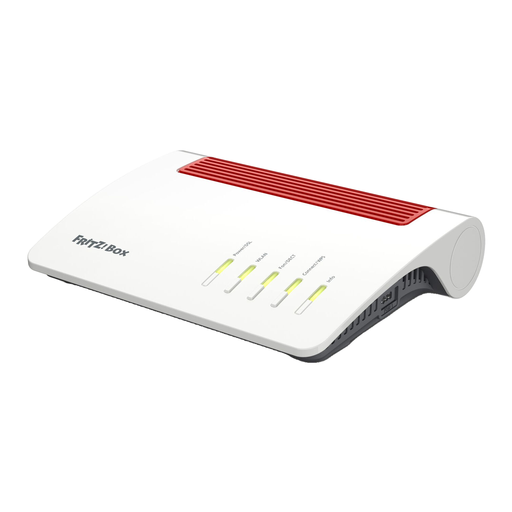
For households considering a DSL router with mesh master functionality and several wired connections.
Dual-band Wi-Fi 6, built-in VDSL Supervectoring 35b modem and four Gigabit LAN ports. The modem is designed for DSL; the product description specifies an external modem connected to the WAN port for fibre or cable.
 No image available
For households looking to extend their home Wi-Fi with a mesh kit comprising two units.
Dual-band Wi-Fi 7 and three Gigabit ports per unit; the product description mentions an app for management.
Not just to transfer files locally between devices on your home network. If you’re uploading videos to an online service, you should also check the speed of your internet connection. The Bundesnetzagentur’s broadband test measures that connection, not the local Wi-Fi link on its own.
Don’t put it somewhere with no connection to the rest of your network: the additional unit also needs a reliable wireless backhaul. Try a position somewhere in between. If an Ethernet connection is possible, you can use a wired backhaul instead.
Yes. TP-Link describes an Access Point mode for using Deco behind an existing router. In this mode, your existing router manages the clients, and some advanced Deco router features aren’t available.
Keep the firmware up to date and check before buying whether any extra features you want require a subscription. The eero 6+ product listing mentions a separate subscription for additional security and management features; check the terms for the specific system you’re considering.
On 22 January 2025, the Bundesnetzagentur confirmed that customers can choose their own terminal equipment at the network termination point, including on passive optical fibre networks. It also referred to the existing freedom of choice for VDSL and cable. Check which equipment and setup are suitable for your connection.