Readers of PDF journals
If you read fixed page layouts with small captions or multiple columns, check the zoom and navigation on your preferred screen size.


For wildlife journals with a fixed layout and small print, a larger black-and-white reader is often a sensible starting point: check page view and zoom using your own issue. If colour photos and maps matter to you, compare colour models using the same file and weigh up the screen size. Transfer your journals before you fly, test that you can access them offline, and follow your airline’s rules and the crew’s instructions on board.
If you read fixed page layouts with small captions or multiple columns, check the zoom and navigation on your preferred screen size.
If photos, maps or colour-coded illustrations are important to you, compare the colour reproduction with the available screen space.
If you want to take several of your own issues with you, check before you fly that you can open your files without an internet connection.
Choose a screen to suit your journals’ layout, not just their colour. What matters is whether you can read the important content clearly and open your issues offline.
A good fit if: You want more space to view multi-column PDFs, captions and footnotes, and colour is less important.
The trade-off: A larger device takes up more room than a compact model. You should still test zoom and page turns with one of your own issues.
A good fit if: You want to see colour photos or maps, but also prefer a larger PDF page.
The trade-off: Screen size alone doesn’t tell you whether your specific journal issue will be easy to read. Check file access and the exact model variant too.
A good fit if: You want to take colour illustrations with you and prefer a more compact device to pack away.
The trade-off: A fixed-layout journal page may need more zooming and panning on a smaller screen.
A good fit if: Your issues come in different supported file formats or are available through apps you can access, and you want to annotate PDFs.
The trade-off: App access is no substitute for checking that you can open your issue locally before you fly. With the BOOX Go 10.3 (Gen II), only the Lumi variant has a front light.
| Buying consideration | What to check | Who is it important to? |
|---|---|---|
| PDF page readability | Open a typical issue and check full-page view, zoom, landscape orientation and page turns. | If you read small captions or multiple columns, navigating the fixed layout matters to you. Around 33% of consumers put PDF readability first. |
| Colour for nature photography | View photos, legends and maps on the specific model; compare colour and screen size. | If colour matters for your photos, maps or illustrations, you’ll want to be able to make them out on your reader. Around 27% of consumers prioritise colour reproduction. |
| Portability for travel | Check the dimensions, weight, front light on the exact variant and stated battery-life conditions. | If you want to use the reader in your seat and pack it in your luggage, its size and ease of use are key. Around 20% of consumers prioritise portability. |
| Offline access to your own files | Check the file format, DRM and annotation permissions; transfer your issue before you fly and test it offline. | If you want to read purchased or personal journals on a flight without internet access, that specific issue must be available locally. Around 20% of consumers focus above all on offline file access. |
With PDFs, you may not be able to change the font size and style as you can with an e-book. Rakuten Kobo also notes restrictions on text selection; when you zoom in, you only see part of the page at a time.
Before you buy, check several typical pages, including captions and footnotes, on your preferred screen size.
Frequent zooming and panning can add time to your reading.
A compact colour display and a larger colour display offer different amounts of space for the same fixed page layout. The manufacturer’s stated screen size alone doesn’t prove that the text in your issue will be easy to read.
Assess colour reproduction and full-page PDF readability separately, using a representative issue.
A reader’s PDF support doesn’t automatically mean you can transfer, open offline or annotate every protected journal issue. Rakuten Kobo describes simple computer transfer for unprotected PDF and EPUB files; on the Elipsa 2E, DRM or restricted permissions can prevent annotations.
Transfer your specific issue before you fly and check that you can read and annotate it offline.
An issue may require a different transfer method or reading app.
The Elipsa 2E is a large-format black-and-white reader for PDFs and stylus annotations.
Kindle Scribe variants offer black-and-white or colour displays, as well as writing features.
The InkPad Color 3 is a 7.8-inch colour model; the InkPad 4 is a black-and-white alternative with the same screen size.
The vision color is a compact 7-inch colour option with PDF support and access to the tolino ecosystem.
The Go 10.3 (Gen II) range combines black-and-white E Ink with PDF annotations and supported apps.
The following Joybuy devices are compact colour E Ink readers for colour content. Bear in mind that their smaller screens may be less suited to fixed-layout journal pages.
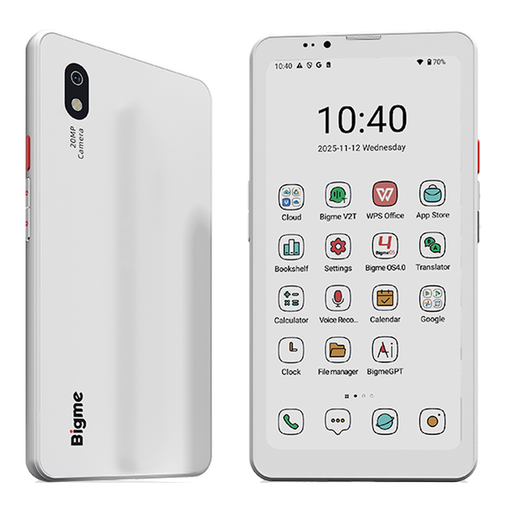 No product image available
A compact colour option if colour content matters to you and you prefer a smaller device. The 6.13-inch display offers less space for fixed-layout journal pages than a large-format device; when you zoom in, you’ll only see part of the page at a time.
Colour display: Kaleido 3.
Configuration listed in the product title: Android 14, 8 GB + 256 GB.
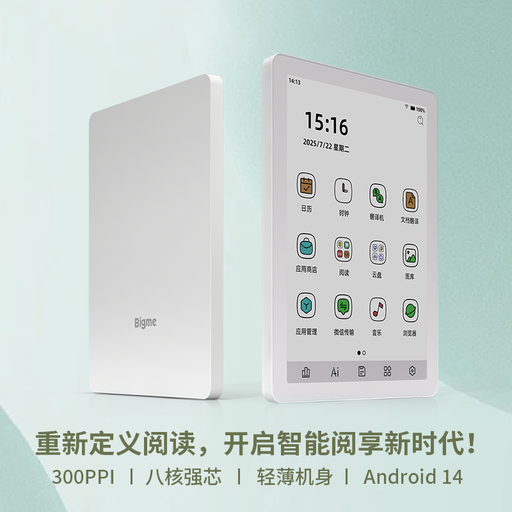 No product image available
A small colour reader with a front light for travelling. There’s limited screen space for a fixed-layout journal page, so check zoom and readability using one of your own issues.
E Ink resolution according to the product description: 300 PPI for black-and-white content and 150 PPI for colour content.
The product description lists an adjustable dual front light with 36 levels.
Not necessarily: Kobo’s PDF viewer doesn’t let you change the font size and style as you can with standard e-books. Zooming in and switching to landscape can help, but you’ll only see part of the page at a time when zoomed in. Check how it works with one of your own issues.
Transfer the specific issue before you fly and open it without an internet connection. Rakuten Kobo documents computer transfer for unprotected PDFs and EPUBs; this simple transfer method doesn’t apply to DRM-protected files.
It depends on the model and the file permissions: the Kobo Elipsa 2E comes with the Stylus 2, while the compatible stylus for the tolino vision color is sold separately. Kobo notes that DRM or restricted permissions may prevent annotations on PDFs.
There’s no general answer. The European Union Aviation Safety Agency explains that each airline decides whether portable electronic devices can be used; always follow the crew’s instructions.
The European Union Aviation Safety Agency recommends carrying portable electronic devices in your hand luggage. Also check your airline’s rules, and don’t transport damaged lithium batteries as you normally would.