
Lieferung heute & morgen

Qualitätsgarantie

Willkommens-Angebote freischalten: KOSTENLOSE Lieferung | Bis zu 80 % RABATT | Kostenlose 30-Tage-JoyPlus-Testphase
App herunterladen
Clean windows, mirrors and glass doors may seem easy to manage day to day – until streaks, water spots or hard-to-reach exterior surfaces make the job more demanding. The choice ranges from classic glass cleaner and window wipers to window squeegees, electric window cleaners and window-cleaning robots. However, not every solution is suitable for every glass surface or household.
The term streak-free glass cleaner does not automatically guarantee a perfect cleaning result. Residue is often caused by using too much cleaning solution, a dirty cloth or working in direct sunlight. Even a good window squeegee can leave streaks if the rubber blade is damaged or covered in dirt.
You should therefore look for:
A telescopic window wiper can extend your reach, but it does not replace a safe working position. When cleaning high windows, do not climb onto furniture or window sills. With a long handle, check that the locking mechanism engages securely and that the cleaning head can be guided in a controlled manner.
Although a window-cleaning robot reduces the need to handle hard-to-reach surfaces, it still requires a suitable glass surface, a power supply and a correctly attached safety rope. Damaged, uneven or unsuitable glass can affect the robot’s grip.
When looking at a window-cleaning robot, high suction power may initially sound impressive. However, cable and rope length, battery life, edge detection, water tank, noise level and controls also matter when making your decision. A high figure alone says little about whether the device is suitable for your windows.
The same applies to glass-cleaner concentrate: its yield is only an advantage if the mixing ratio is clearly stated and the solution is compatible with your window vacuum or window wiper.
Not every liquid is suitable for every surface. Many glass cleaners are designed for windows, mirrors, glass tables and other water-resistant, smooth surfaces. Sensitive coatings, painted surfaces and TFT, LCD or plasma screens may be excluded.
Before use, read:
When using a window-cleaning product containing alcohol or surfactants, do not leave the liquid on sensitive surfaces for a long time. If in doubt, test it first on a small, inconspicuous area.
A window squeegee should have an even, flexible blade. The width affects how quickly you can work, but also how easy it is to handle on smaller windows. For example, the Leifheit Window & Frame Cleaner has a 32 cm-wide silicone blade and an angle that can be adjusted to three positions.
With a microfibre window wiper, washability, attachment and the size of the cleaning head are important. A chenille head measuring 26 × 17,5 cm can be practical for larger glass surfaces, while a narrower head is better suited to windows with glazing bars.
For high windows, a telescopic handle with a secure locking mechanism or a robot with suitable safety equipment is important. The ECOVACS WINBOT W2S OMNI is specified as having, among other features, a 5,5 m-long cable, a multifunctional station and a safety rope. Even so, the rope must be attached to a stable point before use.
Electrical devices must not come into contact with water. Before buying, check whether the tank capacity, power supply and cleaning-product requirements suit how you intend to use the device. With a robot, you should also consider whether it is operated by remote control or app, and how its accessories can be stored.
The recommendations below group specific products according to typical usage situations. The stated product features are decisive, rather than broad advertising claims.
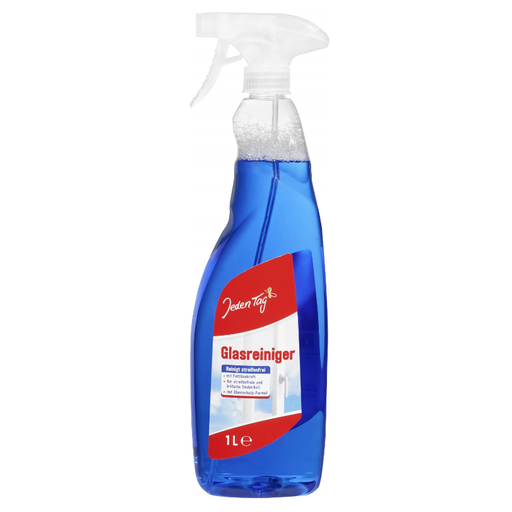
Why this product suits this profile: The 1-litre bottle is suitable for regular cleaning jobs on windows and mirrors, without having to switch straight to an electric device.
It can be applied directly to glass; for painted surfaces, applying it to a damp cloth is recommended. TFT, plasma and LCD screens are excluded.
1 litre contents, less than 5% anionic surfactants according to the product information, and suitable for glass and mirror surfaces.
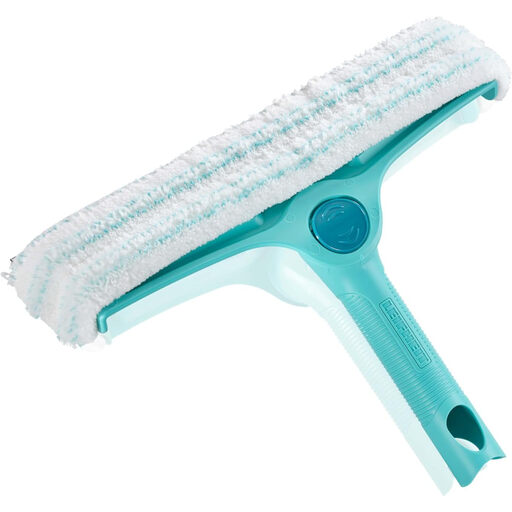
Why this product suits this profile: If you want to clean windows, frames and corners with one manual system, this tool combines several functions in one.
The washable microfibre cover reaches around the frame. The adjustable angle makes it easier to clean hard-to-reach areas.
32 cm silicone blade, three angle positions and compatibility with Leifheit Click System extension poles.
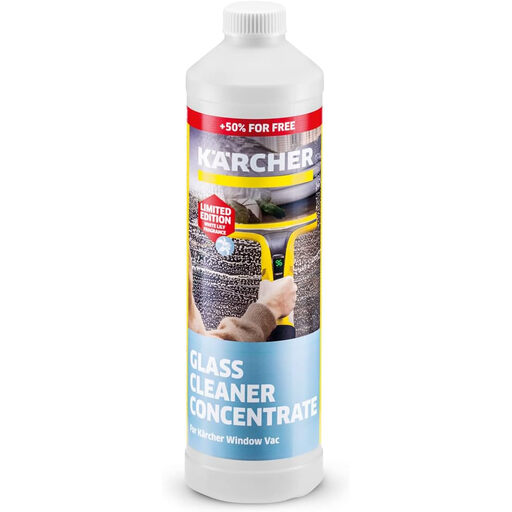
Why this product suits this profile: This concentrate is appealing to households that clean windows regularly and want a solution for both manual use and Kärcher window vacuums.
The mixing ratio is specified, helping to prevent overdosing; the solution must not be mixed with other cleaning products.
750 ml contents, suitable for Kärcher WV and KV series according to the product information, and designed for water-resistant smooth surfaces.
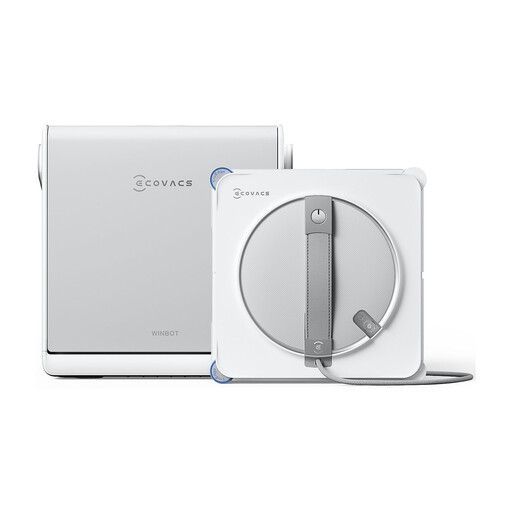
Why this product suits this profile: This window-cleaning robot is aimed at users with large or hard-to-reach glass surfaces who are interested in automated cleaning modes.
The product information lists a safety rope, edge detection and twelve protection levels. The rope must be attached before every use; damaged glass is unsuitable.
Specified features include 8.000 Pa suction power, up to 110 minutes of runtime, an 80 ml tank capacity and several cleaning modes.
We have put together a complete, regularly updated list of products that fully meet these strict selection criteria and the safety regulations applicable in the EU.
Both can be suitable. A spray is straightforward and ready to use. Glass-cleaner concentrate can reduce packaging volume when used frequently, but it must be diluted correctly. A clean cloth and an intact squeegee blade are also essential.
For heights within reach, a telescopic window wiper with a secure locking mechanism is suitable. For larger or hard-to-reach surfaces, a window-cleaning robot may be an alternative. Before use, check the safety rope, suitability of the glass surface, power supply and operating instructions.
Its service life depends on how often it is used, maintenance, battery condition and the availability of spare parts. After each use, clean the water tanks, nozzles, cloths and squeegee blades. With a robot, regularly check the cable, safety rope and contact surfaces for damage.