
Lieferung heute & morgen

Qualitätsgarantie

Willkommens-Angebote freischalten: KOSTENLOSE Lieferung | Bis zu 80 % RABATT | Kostenlose 30-Tage-JoyPlus-Testphase
App herunterladen
Streaks on the window, water spots on the shower screen or hard-to-reach exterior surfaces: the right window cleaner can make your cleaning routine far more predictable. However, window squeegees, window scrapers, window vacs and window cleaning robots differ considerably in terms of operation, reach and safety requirements.
Before you buy, it is worth looking at the actual product features rather than big marketing promises. Three typical pitfalls lead to the most common buying mistakes.
A wide window squeegee covers large panes quickly. However, it can be awkward for small windows with mullions, mirrors or shower enclosures. A width of 32 to 45 cm is practical for many households, provided the rubber blade can be guided cleanly.
Even a suitable window squeegee will leave residue if the pane is heavily soiled, too much cleaning product is used or the blade is damaged. A glass cleaner should be dosed correctly. High concentrations can leave residue and impair the glide of the blade.
A window cleaning robot can tackle hard-to-reach glass surfaces, but it requires a suitable, smooth surface, a power supply and a correctly attached safety tether. A robot does not automatically replace checking the edges, maintaining the cleaning pads or cleaning heavily soiled frames.
The blade should sit evenly and show no visible cracks or distortion. Rubber or silicone blades are suitable for smooth glass surfaces and shower walls. Silicone as a material is not automatically suitable for every surface; for sensitive coatings, the manufacturer's approval is crucial.
A silicone squeegee or shower squeegee is primarily intended for water on smooth surfaces. For dried-on dirt, you will also need a wash mitt or a suitable glass cleaning product.
The working width should match the layout of your windows:
A non-slip handle is important when cleaning with water. When buying, you should also check whether the accessories are compatible with an existing click or top-lock system.
A concentrated glass cleaner can be diluted or used directly, depending on the product. The instructions on the label are decisive. Cleaning products should not be mixed together. For coated, painted or textured surfaces, it is advisable to test on an inconspicuous area.
For the most even streak-free window cleaning, a clean wash mitt, an intact squeegee blade and a suitable drying cloth are also important. The window frame should be cleaned before squeegeeing so that dirt does not transfer onto the pane.
With an electric window cleaner, technical specifications alone are not enough. The following are crucial:
A window cleaning robot must not be used on cracked, heavily uneven or unsuitable material. The operating instructions for the specific model take precedence.

Why this product suits the profile: The combined window frame cleaner and window squeegee covers several manual cleaning steps with one tool. This is interesting for households that want to start without an electric device and without multiple individual products.
The 32 cm silicone blade is well suited for smaller and medium-sized glass surfaces. According to the product description, the surrounding microfibre cover also picks up dirt on the frame.
Four functions in one tool, washable cover at 40 °C and three adjustable cleaning angles.
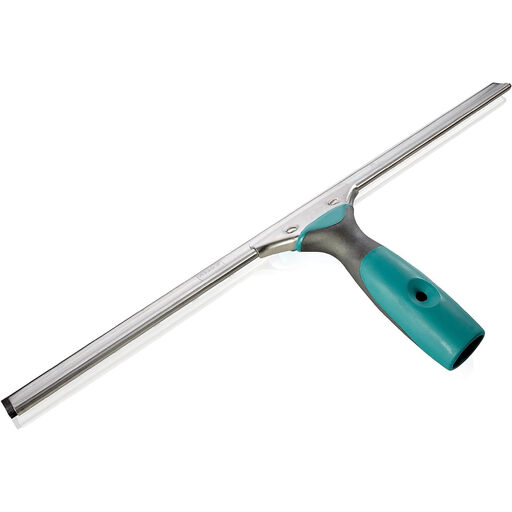
Why this product suits the profile: The 45 cm working width is aimed at users with larger, open glass surfaces. The sliding handle can be helpful with mullions or hard-to-reach areas.
The flexible rubber squeegee is designed for the even removal of water and cleaning fluid. The top-lock system reduces the risk of buying an incompatible telescopic pole.
45 cm wide blade, soft-grip handle made of rubber and plastic, and connection option for Leifheit Professional telescopic poles.
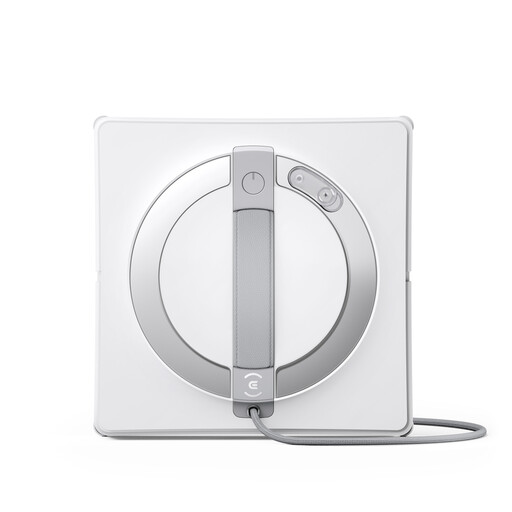
Why this product suits the profile: For high or hard-to-reach glass surfaces, the robot offers an automated alternative. It is only suitable for users who consistently observe the safety tether, station, power supply and operating instructions.
The product specifications mention an integrated safety and power cable, a 5.5 m safety tether and 12 protective functions. These details do not replace the required safety check before each use.
Three nozzles for spray distribution, app control, Win-SLAM 4.0 path planning and charging during operation according to the product description.
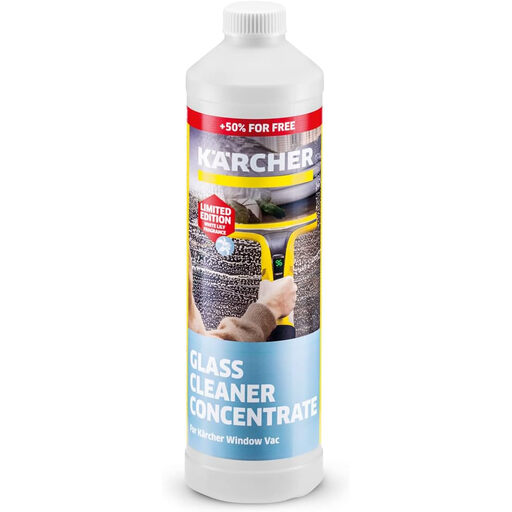
Why this product suits the profile: The concentrate is intended for users who regularly clean windows, mirrors and other water-resistant smooth surfaces and want to combine it with a window vac or window squeegee.
The specified dilution supports controlled dosing. According to the product information, the cleaner is intended for Kärcher window vacs and manual use.
750 ml concentrate, suitable for water-resistant smooth surfaces and, according to the manufacturer, formulated with biodegradable surfactants in accordance with OECD 311.
We have compiled a complete, regularly updated list of products that fully meet these strict selection criteria and the safety regulations in force in the EU.
With a robot, you must check the adhesion, safety tether, power connection and suitability of the surface before starting.
A small, correctly dosed amount of cleaning product, a clean squeegee blade and a dry edge finish are crucial. Direct sunlight can cause the cleaner to dry too quickly. For heavy soiling, the pane should be washed first before using the window squeegee.
This depends on use, cleaning and storage. The rubber blade should be replaced as soon as it shows cracks, hard spots or uneven edges. Wash mitts should be cleaned according to the care instructions and not stored permanently damp.
In addition to the purchase price, costs can include electricity, replacement pads, cleaning products and possibly spare parts. The actual costs depend on the frequency of use and the specific model. For devices with a tank or spray function, only a manufacturer-approved product should be used.