
Lieferung heute & morgen

Qualitätsgarantie

Willkommens-Angebote freischalten: KOSTENLOSE Lieferung | Bis zu 80 % RABATT | Kostenlose 30-Tage-JoyPlus-Testphase
App herunterladen
Large window panes, conservatories, or hard-to-reach skylights bring light and a sense of space into your home, but cleaning them is often tedious and sometimes risky. A window cleaning robot promises a solution: a streak-free shine at the touch of a button. But the market is crowded, and not every device lives up to its advertising claims. As your Joybuy Product Recommendation Officer, I'm here to help you navigate the options and make an informed decision.
Many buyers invest in an automatic window cleaner only to find that the device doesn't meet their expectations. This is often due to three common pitfalls:
To avoid a bad purchase, you should check three core technical parameters before making a decision. These are crucial in determining the performance, safety, and longevity of your window cleaning robot.
A reliable window robot is mains-powered. The power cord ensures constant, high suction, which is essential for it to adhere to the vertical glass surface. The integrated battery acts as an uninterruptible power supply (UPS). It prevents the device from falling immediately during a sudden power interruption. Pay attention to the battery's stated backup time; 20 to 30 minutes is a good benchmark to give you enough time to safely remove the robot from the window. Models that run exclusively on battery power are rare and often severely limited in their performance and runtime.
The robot's shape and its navigation technology are critical for achieving flawless coverage.
Suction power, measured in Pascals (Pa), is the most important parameter for the device's safety and adhesion. A higher Pascal number means stronger adhesion to the glass surface.
In addition to suction power, a multi-level safety system is essential. Besides the UPS, this should always include a robust safety tether that is secured indoors, as well as edge detection sensors to prevent it from moving off frameless surfaces.
Instead of presenting a confusing list, we have matched models to three typical user profiles.
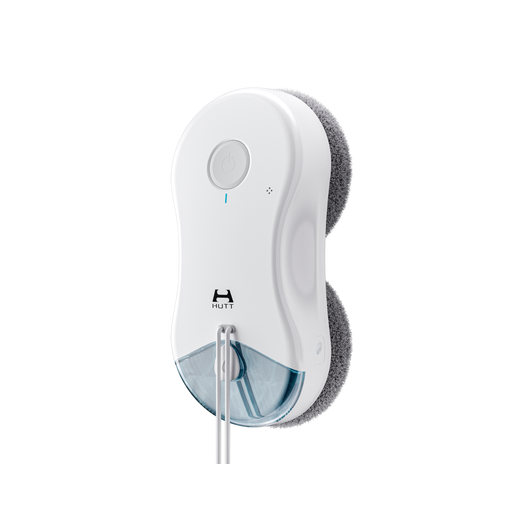
Why This Fits Their Persona: Ideal for users who want to try the technology without a large initial investment. Operation via remote control is straightforward and requires no app installation, making it easy to get started. Well-suited for standard windows, mirrors, and tiled surfaces in the home.
The device is clearly designed as a mains-powered model with a UPS function, thus avoiding the "cordless" trap. Its rectangular shape ensures solid edge-cleaning performance that is impressive for this price range.
The suction power of up to 5,400 Pa is remarkable in this segment and ensures a secure grip. The 80 ml water tank allows for cleaning larger areas without constant refilling.
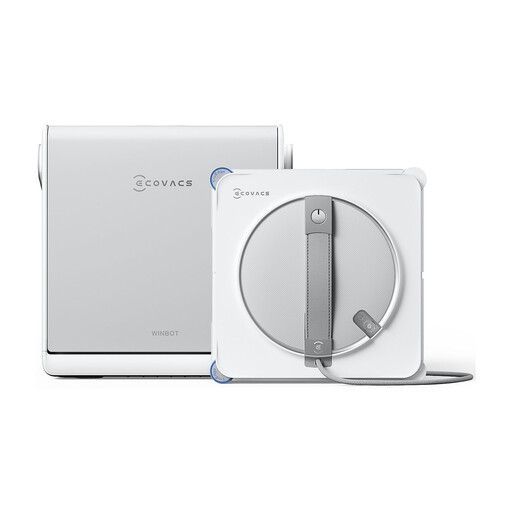
Why This Fits Their Persona: Perfect for owners of modern properties with floor-to-ceiling windows, a conservatory window cleaning robot, or large glass facades. The multi-functional station serves as a base, charging unit, and storage, offering maximum convenience.
This model solves the edge-cleaning problem with its proprietary TruEdge technology, which specifically targets and cleans corners with high pressure. The enormous suction power of 8,000 Pa and the 12-stage safety system provide maximum reliability, even when cleaning high windows.
The multi-functional station with an integrated battery allows for a runtime of up to 110 minutes. The intelligent WIN-SLAM 4.0 navigation system ensures efficient and complete route planning.
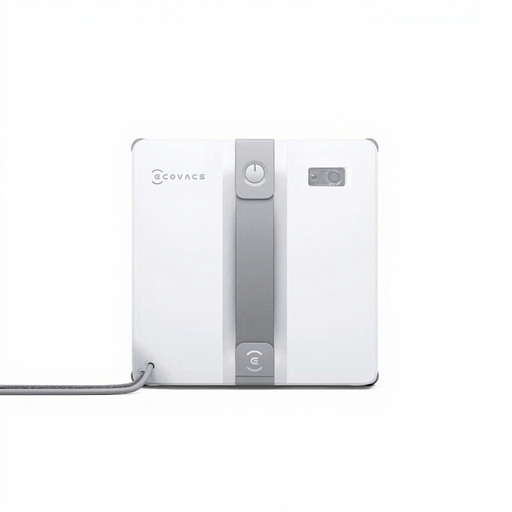
Why This Fits Their Persona: The solution for anyone who hits the limits with standard robots. Thanks to its extremely compact design, this device effortlessly cleans narrow windows, latticed windows, or surfaces where handles and grilles are in the way.
This model bypasses the trap of insufficient coverage by being specifically designed for niches that other robots can't even reach. Despite its small size, a high suction power of 7,500 Pa ensures uncompromising safety.
Its standout feature is the ultra-compact design, with a height of just 55 mm and an edge length of 215 mm. The ultrasonic spray technology ensures efficient dirt removal and a streak-free finish.
We have compiled a complete, up-to-date list of products that fully meet these strict selection criteria and local safety regulations.
1. Do window cleaning robots also work on frameless or sloped windows? Most modern window cleaning robots are equipped with edge detection sensors and can therefore be used safely on frameless glass surfaces (e.g., shower screens or glass railings). Caution is advised for sloped windows, such as those found in attics. Manufacturers typically specify a maximum angle of inclination that must not be exceeded, as adhesion can no longer be guaranteed beyond that point. Be sure to check the product specifications for this information.
2. Do automatic window cleaners really leave no streaks? A streak-free finish depends on several factors. For optimal performance, the microfibre pads should be clean and dry before the cleaning cycle begins. For heavily soiled windows, a second pass or manual pre-cleaning of coarse dirt may be necessary. Models with a window robot with a spray function distribute the cleaning fluid more evenly and often achieve better results than devices where the pad must be manually moistened. The quality of the cleaning solution also plays a role.
3. What maintenance does a window cleaning robot require? The maintenance is minimal. After each use, the microfibre pads should be washed according to the manufacturer's instructions (usually machine-washable). The sensors and the drive tracks or wheels should be regularly cleaned of dust with a soft cloth to ensure proper function. The water tank on models with a spray function should be emptied after use. With proper care, these devices are designed for a long service life.