
Lieferung heute & morgen

Qualitätsgarantie

Willkommens-Angebote freischalten: KOSTENLOSE Lieferung | Bis zu 80 % RABATT | Kostenlose 30-Tage-JoyPlus-Testphase
App herunterladen
Large glass facades, conservatories, or hard-to-reach windows present a significant cleaning challenge. Manual cleaning is often time-consuming, physically demanding, and poses safety risks with high windows. A robot window cleaner automates this process. These devices adhere to the glass surface using vacuum pressure and navigate systematically to achieve a streak-free finish. Selecting the right model depends on specific technical parameters and individual on-site conditions.
The decision for a particular model should be based on an analysis of its technical specifications. The following criteria are crucial for functionality and efficiency.
The suction power, measured in Pascals (Pa), determines how firmly the robot adheres to the surface. Higher suction power ensures greater stability, especially on slightly uneven or textured surfaces like some tiles. Typical values range from 2,500 Pa to 5,500 Pa. Models with variable suction power can adapt to different surfaces.
Modern window robots use intelligent navigation systems to ensure complete coverage.
An integrated spray function is an essential feature for effective wet cleaning.
Most robot window cleaners are corded to guarantee constant suction power throughout the entire cleaning process.
The shape of the device influences its cleaning performance in corners and along edges.
Operation is typically handled via an included remote control or a smartphone application. App control often provides advanced features such as selecting specific cleaning modes, manually steering the robot, or viewing cleaning progress.
Based on an analysis of technical data and feature sets, we present a few models that can be considered for different user profiles.

Why We Recommend This Product This model combines a solid 2,500 Pa of suction power with an intelligent dual spray function. The integrated laser sensor assists with edge detection and path planning, enabling systematic cleaning. It can be controlled either manually or automatically.
Advantages
Who It's For This device is suitable for users looking for reliable automation for standard-sized windows who value effective wet cleaning via a dual spray function. Please note that this product must be connected to the mains for operation; the battery serves exclusively as a safety feature.
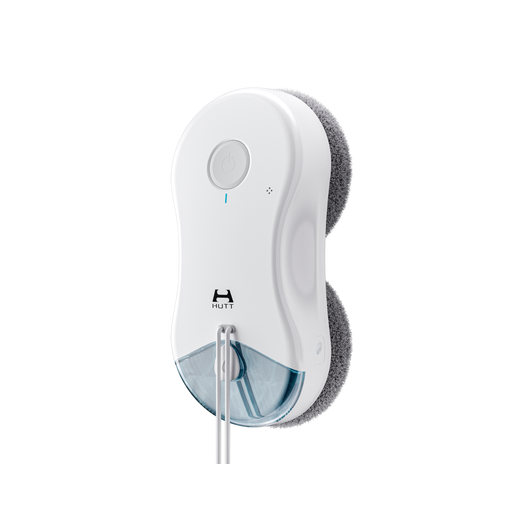
Why We Recommend This Product The HUTT DDC55 Pro stands out with its high suction power of up to 5,400 Pa and straightforward operation without a mandatory app. Its design is optimised for thorough edge cleaning. With an 80 ml water tank and a cleaning speed of under 3 minutes per square metre, it is engineered for efficiency.
Advantages
Who It's For Users who prefer a powerful, ready-to-use solution without smartphone integration will find this a suitable model. It is ideal for households with various smooth surfaces, from patio doors to shower stalls.
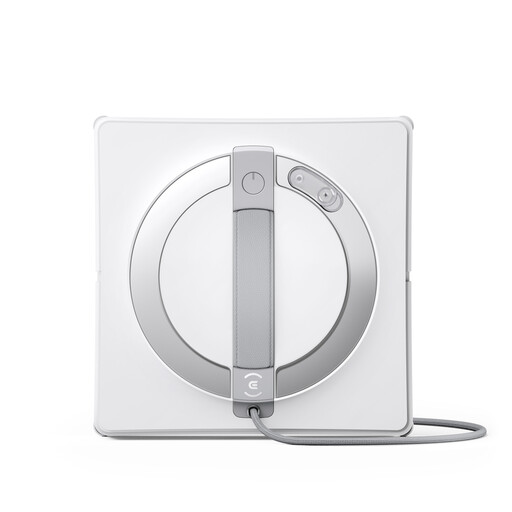
Why We Recommend This Product The Ecovacs Winbot W2 PRO Omni represents a highly advanced solution featuring a multifunctional 6-in-1 station. This station not only serves for storage but also integrates the power and safety cable, charges the robot, and facilitates transport. With WIN-SLAM 4.0 path planning and a three-nozzle wide-angle spray technology, it is designed for maximum efficiency and coverage.
Advantages
Who It's For This system is aimed at tech-savvy users seeking a fully integrated and convenient solution for large window expanses or a conservatory. The all-in-one station and advanced navigation offer a high degree of automation and convenience.
The models presented here offer a glimpse into the current technological possibilities. The market is constantly evolving, offering a wide variety of devices for different requirements and budgets. You can find a broader overview in our electric window cleaning device category.
1. How well do robot window cleaners clean corners? The cleaning performance in corners depends on the device's form factor. By design, square models often get closer to 90-degree corners. Round models compensate for this with rotating movements and specially shaped microfibre cloths that protrude slightly beyond the device's edge. While 100% coverage of the outermost corner is often physically impossible, modern devices leave only a minimal, barely visible border.
2. Can robot window cleaners also be used on tiles or in a conservatory? Yes, most robot window cleaners are suitable for all smooth, non-porous surfaces. In addition to windows, this includes mirrors, glass shower screens, and smooth, large-format tiles. They are particularly well-suited for use in a conservatory due to the often large and hard-to-reach glass surfaces. However, it is important to ensure that the grout lines between tiles are not too deep, as this could impair the suction.
3. Do robot window cleaners always need a power cord? Yes, continuous operation requires a constant power supply via a cord. This ensures that suction power is maintained throughout the entire cleaning cycle. The often-mentioned battery is an Uninterruptible Power Supply (UPS) that serves as a safety feature. In the event of a power outage, it prevents the device from falling immediately by maintaining its adhesion for a limited time.