
Lieferung heute & morgen

Qualitätsgarantie

Willkommens-Angebote freischalten: KOSTENLOSE Lieferung | Bis zu 80 % RABATT | Kostenlose 30-Tage-JoyPlus-Testphase
App herunterladen
Cleaning windows, especially large glass fronts, conservatories, or on upper floors, is often tedious, time-consuming, and sometimes even dangerous. A window cleaning robot promises welcome automation in this area. However, the market is crowded, and not every device lives up to its advertising claims. As your Joybuy Product Recommendation Officer, I'll help you identify the crucial features and avoid common purchasing pitfalls.
Before you make a decision, it's important to critically examine common marketing claims. Many buyers regret their choice because they've fallen for one of these three traps.
To avoid a bad purchase, you should focus on objective, technical features rather than advertising slogans. The following three points are decisive for the performance and safety of a window robot.
Suction power, measured in Pascals (Pa), is one of the most important metrics. It determines how firmly the window cleaning robot adheres to the glass surface. Higher suction power not only ensures greater safety but also provides stronger pressure from the cleaning pad onto the pane, which improves the removal of stubborn dirt.
An intelligent navigation system is the key to a thorough, gap-free cleaning. Look for systems that follow systematic paths (often referred to as Z- or N-patterns) instead of moving randomly.
As mentioned, the power supply is a critical point. A reliable window cleaning robot has a dual system:
Based on these objective criteria, we have identified some models that are suitable for different user profiles and requirements.

Why this model is a good fit: Ideal for users seeking basic automation for standard apartment windows without a large budget. The device handles the main work and offers a solid set of basic features.
This model is transparent about its power source: it is mains-powered, and the battery serves as a 30-minute uninterruptible power supply (UPS). It bypasses the pitfall of unsafe devices by combining 2,500 Pa of suction power with an included safety tether.
The dual water spray function, which can be controlled manually or automatically, is a useful feature for dirt removal in this price range. It is easily controlled via a remote.
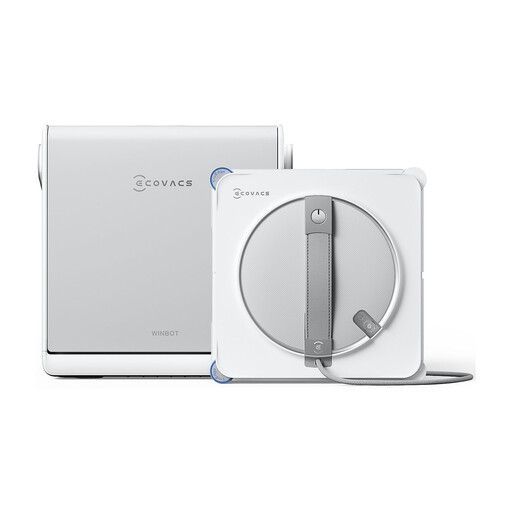
Why this model is a good fit: Perfect for homeowners with conservatories, floor-to-ceiling windows, or tall glass facades who are looking for a thorough and convenient cleaning solution. The multifunctional station serves as a base, charging, and storage unit.
This model directly addresses the pitfall of unclean edges with its TruEdge technology, which intelligently detects and precisely cleans them. Navigation with WIN-SLAM 4.0 ensures systematic coverage without missed spots.
The combination of very high suction power of 8,000 Pa for maximum safety and adhesion pressure, along with the advanced edge cleaning technology, delivers a consistently clean result, even on challenging surfaces.
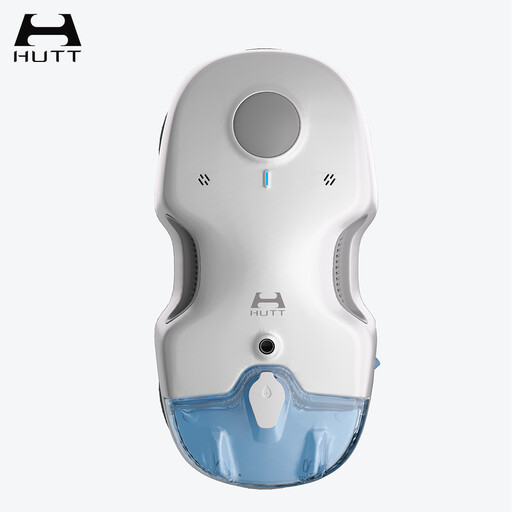
Why this model is a good fit: Suitable for users who want to clean not only windows but also other smooth surfaces like tiled bathroom walls, large mirrors, or glass doors. Its adaptive technology makes it a flexible household helper.
This model bypasses the pitfall of inadequate suction power. According to the manufacturer, the HUTTHINK 5.0 frequency control dynamically adjusts the suction power (up to 5,500 Pa) based on the level of dirt and the surface type. This ensures a secure hold and gentle cleaning.
The ability to automatically adjust suction power makes it particularly versatile for various smooth surfaces in the home, from glass to tiles to wooden doors. The HUTTSLAM 4.0 mapping system ensures systematic cleaning throughout.
If the models featured here don't exactly match your requirements, you can find a broader selection in our main category. There, we have compiled a list of products that meet our criteria for functionality and safety.
How safe is a window cleaning robot on upper floors? Safety is a high priority in the design of these devices. A reliable robot features a multi-level safety system: it is powered by a power cord, has a backup battery (UPS) to prevent a fall during a power outage, and is additionally secured with a sturdy safety tether anchored indoors. When used correctly according to the manufacturer's instructions, operation is very safe.
Do window cleaning robots also work on frameless windows? Yes, most modern devices are suitable for frameless glass surfaces such as shower enclosures or glass railings. They use optical or laser sensors to detect the edge of the glass surface and change their direction in time. However, it is still advisable to check the product specifications of the respective model to ensure compatibility.
What cleaning solution should I use in the water tank? To avoid clogging the device's fine spray nozzles, you should only use distilled water or the cleaning solution explicitly recommended by the manufacturer. Common household glass cleaners may contain ingredients that could damage the nozzles or the robot's rubber tracks. Information on this can be found in the device's user manual.