
Lieferung heute & morgen

Qualitätsgarantie

Willkommens-Angebote freischalten: KOSTENLOSE Lieferung | Bis zu 80 % RABATT | Kostenlose 30-Tage-JoyPlus-Testphase
App herunterladen
Cleaning windows, especially large or hard-to-reach glass surfaces like those in conservatories or on multi-story buildings, is often tedious and risky. A window cleaning robot promises to make this task significantly easier. However, the market is flooded with models whose advertised features don't always live up to their promises. As your Joybuy Product Recommendation Officer, I'm here to help you identify the crucial features and avoid marketing traps.
Before you make a decision, you should be aware of the typical weaknesses that only become apparent in everyday use and often lead to disappointment.
To avoid a bad purchase, focus on objective, technical specifications rather than grandiose advertising claims.
Suction power, measured in Pascals (Pa), is the most important parameter for safety and cleaning performance. It determines how firmly the window robot adheres to the glass surface.
A reliable window cleaner robot always features a dual safety system.
The quality of the clean depends heavily on the navigation technology. A smart window cleaner should clean systematically in paths (Z- or N-patterns) rather than moving randomly across the surface. Models with edge detection sensors ensure a thorough clean right up to the frame.
A window cleaning robot with a spray function offers a clear advantage: it dispenses the cleaning fluid automatically and evenly. This prevents the pads from becoming too dry or too wet, which can lead to streaking.
Here are some product recommendations tailored to different user profiles and their specific requirements.

Why it's a good fit: This device offers a balanced combination of essential features for the typical household. The dual spray function and intelligent navigation deliver a solid cleaning result on normal-sized windows without overwhelming the user with complex settings.
With a backup battery (UPS) for up to 30 minutes (according to the manufacturer) and automatic edge detection, it addresses pitfalls 2 and 3. The 2500 Pa suction power is sufficient for standard windows.
The integrated dual spray function ensures the surface is evenly moistened, promoting a streak-free clean.
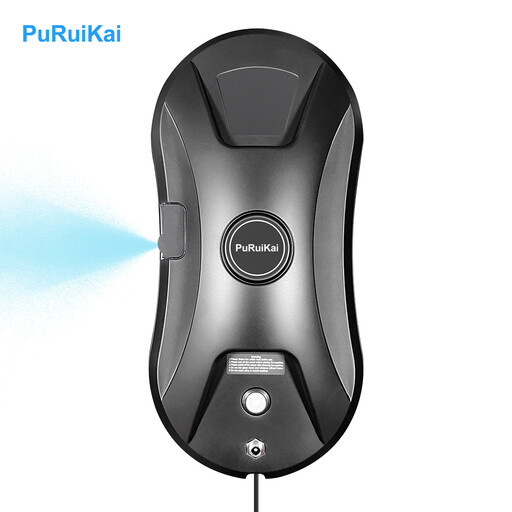
Why it's a good fit: Perfect for owners of properties with tall windows, conservatories, or large storefronts. The very high suction power provides maximum safety and cleaning pressure, which is crucial on expansive vertical surfaces.
The manufacturer-stated suction power of 5600 Pa minimises the risk of losing adhesion (pitfall 1), even on large or slightly uneven surfaces. The integrated spray function and safety features complete the package.
The exceptionally high suction power ensures maximum adhesion and strong contact pressure, resulting in a more thorough clean.
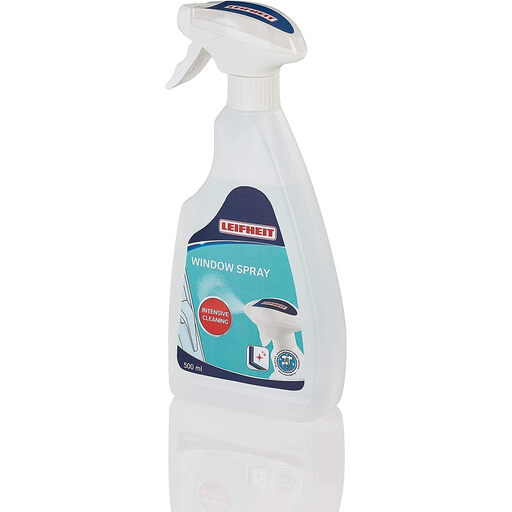
Why it's a good fit: This isn't a robot, but the perfect companion. Even the best window cleaning robot depends on a good cleaning fluid. This solution is designed to effectively dissolve dirt and grease without leaving streaks.
It addresses the problem of poor cleaning results, which is often mistakenly blamed on the robot. Using an unsuitable cleaner can clog a robot's nozzles or render the pads ineffective.
The concentrated formula is optimised for streak-free results and can be used in many robots with a water tank or for moistening the pads.
A great robot is only half the battle. For a perfect, streak-free result, the right cleaning agent is crucial. Discover our selection of effective solutions.
The battery in a window cleaning robot is a backup battery (UPS) and is not intended for cordless operation. The device must be connected to the power grid throughout the entire cleaning process. The battery's sole purpose is to keep the robot securely on the window for 20 to 30 minutes during a power outage, giving you time to retrieve it.
Yes, many modern models can also clean frameless glass surfaces like shower screens or glass railings. Look for devices with precise edge detection sensors (often described as laser or infrared sensors) that can identify the edge of the glass and change direction in time.
Maintenance is straightforward. The microfibre pads should be washed after each use. For models with a spray function, the water tank should be regularly filled with distilled water or a suitable cleaning solution to prevent limescale buildup in the nozzles. You should also occasionally check the drive tracks or wheels for debris.