
Lieferung heute & morgen

Qualitätsgarantie

Willkommens-Angebote freischalten: KOSTENLOSE Lieferung | Bis zu 80 % RABATT | Kostenlose 30-Tage-JoyPlus-Testphase
App herunterladen
Large glass facades, conservatories, or hard-to-reach skylights can be a challenge. Manual cleaning is time-consuming, strenuous, and often not entirely safe. A window cleaning robot promises welcome relief. However, the market is flooded with devices making grandiose marketing claims. As your Joybuy Product Recommendation Officer, I'll help you separate the wheat from the chaff and make an informed decision.
Before you invest, you should be aware of the three most common pitfalls that often lead to disappointment:
To avoid a bad purchase, you should focus on objective, technical parameters that have a direct impact on performance and safety. A good automatic window cleaner is characterised by a balanced combination of several factors.
Suction power, measured in Pascals (Pa), is crucial for the device's adhesion to the vertical glass surface. A value between 2500 Pa and 3000 Pa is sufficient for most standard windows. For very large, heavy devices or in strong winds, higher suction power may be advantageous. However, safety features are more important than the raw Pa value. Be sure to look for:
There are fundamental differences here that significantly influence the result. Most devices use rotating or vibrating microfibre pads. The crucial factor is how the cleaning fluid gets onto the window. Models with an integrated window cleaning robot with a water tank offer a clear advantage here. They automatically spray a finely metered amount of water or cleaning solution onto the glass, which leads to a more uniform result and eliminates the need to manually moisten the pads. This is particularly practical for large surfaces.
A smart window cleaner should intelligently plan its path to cover the entire surface without gaps. Look for devices that offer systematic cleaning modes (e.g., N- or Z-patterns). This is far more efficient than random navigation. For good edge cleaning, the shape of the device and the position of the cleaning pads are decisive. Some models are specifically designed to clean as close to the window frame as possible. Such devices are also ideal as a window cleaning robot for tiles in the bathroom or kitchen.
Instead of making blanket recommendations, we have identified products that fit specific user profiles.
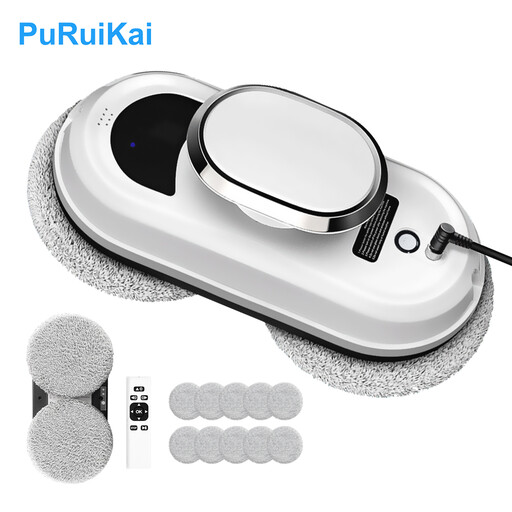
Why this model is a good fit: Ideal for users seeking a straightforward and reliable solution for standard windows in an apartment or house. The operation is intentionally simple and requires no technical onboarding.
This model forgoes a complex app in favour of an intuitive remote control. This bypasses the trap of overloaded software and makes the device ready to use right out of the box.
Suction Power: 2800 Pa x 2 for stable adhesion. Control: Simple remote control. Safety: Backup battery (20 min) and safety tether included.
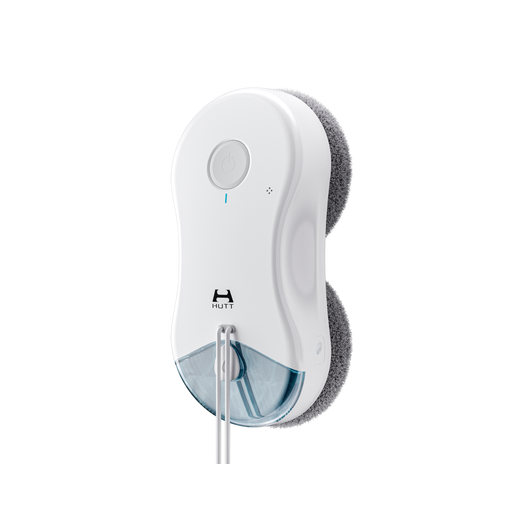
Why this model is a good fit: For owners of conservatories, floor-to-ceiling windows, or large mirrored surfaces where edge cleaning and automated misting are crucial for a good result.
The design is optimised for improved edge cleaning, thus avoiding the typical dirty border. The integrated 80 ml water tank ensures constant, automatic misting.
Suction Power: Up to 5,400 Pa (variable). Water Tank: 80 ml integrated. Safety: 30 min backup battery. Special Feature: Optimised for edge cleaning.
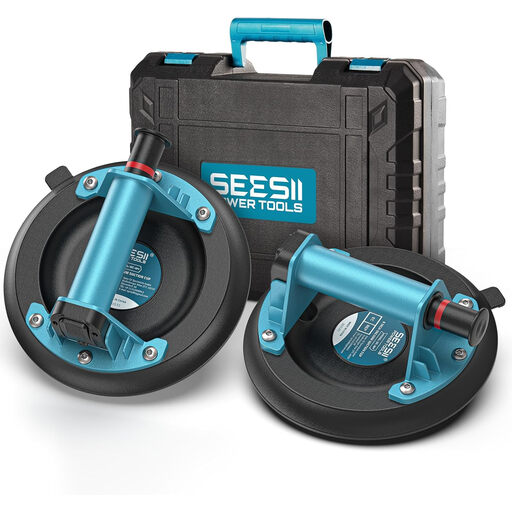
Why this model is a good fit: This is not a cleaning device, but a professional tool for anyone who needs to safely lift and install large glass or tile panels—for instance, during renovations or the installation of glass walls.
This tool focuses on a single, highly specialised task: safe lifting. It avoids the compromises of a multi-function device, instead offering maximum safety and load capacity for manual work.
Load Capacity: Up to 200 kg per lifter. Material: High-strength ABS plastic and natural rubber suction cup. Application: For all smooth, non-porous surfaces like glass, tiles, and marble.
Incidentally, some of these robots are not only suitable for windows but also excellent for cleaning large tiled walls. If you're looking to further enhance your home with high-quality glass products, our selection of glass tiles might also be of interest to you.
We have compiled a complete, real-time list of products that meet these strict selection criteria and safety regulations.
Yes, most modern glass cleaning robots have sensors for edge detection. They recognise the end of the glass surface and change direction to prevent falling. This works on frameless windows, glass doors, or shower cabins. However, it is advisable to supervise the function during its first use.
A good result depends on several factors: the cleanliness of the microfibre pads, the correct dosage of the cleaning fluid, and the level of dirt on the windows. For heavily soiled windows, a second pass with clean pads may be necessary. A real-world window cleaning robot test often shows that models with an automatic spray function tend to deliver more uniform, less streaky results than those where the pads must be manually moistened.
The lifespan of the device itself depends on the build quality and maintenance, and can be several years. The main consumables are the microfibre pads and the battery. The pads should be replaced every few months, depending on the frequency of use. The backup battery loses capacity over the years and should be checked and, if necessary, replaced according to the manufacturer's instructions to ensure safety.