
Lieferung heute & morgen

Qualitätsgarantie

Willkommens-Angebote freischalten: KOSTENLOSE Lieferung | Bis zu 80 % RABATT | Kostenlose 30-Tage-JoyPlus-Testphase
App herunterladen
Large window facades, conservatories, or hard-to-reach skylights can quickly turn window cleaning from a tedious chore into a risky and time-consuming task. A window cleaning robot promises a solution: streak-free cleanliness at the touch of a button, with no ladders and no wet sleeves. But the market is filled with devices whose marketing promises often shine brighter than the windows they clean.
Before you make a purchase, it's crucial to understand the common pitfalls that lead to disappointment and unsatisfactory results. Many devices fail at basic challenges that are rarely mentioned in advertisements.
To avoid a bad purchase, you should focus on technical features that make a real-world difference. These parameters determine whether a window cleaning robot is a genuine labour-saver or just another complicated gadget.
Suction power, measured in Pascals (Pa), is the foundation for the device's adhesion to the glass. Values between 5,000 Pa and 8,000 Pa are common in modern devices and provide a solid base. However, the crucial factor is how this force is transferred to the surface. A good robotic window cleaner features a "floating" cleaning pad that adapts to uneven surfaces and maintains constant contact pressure. Combined with non-slip caterpillar treads, this ensures stable and seamless movement across the glass.
The navigation technology determines the efficiency and thoroughness of the cleaning. Systems like WIN-SLAM 4.0 or higher enable systematic path planning and ensure no spots are missed.
Even more important is edge detection. Look for models with dedicated optical sensors or special edge-cleaning modes. These technologies allow the device to precisely identify the window frame and guide the cleaning cloths right to the edge. A window cleaning robot with a spray function can be an added advantage here, as targeted misting helps dissolve stubborn dirt in the corners.
A multi-stage safety system is non-negotiable. The three most important components are:
Based on the criteria above, we have identified a few models that represent a considered choice for different needs and households.
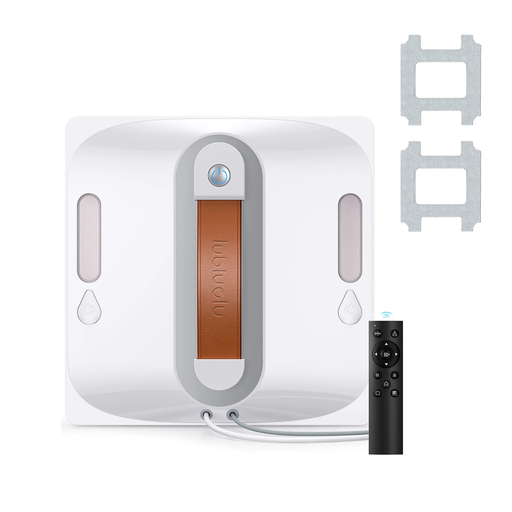
Why This Fits Their Persona: Ideal for users seeking a reliable, straightforward solution for standard windows in apartments or single-family homes. The remote control operation is intuitive and requires no app installation.
Addresses the problem of poor edge cleaning with a dedicated edge mode, activated by remote control, which specifically retraces the borders.
Comprehensive 8-stage safety system with a 30-minute emergency battery and anti-drop sensors. The 6,500 Pa suction power is sufficient for most types of dirt.
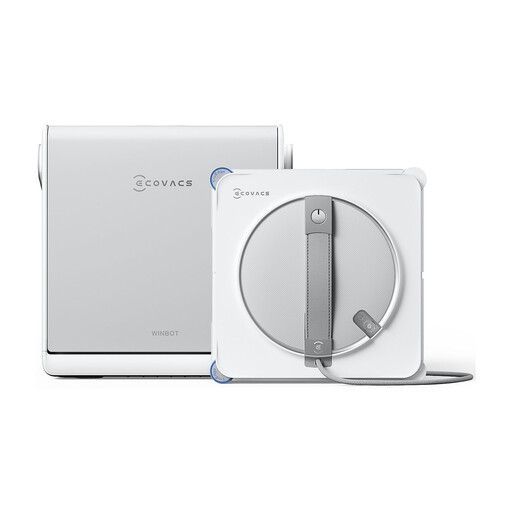
Why This Fits Their Persona: Designed for homeowners with floor-to-ceiling windows, glass facades, or conservatories who want a fully automated, all-in-one solution with minimal effort. The multi-functional station serves as a base, charging, and storage unit.
The TruEdge Technology is a direct response to unclean edges. It detects borders and extends the cleaning cloth to ensure a precise clean up to 1.1 cm from the edge.
The combination of 8,000 Pa suction power, WIN-SLAM 4.0 navigation, and a battery life of up to 110 minutes allows for the efficient cleaning of large areas. The 12-stage safety system offers comprehensive protection.
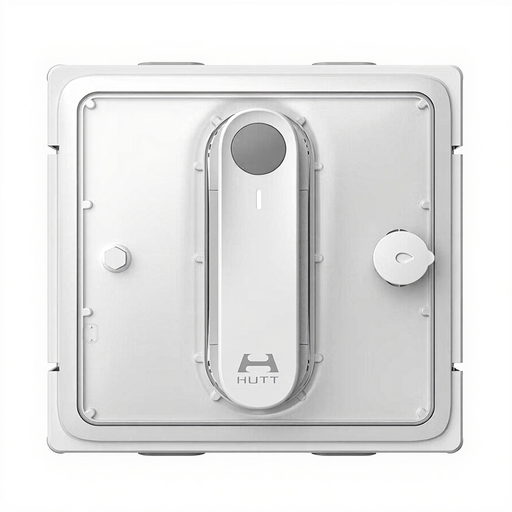
Why This Fits Their Persona: Suitable for users with large, continuous glass surfaces like those in conservatories or on sliding doors. The large 150 ml panoramic tank enables long, uninterrupted cleaning without constant refilling.
The device bypasses the trap of incomplete cleaning through targeted edge and obstacle detection. It cleans controllably up to the edge and automatically returns to its starting point upon completion.
The uniform spray function effectively dissolves the film of dirt, while the 3,800 Pa suction power ensures a secure grip. The simple, app-free operation makes the device ready to use out of the box.
We have compiled a complete, up-to-date list of products that fully meet these strict selection criteria and safety regulations.
Modern devices feature a multi-stage safety system. This includes strong suction power, an emergency battery that keeps the device on the window for 20-30 minutes during a power outage, and a robust safety rope that is fastened indoors. Sensors for detecting edges and obstacles further minimise the risk of falling. When used correctly according to the manufacturer's instructions, operation is very safe.
Yes, many window robots can also be used on other smooth, vertical surfaces such as frameless glass showers, mirrors, or large-format tiles. The key here is precise edge detection via optical sensors, which allows the robot to reliably identify the edge of the surface and not move past it. Check the manufacturer's specifications for the specific model.