
Lieferung heute & morgen

Qualitätsgarantie

Willkommens-Angebote freischalten: KOSTENLOSE Lieferung | Bis zu 80 % RABATT | Kostenlose 30-Tage-JoyPlus-Testphase
App herunterladen
By Joybuy Product Recommendation Officer, August 28, 2026
Manually cleaning windows with a squeegee and glass cleaner is a tedious and time-consuming task for many, especially with large glass surfaces, conservatories, or hard-to-reach windows. A window cleaning robot promises significant relief. However, the market is filled with devices whose marketing promises often suggest more than the technology can deliver. Before you make a purchasing decision, it's crucial to know the common pitfalls that lead to frustration and unsatisfactory cleaning results.
This guide will help you identify the crucial features and find a model that truly fits your needs.
In practice, many devices fail due to the same problems. Pay close attention to these three points to avoid a bad purchase:
To avoid the weaknesses mentioned above, you should check three core technical aspects before buying. These largely determine the performance, safety, and longevity of a window cleaning robot.
Suction power is the force with which the robot adheres to the window pane. A higher value in Pascals (Pa) generally means a stronger and more secure grip. For standard indoor windows, values around 3000 Pa may be sufficient. For large, high, or outdoor windows, models with 5000 Pa or more are a safer choice. Some advanced devices feature automatic air pressure compensation, which adjusts the suction power in real-time to ensure constant adhesion.
The type of navigation determines how efficiently and completely the cleaning is performed. Basic models often move in a random pattern, which leads to missed spots. High-quality devices use intelligent planning systems like WIN-SLAM 4.0 to clean systematically in paths. Precise edge detection is crucial. Look for special edge-cleaning modes or technologies explicitly designed to clean the window borders completely, ensuring a streak-free finish.
A window cleaning robot often works at heights, which is why safety must be the top priority. The following two features are non-negotiable:
Based on the criteria above, we have compiled a selection of devices suitable for different user profiles and their specific requirements.
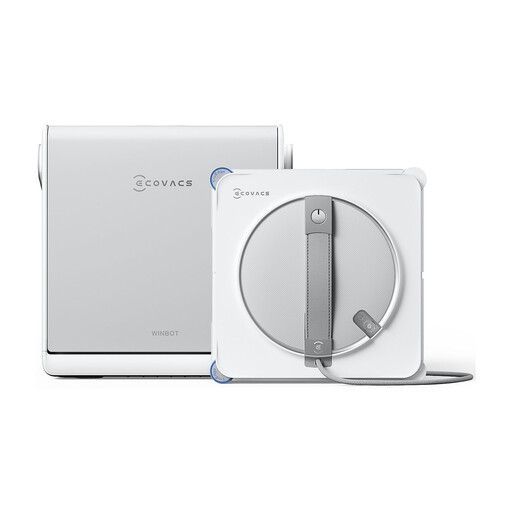
Why This Fits Their Persona: Ideal for owners of modern apartments or houses with large, floor-to-ceiling windows, where gapless cleaning right to the very corners is crucial.
According to the manufacturer, the TruEdge technology was specifically developed to address the common weakness of edge cleaning. It enables precise cleaning right up to the border, preventing dirty streaks.
Powerful suction of 8,000 Pa for a secure hold. Intelligent WIN-SLAM 4.0 path planning for systematic coverage.
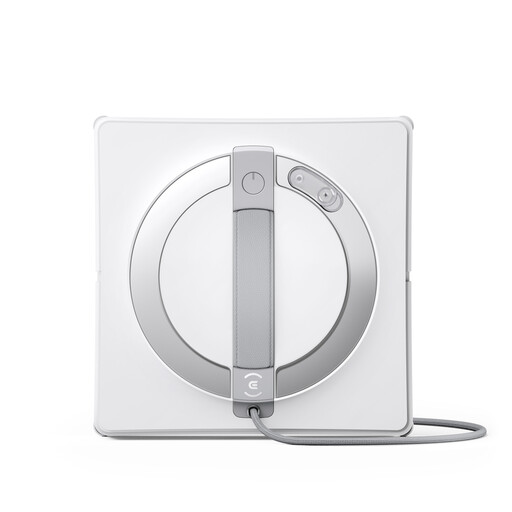
Why This Fits Their Persona: Perfect for users who seek maximum convenience and want to minimise the effort of storage, charging, and cable management. Ideal for regular use throughout an entire house.
The multifunctional station solves the problem of complicated handling. It serves as a charging station, storage case, and cable winder all in one, significantly simplifying its use.
6-in-1 multifunctional station for easy handling and storage. Three-nozzle wide-angle spray technology for even moisture distribution across the surface.
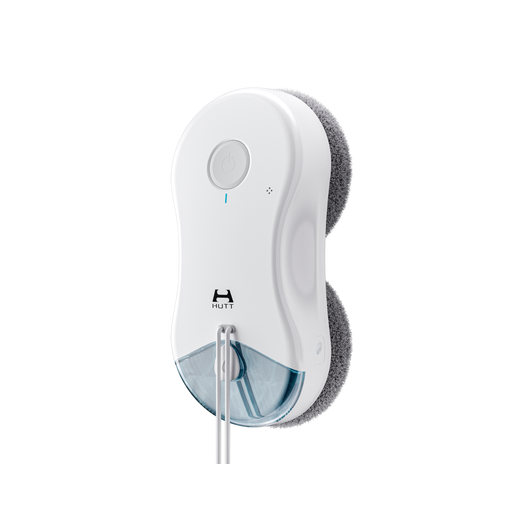
Why This Fits Their Persona: Suitable for users looking for a straightforward and functional solution for standard apartment windows, who can do without complex app features.
This model intentionally omits an app and is controlled via a remote. This avoids the pitfall of complicated software setup and makes the device ready to use right out of the box.
Solid suction power of up to 5,400 Pa. Includes a backup battery and safety tether for secure operation.
We have compiled a complete, up-to-date list of products that fully meet these strict selection criteria and safety requirements.
Yes, most modern window cleaning robots are suitable for use on various smooth, non-porous surfaces. Thanks to their edge detection sensors, they can also navigate safely on frameless glass surfaces like shower stalls or glass railings without falling. Likewise, cleaning large, smooth tiles in the bathroom or kitchen is usually no problem. However, always check the manufacturer's specifications for the specific model.
The cleaning time depends on the size of the window, the selected cleaning mode (e.g., quick or deep clean), and the efficiency of the navigation software. As a rough guideline, you can expect about 2 to 4 minutes per square metre. A standard 1.5 m? window would therefore be cleaned in approximately 3 to 6 minutes.
Maintenance is generally straightforward. After each use, the microfibre cleaning pads should be removed and washed (they are usually machine-washable). The dirty water tank, if present, must be emptied, and the fresh water tank should be refilled with a suitable glass cleaner, such as the Ecovacs WINBOT Cleaning Solution. Additionally, the robot's sensors and caterpillar treads should be regularly checked for dirt and cleaned with a soft cloth if necessary.