
Lieferung heute & morgen

Qualitätsgarantie

Willkommens-Angebote freischalten: KOSTENLOSE Lieferung | Bis zu 80 % RABATT | Kostenlose 30-Tage-JoyPlus-Testphase
App herunterladen
Cleaning windows, especially large glass facades, conservatories, or on upper floors, is often tedious, time-consuming, and not without risk. A window cleaning robot promises to make this task much easier. However, the market is filled with models whose marketing promises don't always hold up to reality. Before you make a purchase, it's crucial to understand the typical pitfalls that lead to unsatisfactory results and, ultimately, a bad investment.
As your Joybuy Product Recommendation Officer, I'm here to help you separate the wheat from the chaff. In this guide, we'll focus on the crucial technical features and show you how to avoid the most common flaws to find a device that truly delivers on its promises.
Many devices look convincing at first glance but reveal their weaknesses only in real-world use. Pay close attention to these three critical points to avoid disappointment:
To avoid the issues mentioned above, you should focus on the technical specifications that ensure reliable and thorough performance. A good automatic window cleaner is characterized by the following features.
The way a robot maps and travels across the surface to be cleaned is fundamental for a gap-free result. Look for devices with systematic route planning, often referred to as intelligent path planning (e.g., WIN-SLAM 4.0). Such systems create a map of the glass surface and clean it path by path, rather than moving chaotically. Equally important are precise edge sensors that allow the robot to work safely on frameless glass surfaces without falling. Modern devices combine this with special edge cleaning modes for a clean result right to the very edge.
A convincing cleaning result comes from the interplay of several components. An advanced robot for window cleaning should have the following properties:
Safety is the top priority. A reliable device features a multi-stage safety system. This includes a backup battery that keeps the robot on the window for at least 20-30 minutes in case of a power failure, as well as a robust safety tether with a carabiner for anchoring it indoors. Models like a window robot with a station offer additional convenience, as the station not only serves for storage and charging but also often simplifies cable management and acts as a secure base on the ground. Control via a window cleaning robot with an app also significantly enhances user convenience.
Based on the criteria above, we have identified a few models suitable for different users and their specific needs.
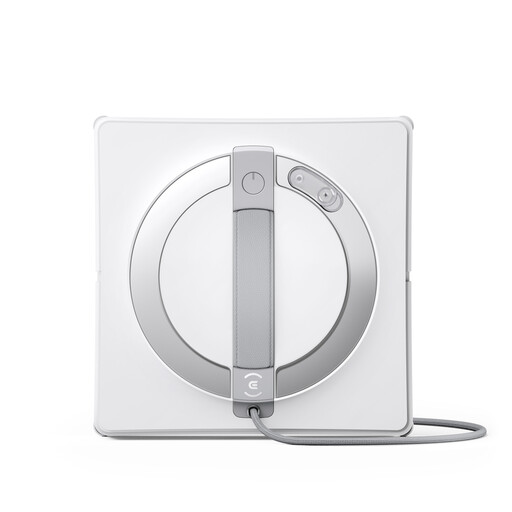
Why This Fits Their Persona: Ideal for tech-savvy users seeking a fully automatic, "all-in-one" solution. The multifunctional station reduces the manual effort of window cleaning to an absolute minimum.
The 6-in-1 station solves the problem of complicated handling by serving as a secure base, storage, and cable winder. The three-nozzle spray technology and WIN-SLAM 4.0 path planning prevent streaks and missed spots.
The all-in-one station is the key feature. It provides secure anchoring (800N suction force), automatic cable retraction, and an integrated battery for the robot, which greatly simplifies handling.
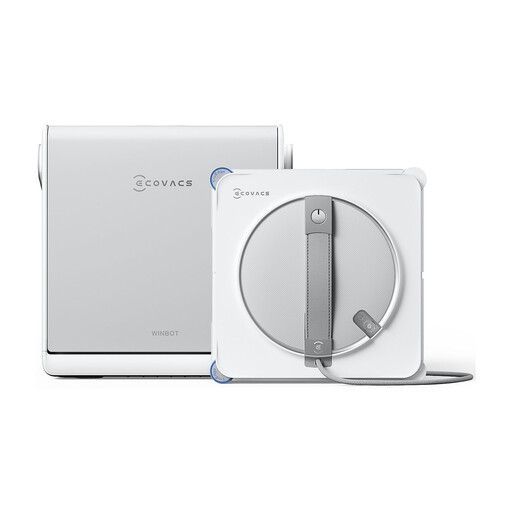
Why This Fits Their Persona: Perfect for owners of homes with modern architecture, conservatories, or hard-to-reach windows. The high suction power and special edge cleaning are designed for demanding tasks.
The proprietary TruEdge technology was specifically designed to overcome the pitfall of poor edge cleaning. It enables precise cleaning to within 1.1 cm of the edge and into corners.
The combination of very high suction power (8,000 Pa) and TruEdge edge cleaning technology delivers superior cleaning performance, which is particularly effective on heavily soiled or large surfaces. The long 110-minute battery life is also an advantage.
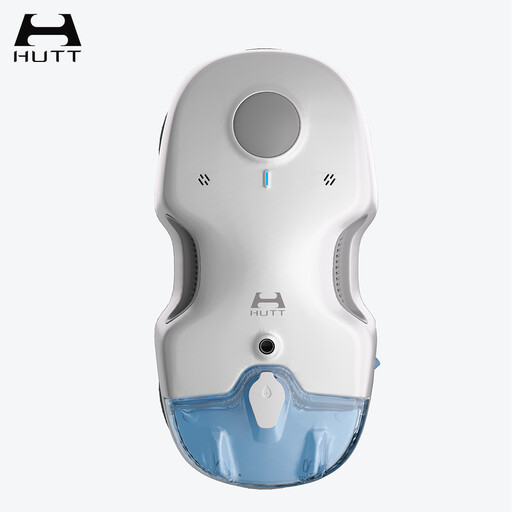
Why This Fits Their Persona: A great choice for users who want to try out the benefits of automatic window cleaning without investing in a premium model with a station. It offers core smart features at a more accessible price point.
The HUTTHINK 5.0 frequency control dynamically adjusts suction power, preventing adhesion problems. The HUTTSLAM 4.0 mapping system ensures systematic cleaning, and the 80 ml water tank reduces the need for manual intervention.
The adaptive suction adjustment is a standout feature in this class, enabling safe cleaning on various smooth surfaces like glass, tiles, or even wooden doors. The large 80 ml water tank capacity is also a plus.
While your robot takes care of the windows, you can find the right helpers for other areas of your home with us. We have compiled a comprehensive list of products that meet strict selection criteria and safety standards.
Modern window cleaning robots are equipped with a multi-stage safety system. The foundation is strong suction power that holds the device firmly to the window. In the event of a power outage, an integrated backup battery ensures the robot remains attached to the window for a typical duration of 20 to 30 minutes while sounding an alarm. The final and most important safeguard is the mandatory safety tether, which must be anchored to a fixed object indoors before operation. When used correctly, operation is very safe.
Whether a window cleaning robot leaves streaks largely depends on the quality of the device and its proper use. High-quality models minimize streaking through a combination of precise spray technology, systematic path planning, and clean microfiber cloths. To avoid streaks, you should wash the cleaning pads regularly, use only the cleaning fluid recommended by the manufacturer, and avoid operating the robot in direct, strong sunlight, as the liquid can dry too quickly. In many comparisons and reports covering window cleaning robot reviews, streak-free cleaning is cited as a crucial quality benchmark.
Yes, most modern devices are window cleaning robots with app control. This offers significant convenience. Through the app on your smartphone, you can start and stop the cleaning process, select different cleaning modes (e.g., intensive cleaning, spot cleaning for stubborn stains), and receive status notifications, such as when cleaning is complete or the battery needs charging.