
Lieferung heute & morgen

Qualitätsgarantie

Willkommens-Angebote freischalten: KOSTENLOSE Lieferung | Bis zu 80 % RABATT | Kostenlose 30-Tage-JoyPlus-Testphase
App herunterladen
Streak-free windows are what everyone wants, but the cleaning process, especially for large glass surfaces, conservatories, or hard-to-reach windows, is often tedious and time-consuming. An automatic window cleaner promises a solution. However, the market is crowded, and not every device delivers on its promises. Before you make a purchasing decision, it's crucial to understand the typical weaknesses that often only become apparent after the purchase, potentially leading to a bad investment.
This guide will show you the three most common pitfalls when buying a window cleaning robot and explain which technical features you should look for to make an informed decision.
Manufacturers often advertise with impressive images and features. Yet, some critical flaws only reveal themselves in everyday use.
Pitfall 1: Neglected Edges. Many promotional images show perfectly clean windows. In practice, however, numerous models leave an unsightly, dirty border of several centimetres along the edges and in the corners. This is due to a design that prevents the robot from reaching the entire glass surface. The result is an incomplete cleaning that requires manual touch-ups.
Pitfall 2: Poor Adhesion and Safety Risks. Insufficient suction power is not just an indicator of poor cleaning performance but also a significant safety risk. Devices with weak suction can lose their grip and fall, especially on slightly dirty or sloped surfaces. A backup battery and a robust safety tether are therefore not optional extras, but fundamental necessities.
Pitfall 3: Complex Follow-up and Maintenance. A robot should reduce work, not create more. Models without a well-designed station often require manual charging, attaching and washing the cloths, and cumbersome storage. This can quickly negate the time-saving advantage of automated cleaning.
To avoid the pitfalls mentioned above, you should check three core parameters before buying. These largely determine the performance, safety, and convenience of your future device.
A good window cleaning robot doesn't navigate randomly but systematically. Look for intelligent path-planning technologies like WIN-SLAM, which ensure the entire surface is cleaned efficiently and without gaps. Even more important is a specialised technology for edge-to-edge cleaning. Some advanced models use sensors to detect edges precisely and extend their cleaning cloths or brushes right to the very edge. This is the key to a truly streak-free result without dirty borders.
The suction power, measured in Pascals (Pa), is crucial for the robot's adhesion to the window. A value of at least 2800 Pa is considered a solid baseline for standard vertical windows. For larger, sloped, or heavily weather-exposed glass surfaces, models with 5000 Pa or more are a safer choice. A comprehensive safety system is essential and should include at least the following components:
The true convenience of a window cleaning robot is reflected in its degree of automation. A window robot with a station offers significant advantages here. A multi-function station serves not only as a charging base but often also as a storage solution for the device and its accessories. It ensures the robot is always ready for use.
Additionally, a window cleaner with app control allows for flexible cleaning adjustments. An app can be used to select various modes, such as a quick surface clean or an intensive deep clean for stubborn dirt.
Based on the criteria above, we have identified some models that are suitable for different user profiles and requirements.
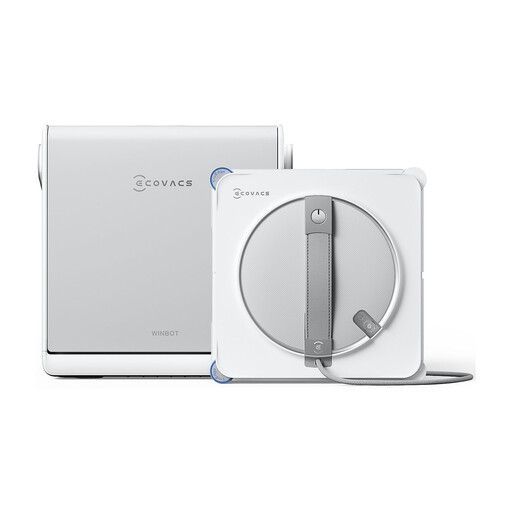
Why this model is a good fit: Ideal for homeowners with large, hard-to-reach glass fronts like conservatories or floor-to-ceiling windows who are looking for a fully automated solution. The multi-function station and intelligent navigation minimise manual effort.
The proprietary TruEdge technology is specifically designed for edge cleaning and counteracts dirty borders (Pitfall 1). The high suction power of 8,000 Pa and the 12-stage safety system ensure maximum adhesion and security (Pitfall 2). The multi-function station handles charging and storage, simplifying handling (Pitfall 3).
The combination of an all-in-one station, intelligent WIN-SLAM 4.0 navigation, and specialised edge-cleaning technology offers a high degree of automation and cleaning quality.
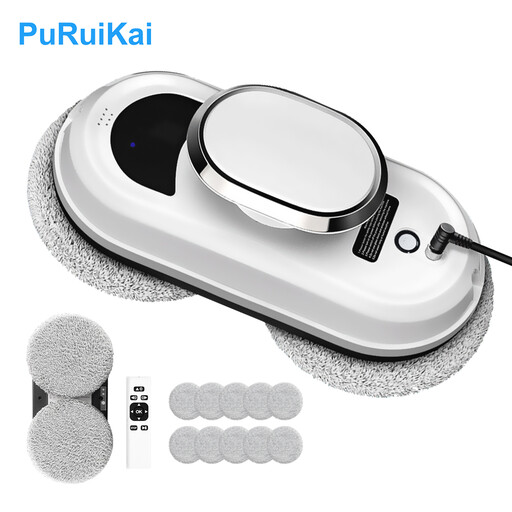
Why this model is a good fit: A solid choice for users in apartments or houses with standard windows who want to try automated cleaning without a large initial investment. Its simple operation makes it easy to get started.
The dual suction system with 2800 Pa per side ensures reliable adhesion on vertical glass surfaces, addressing the safety risk (Pitfall 2). A backup battery and safety tether are also included. Operation via remote control is simple and avoids the hassle of a complex app setup (Pitfall 3).
Offers the fundamental features of an automatic window cleaner with a focus on safety and ease of use at an accessible price point.
We have compiled a complete, up-to-date list of products that fully meet these strict selection criteria and safety regulations.
Modern window cleaning robots are equipped with multi-stage safety systems. These include strong suction power that holds the device to the window, an integrated backup battery that maintains adhesion for a period of time during a power outage, and a physical safety tether that prevents a fall. When used correctly according to the manufacturer's instructions, operation is very safe.
The quality of edge cleaning varies significantly between models. Basic devices often leave a narrow, uncleaned strip. High-quality models feature special technologies, such as extendable cleaning pads or an optimised shape, to maximise edge-to-edge cleaning and reach corners as effectively as possible. Check the product description for terms like "Edge Cleaning" or similar phrases.
Many manufacturers recommend using their own cleaning solution, which is formulated for the materials of the cleaning cloths and the surfaces. In some cases, distilled water can also be used to prevent limescale buildup in the device. The use of aggressive or foaming household cleaners is generally not recommended, as they can clog the nozzles or damage the robot's surface. Always follow the manufacturer's instructions.