
Lieferung heute & morgen

Qualitätsgarantie

Willkommens-Angebote freischalten: KOSTENLOSE Lieferung | Bis zu 80 % RABATT | Kostenlose 30-Tage-JoyPlus-Testphase
App herunterladen
By a Joybuy Product Recommendation Officer
Manually cleaning windows is a tedious, time-consuming, and, for high windows, even risky task for many people. An automatic window cleaner promises a solution: streak-free cleanliness at the touch of a button. But the market is flooded with devices making bold advertising claims. Not every smart window cleaner delivers on its promises. Before you buy a window robot, it's crucial to understand the common weaknesses that often only become apparent after the purchase.
This guide will walk you through the three most common pitfalls and explain which technical features you should really look for to make an informed decision.
Many devices look impressive at first glance, but a closer look often reveals flaws that severely limit their usefulness.
To avoid these problems, you should base your choice on objective technical parameters. Here are the three most important criteria for a reliable window cleaning robot.
High suction power is fundamental for the robot to adhere securely to the vertical glass surface. Values between 2800 Pa and 8000 Pa are common. However, the interplay with other safety features is what's crucial:
A good window cleaning robot doesn't clean randomly; it cleans systematically. Look for the following features:
Modern sensors are the robot's brain. They detect obstacles like window handles and, crucially, the edges of frameless windows to prevent falls. There are two common control options:
Based on the criteria above, we have identified several models that represent a considered choice for different user profiles and requirements.
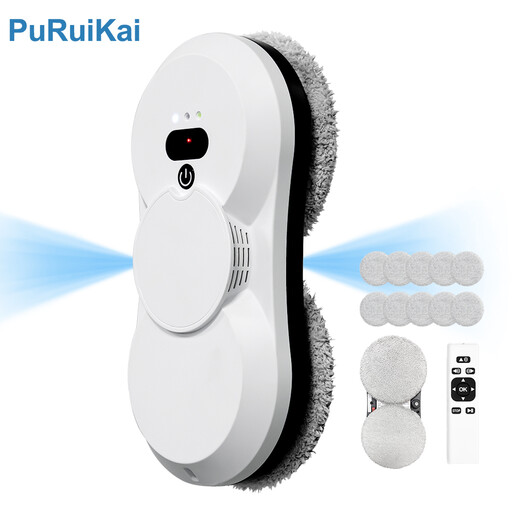
Why This Fits Their Persona: Ideal for users who want to try out the technology without a large investment. It's well-suited for standard windows in apartments and houses and is easily controlled via remote.
The device features automatic edge detection and intelligent path planning to avoid the "Forgotten Edge" trap. Its safety package, with a 30-min backup battery and safety rope, addresses fundamental safety needs.
Features an automatic spray function, which is not a given in this price range. The remote control operation is straightforward and requires no app installation.
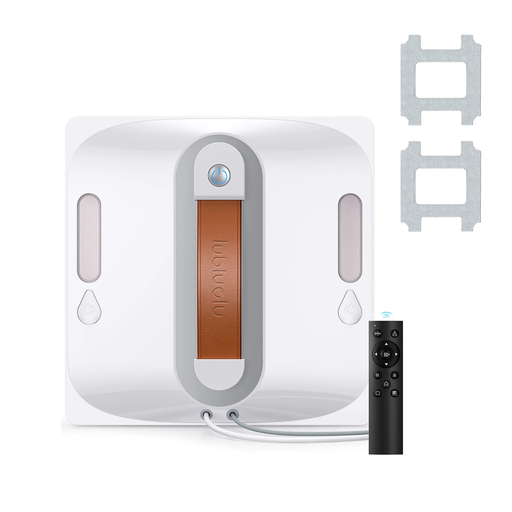
Why This Fits Their Persona: Perfect for homeowners with conservatories, floor-to-ceiling windows, or hard-to-access glass facades. Safety and thorough, corner-to-corner cleaning are the top priorities here.
Addresses the safety issue with an 8-layer protection system, including strong suction (6500 Pa), a backup battery, and anti-fall sensors. The dedicated "Edge Cleaning" mode is specifically designed to clean borders with precision.
Offers four specialised cleaning modes (including deep cleaning) for different levels of dirt. The combination of N- and Z-shaped cleaning paths ensures gap-free coverage, making it an excellent window cleaning robot for large windows.
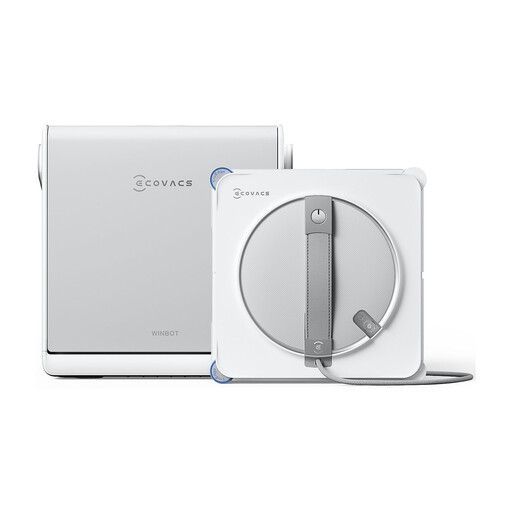
Why This Fits Their Persona: For users seeking a comprehensive all-in-one solution who value cutting-edge technology, maximum automation, and convenience. The multi-functional station acts as a control centre, charging dock, and storage case.
The proprietary TruEdge Technology cleans edges with high precision. The 12-stage protection system, with 8000 Pa of suction power and WIN-SLAM 4.0 navigation, ensures maximum safety and gap-free, efficient cleaning without constant supervision.
The innovative multi-functional station with an integrated battery allows for up to 110 minutes of operation. Seven different cleaning modes offer the right setting for any situation. A flagship representative of the Ecovacs Winbot series.
We have compiled a complete, up-to-date list of products that fully meet these strict selection criteria and rigorous safety standards.
Modern window cleaning robots are equipped with multi-stage safety systems. These include strong suction power to hold the device on the glass, a backup battery to prevent an immediate fall during a power outage, and a physical safety rope that is attached to a fixed point indoors. When used correctly according to the manufacturer's instructions, operation is very safe.
Yes, many models are designed for this. They use special edge detection sensors (often laser or infrared) to identify the end of the glass surface and change direction in time. It is important to check the product specifications to confirm if the device is explicitly suitable for frameless surfaces like glass shower doors or balustrades.
The cleaning time depends on the size of the window, the selected cleaning mode (e.g., fast or deep clean), and the robot's speed. As a rough guide, most devices take about 2 to 4 minutes per square metre. A standard 1.5 m? window would therefore be cleaned in approximately 3 to 6 minutes.