
Lieferung heute & morgen

Qualitätsgarantie

Willkommens-Angebote freischalten: KOSTENLOSE Lieferung | Bis zu 80 % RABATT | Kostenlose 30-Tage-JoyPlus-Testphase
App herunterladen
Large glass facades, conservatories, or hard-to-reach skylights are architecturally appealing, but cleaning them is often tedious and time-consuming. An automatic window cleaner promises a solution. However, the market offers a multitude of models whose marketing promises don't always hold up in practice. As your Joybuy Product Recommendation Officer, I'll help you identify the crucial features and make an informed decision based on facts rather than advertising slogans.
Before you invest, you should be aware of the common pitfalls that can lead to disappointment and poor cleaning results.
To avoid a bad purchase, you should base your selection on objective, technical parameters. These three criteria are decisive for the performance and safety of a window cleaning robot.
A robot for window cleaning often operates at height. Therefore, a power outage must never lead to a fall. Pay attention to two key features:
A robot's intelligence is demonstrated by its navigation. Budget models often move randomly, which leads to missed spots and inefficient cleaning. In contrast, a high-quality, smart glass cleaner uses systematic path planning. Intelligent algorithms (e.g., Z- or N-patterns) ensure that the entire surface is covered without gaps. Edge detection sensors are crucial for the device to navigate safely even on frameless glass surfaces. Models with window cleaning robot with app control often offer additional flexibility in selecting cleaning modes.
The actual cleaning performance depends on the mechanics. Square models are often better suited for corner cleaning. When it comes to spraying, you should look for advanced systems. An ultrasonic spray function atomises water or cleaning solution into a fine mist that evenly moistens the surface without causing drips or streaks. This effectively dissolves dirt without oversaturating the cleaning pads.
Instead of making a one-size-fits-all recommendation, we have identified models tailored to specific user profiles and their needs.
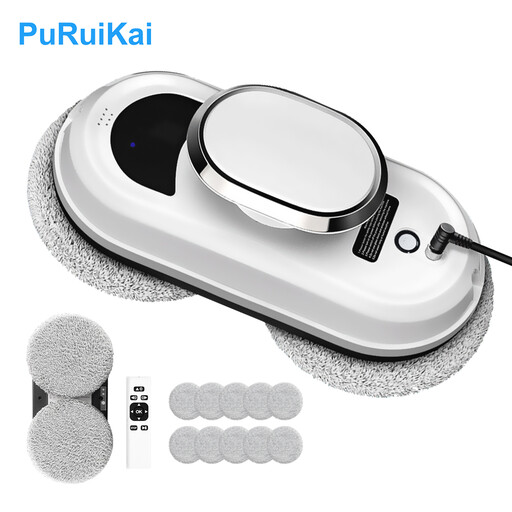
Why This Fits Their Persona: This model offers the core functions of an automatic window cleaner at an accessible price. It is suitable for users who are looking for basic automation for standard windows and can do without advanced smart features.
The device features intelligent path planning and a remote control, thereby avoiding the trap of purely random and inefficient cleaning. The spraying is done manually, which requires more effort but avoids the risk of streaks caused by a poor automatic system.
Solid basic features including a backup battery and safety tether. The remote control allows for simple operation without being forced to use an app.
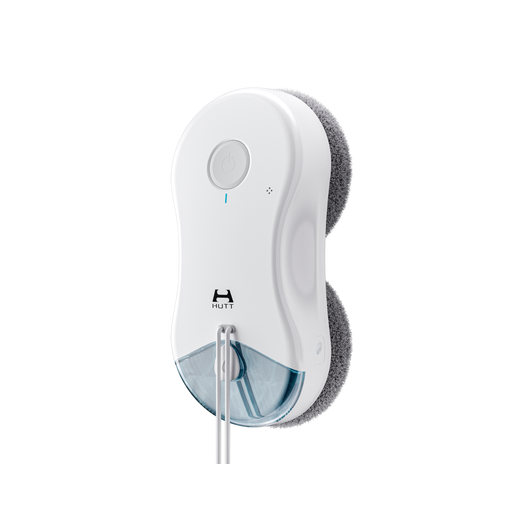
Why This Fits Their Persona: Ideal for homeowners seeking a reliable and thorough clean for various glass surfaces like windows, mirrors, or tiled walls. The device is designed for effective cleaning right to the corners and is easy to operate.
This model specifically addresses the trap of poor edge cleaning. According to the manufacturer, it is designed to clean reliably right up to the edge. The suction power of up to 5,400 Pa is sufficiently dimensioned for most applications without advertising unrealistic values.
Features an 80 ml water tank and is controlled by a remote, allowing for a straightforward setup without a smartphone. The cleaning speed of under 3 minutes per square metre is efficient.

Why This Fits Their Persona: This ECOVACS window robot is designed for users who value high performance, intelligent features, and convenient control. It is particularly suitable for large, hard-to-reach glass surfaces where maximum cleaning quality is required.
The device counters the trap of inadequate spraying with an advanced ultrasonic dual-spray system. This ensures a fine and even mist. The WIN-SLAM 5.0 navigation guarantees systematic and thorough cleaning, avoiding inefficient, random patterns.
High suction power of 7500 Pa for a secure grip. Intelligent control and monitoring via app (window cleaning robot with app control). The edge cleaning technology ensures clean borders.
We've compiled a complete, up-to-date list of products that fully meet these strict selection criteria and rigorous safety standards.
1. How safe is a window cleaning robot on high or tilted windows? Safety is a priority for these devices. All reputable models have a backup battery that keeps the device on the window for at least 20 minutes in case of a power failure. Additionally, using the supplied safety tether, which is secured indoors, is mandatory. It acts as a final failsafe and prevents a fall. However, always check the manufacturer's specifications for the maximum tilt angle.
2. Do window cleaning robots also clean corners and edges completely? This is one of the most critical points. Square models have a design advantage as they can get closer to corners and edges than round devices. Modern robots also use special edge detection sensors and algorithms to navigate specifically along the window frame, achieving the most complete coverage possible. However, 100% coverage of every corner may vary depending on the window frame and seals.
3. Can a window cleaning robot also be used on frameless windows or tiles? Yes, most modern window cleaning robots can also be used on frameless glass surfaces such as shower enclosures or glass railings. Their sensors detect the end of the surface and prompt the robot to change direction. Many models are also suitable for cleaning smooth, large-format tiles in the bathroom or kitchen, as long as the grout lines are not too deep or wide, as this could compromise the suction.