
Lieferung heute & morgen

Qualitätsgarantie

Willkommens-Angebote freischalten: KOSTENLOSE Lieferung | Bis zu 80 % RABATT | Kostenlose 30-Tage-JoyPlus-Testphase
App herunterladen
Streak-free windows without a ladder and bucket – that's the promise of automatic window cleaners. A window cleaning robot seems like the ideal solution, especially for large glass fronts, conservatories, or hard-to-reach windows on upper floors. However, the market is confusing, and not every device delivers what the advertising promises. Before you make a purchasing decision, it's crucial to know the common pitfalls that often lead to disappointment and unnecessary expense.
This guide will show you what to look for to avoid the most common mistakes and find a model that truly fits your needs.
Many devices look similar at first glance, but the differences are in the details. These three points are often glossed over in marketing and lead to problems in practice:
To avoid these problems, you should check three core technical features before buying. These define the performance and reliability of a glass cleaning robot in everyday use.
Suction power is the most important safety feature. It ensures that the robot adheres firmly to the vertical glass surface.
Also, look for a reliable safety package. This should always include an uninterruptible power supply (UPS) in the form of an emergency battery that keeps the device on the window for at least 20 minutes in case of a power failure. A sturdy safety tether with a carabiner is also essential to protect the device from a long fall in the worst-case scenario.
The way the robot cleans determines the final result. There are two main systems:
A window cleaning robot with a spray function has a clear advantage here. It moistens the pane directly before the wiping process, which significantly improves cleaning performance and optimises the use of cleaning solution.
Navigation should be systematic. Technologies like WIN-SLAM enable map-based cleaning, where the robot knows its position, follows paths precisely, and returns to its starting point after the job is done. Reliable edge detection is crucial for the robot to work safely on frameless windows.
Not every automatic window cleaner is suitable for every glass surface. Check the manufacturer's specifications on the following points:
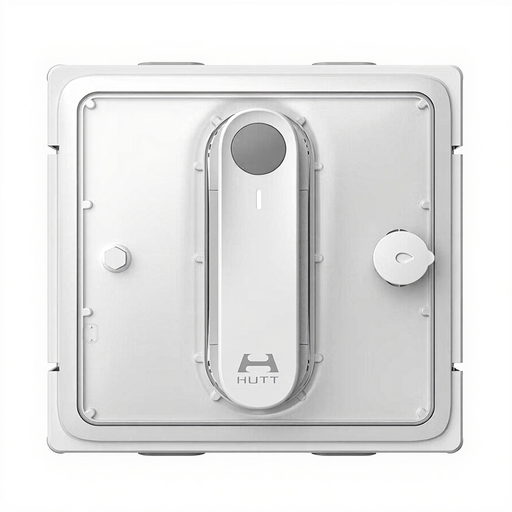
Why This Fits Their Persona: Ideal for owners of conservatories or homes with large, continuous window fronts. The large 150 ml water tank allows for cleaning up to 70-80 m? without refilling, significantly speeding up the cleaning process and minimising manual effort.
The device counters streaking with an even spray function that dissolves dirt before wiping. The systematic path planning and edge detection reduce the risk of missed spots and unclean edges.
The combination of a large water tank and a suction power of 3800 Pa (according to the manufacturer) ensures long-lasting and safe cleaning, even on extensive glass surfaces.

Why This Fits Their Persona: Perfect for tech-savvy users who want seamless integration into their smart home. The app control and advanced WIN-SLAM 5.0 navigation offer a high degree of control and automation.
This model avoids the trap of inefficient navigation with its WIN-SLAM 5.0 path planning system. It ensures systematic and complete coverage, while the app provides an intuitive and modern user interface instead of a clunky remote control.
The very high suction power of 7500 Pa (according to the manufacturer) offers maximum safety. The ultrasonic dual-nozzle spray function ensures efficient and even moistening of the surface.
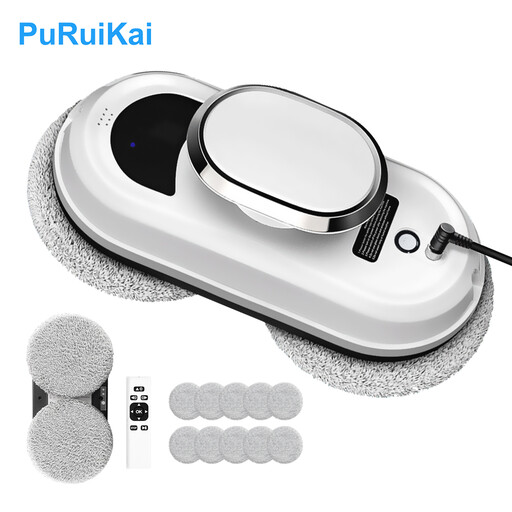
Why This Fits Their Persona: A great choice for users who want to try out the benefits of a window cleaning robot without investing a premium budget. It offers core features like remote control and automatic route planning at an accessible price.
This model addresses the safety risk even in the entry-level segment. It features a backup battery with a 20-minute buffer (according to the manufacturer) and a safety tether, providing the basic precautions against a fall.
Offers solid value for money. The 2800 Pa suction power is sufficient for standard windows, and the remote control operation is straightforward and requires no app installation.
We have compiled a complete, up-to-date list of products that fully meet these strict selection criteria and safety standards.
The integrated battery is not for cordless operation but serves as an uninterruptible power supply (UPS). It is only activated during a power outage to keep the robot on the window. Most models offer a buffer time of 20 to 30 minutes. This gives you enough time to safely remove the robot from the pane. The exact duration is specified in the technical data of the respective product.
That depends on the model. For frameless windows (e.g., glass partitions), the robot needs reliable fall-prevention sensors for edge detection. For sloped windows (e.g., skylights), particularly high suction power is required to counteract gravity. Be sure to check the manufacturer's specifications regarding suitability for such special applications before purchasing.
The microfibre cloths are generally washable and reusable. For an optimal, streak-free result, it is recommended to change or wash the cloths after each major cleaning session (e.g., after cleaning all windows on one floor). For heavily soiled windows, it may also be useful to change them during the cleaning process. It is advisable to always have a set of clean replacement cloths on hand.