
Lieferung heute & morgen

Qualitätsgarantie

Willkommens-Angebote freischalten: KOSTENLOSE Lieferung | Bis zu 80 % RABATT | Kostenlose 30-Tage-JoyPlus-Testphase
App herunterladen
By the Joybuy Product Recommendation Officer
A window-cleaning robot can make cleaning large glass surfaces easier, but it does not automatically eliminate every manual task. Technical details are particularly important for high windows, conservatories and hard-to-reach exterior panes. Focusing solely on suction power or an advertised spray function can quickly mean overlooking important limitations.
This buying guide explains what households, offices and commercial users in Germany should consider before making a purchase. Alongside window-cleaning robots, it also covers suitable glass cleaners and window-cleaning products.
Specifications such as 2,500, 5,500 or 7,500 Pa describe how firmly the device adheres to the glass pane. On their own, they say little about how effectively the robot removes dirt, grease or dried water marks. Cleaning pads, contact pressure, movement control and cleaning solution are also important.
On heavily dust-covered panes, an automatic window cleaner may initially spread the dirt around. A dry pre-clean or a clean first wiping pass is therefore often advisable.
Many glass-cleaning robots require a continuous power supply while operating. In such cases, the integrated battery serves solely as an emergency power supply in the event of a power failure. Before purchasing, check the cable length, safety tether and the position of the power outlet.
For example, the ECOVACS WINBOT W2 PRO Omni uses a two-in-one integrated cable combining the power and safety lines. According to the product specifications, the system includes a 5.5-metre safety tether. The device is designed for a 220–240 V power supply at 50/60 Hz.
A window-cleaning robot with a spray function dispenses liquid as it moves. However, excessive moisture can affect adhesion and movement control. Too little liquid may result in uneven cleaning.
The key consideration is whether the cleaning solution is approved for the specific device. For the WINBOT W2 PRO Omni, ECOVACS states in its product specifications that a recommended cleaning solution should be used and that the device has a 60 ml tank. Household cleaners should not be poured into the tank without first checking their compatibility.
A window-cleaning robot should only be used on suitable, intact glass panes. Cracks, chips, heavily uneven surfaces and wood or metal surfaces may compromise adhesion.
Pay attention to:
The safety tether must be secured to a stable point inside the building. It cannot prevent every type of damage, but it can limit the risk of the device falling. Children and pets should keep their distance while the robot is operating.
A glass-cleaning robot should cover the surface systematically. Systems with intelligent route planning can reduce unnecessary repetition. Around frames, narrow edges and corners, the quality of the sensors and the shape of the cleaning pads are particularly important.
According to the product descriptions, ECOVACS models use WIN-SLAM navigation. The WINBOT W2 PRO Omni is listed with WIN-SLAM 4.0, while the ECOVACS MINI 2 uses WIN-SLAM 5.0. These specifications describe the route-planning system, but they do not guarantee identical results on every type of window.
A window-cleaning robot with app control allows users, depending on the model, to select cleaning modes and monitor the cleaning process. Check whether the app is compatible with your smartphone and whether an active internet connection is required.
Some models alternatively include a remote control. Ongoing costs should also include replacement pads, cleaning solution and any wear parts. Cleaning pads should be inspected after every use and cleaned according to the manufacturer’s instructions.
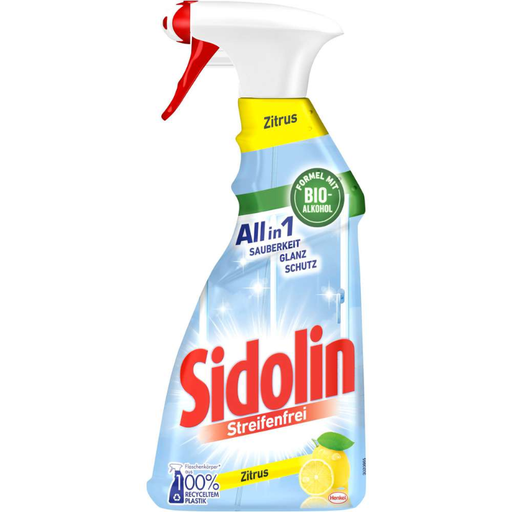
Why does it suit this profile? For households that prefer to clean manually at first or want to complement a window-cleaning robot with a suitable glass cleaner.
The spray bottle allows for precise, economical dosing. According to the product description, the cleaner is suitable for windows, mirrors and other smooth glass surfaces.
500 ml spray bottle, bio-alcohol according to the manufacturer’s specifications, and application with a dry, lint-free cloth.
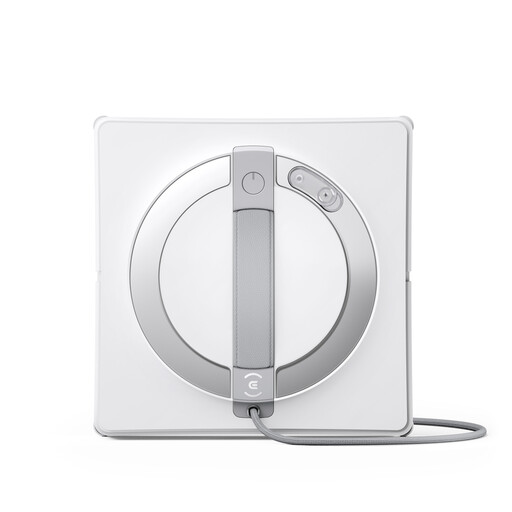
Why does it suit this profile? For large window surfaces and users looking to combine app control, route planning and a mobile station.
The product description lists a 5.5-metre safety tether, twelve safety functions and a three-nozzle spray-misting system. The safety instructions nevertheless remain binding.
WIN-SLAM 4.0, the ECOVACS HOME app, a 6-in-1 station and suction power of up to 5,500 Pa according to the manufacturer’s specifications.
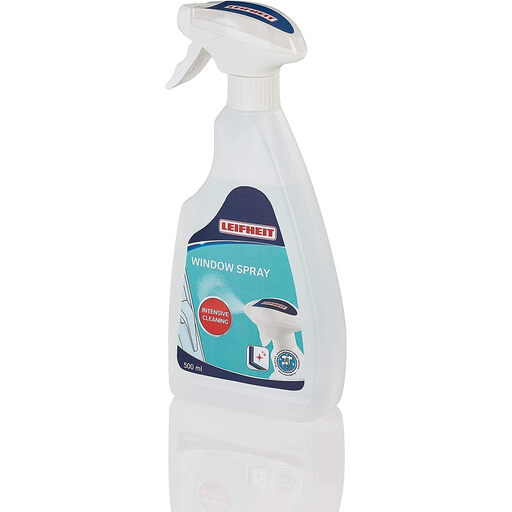
Why does it suit this profile? For users who want the flexibility to apply a spray-bottle window cleaner with a cloth, squeegee or window vacuum.
Its use is not tied to a robot. This makes it possible to clean delicate or framed surfaces where a device must not be used.
500 ml pressure sprayer, refillable according to the manufacturer’s specifications and suitable for windows and mirrors. Do not mix with other cleaners.

Why does it suit this profile? For homes, offices, conservatories and users who prefer a more compact device with app control.
According to the product description, the device is intended for clean, intact glass surfaces. The safety tether, power connection and cleaning pads must be checked before every use.
According to the product description: 7,500 Pa suction power, ultrasonic dual nozzle, WIN-SLAM 5.0 and dimensions of approximately 21.5 × 21.5 × 5.5 cm.
We have put together an up-to-date selection of products that meet these buying criteria and take Germany’s applicable safety guidance into account.
For streak-free window cleaning, the amount of product, cloth quality and drying process matter just as much as the robot itself. Do not spray glass cleaner directly onto sensitive electronics, screens or painted surfaces. According to the product description, Frosch Glass Cleaning Spray is not intended for TFT or LCD screens or painted wood.
For frequent use, larger containers such as Jeden Tag Glass Cleaner 1 Liter or Viss POWER + SHINE Glass & Surfaces 750 ml can be practical. A space-saving alternative is EZEE Tabs Glass Cleaner: according to the product description, one tablet is dissolved in water. Follow the product label for the precise dosage.
Also pay attention to ingredients and warning information. According to the product specifications, Sidolin contains benzisothiazolinone, which can cause allergic reactions. Cleaning products should be kept out of children’s reach and used in accordance with the label instructions.
That depends on the specific model, the window construction and how securely the device can be fastened. A safety tether must always be used. The robot should not be operated in rain, high humidity, on damaged glass or on heavily soiled surfaces. For hard-to-reach exterior windows, also check that the power cable and safety tether are long enough.
There is no reliable way to specify a fixed service life. It depends on frequency of use, maintenance, storage conditions and the replacement of cleaning pads. After every cleaning cycle, inspect the pads, suction surface, cable and housing. Store the device in a dry place and disconnect it from the power supply before carrying out any maintenance.
In addition to the purchase price, you will incur costs for electricity, cleaning solution, cleaning pads and, where applicable, replacement parts. For a window-cleaning robot with a spray function, tank capacity is an important consideration. Anyone who regularly cleans large surfaces should compare consumables and the availability of compatible pads before buying.