
Lieferung heute & morgen

Qualitätsgarantie

Willkommens-Angebote freischalten: KOSTENLOSE Lieferung | Bis zu 80 % RABATT | Kostenlose 30-Tage-JoyPlus-Testphase
App herunterladen
A window cleaning robot can make cleaning large glass surfaces easier, particularly in homes with floor-to-ceiling windows, tall panes or hard-to-reach exterior surfaces. However, not every model is right for every home. Claims such as ‘powerful suction’, ‘intelligent navigation’ or ‘automatic spraying’ describe individual features, but only tell part of the story.
What matters is whether the robot is suitable for your glass surfaces, power supply and preferred level of convenience. If you don’t check the technical details carefully, you could end up with a model that isn’t suitable for certain windows, or whose safety features don’t meet your needs.
A figure in pascals, such as 3,800 Pa or 5,400 Pa, describes suction power under specific conditions. It doesn’t tell you whether the robot is suitable for your surface. Dust, moisture, grease, damaged glass and uneven surfaces can all affect how well it holds on.
So, also check:
An automatic window cleaner usually needs to be set up correctly. The safety rope must be secured to a stable anchor point. Cables must not create a trip hazard, and children and pets should be kept away while the robot is in use.
Edge and obstacle detection also don’t mean the robot is suitable for damaged, wet or unsuitable surfaces. Always follow the instructions and safety guidance in the manual.
A window cleaning robot with a spray function dispenses liquid while it’s in use. This can make cleaning easier, but it won’t automatically remove every kind of dirt. Stubborn deposits may need to be cleaned off first. Also, only use liquids recommended by the manufacturer, provided the tank is designed for them.
A higher Pa figure is a useful technical comparison, but it isn’t proof of quality on its own. Check that the robot is suitable for the specific surface and has a safety rope and protection against power cuts.
For example, ECOVACS says the WINBOT W2 OMNI offers suction power of up to 5,500 Pa, a 5.5 m safety rope and multi-stage protection. The HUTT DDC55 Pro is listed with suction power of up to 5,400 Pa, a 4.5 m rope and protection against power cuts. These figures are based on the manufacturers’ specifications, so check them against the relevant user manual.
If you’re cleaning large windows, mirrors or tiles, it’s worth checking how the window cleaning robot handles edges and obstacles. Edge control can help it cover more of the surface, but it doesn’t remove the need to check for frames, glazing bars, stickers or changes in level.
If you’re looking for a robot for tall windows, also consider the power cable’s reach, the position of the socket and how to secure the safety rope. A window cleaning robot won’t operate without a cable if its battery is only intended as an emergency power reserve.
Tank size affects how often you’ll need to refill it. The HUTT W9 has a stated capacity of 150 ml, while the HUTT DDC55 Pro holds 80 ml. A larger tank can be useful for bigger surfaces, but it doesn’t automatically mean better cleaning performance.
Also consider the controls:
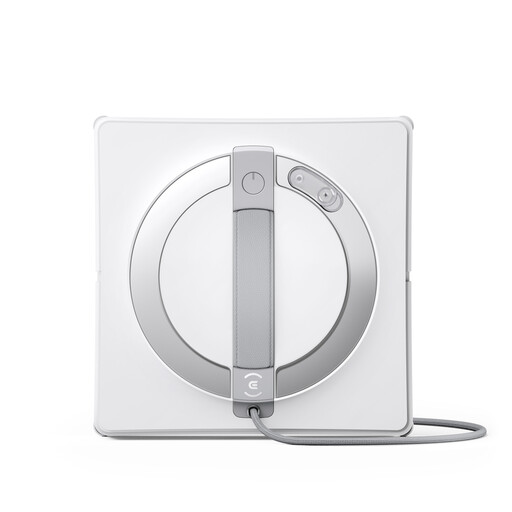
Why this product suits this type of user: The multifunction station, app control and Win-SLAM-4.0 route planning make it a good fit for homes with large glass surfaces and users who like a structured approach to cleaning.
The product description lists a 5.5 m safety rope, a three-nozzle spray system and twelve safety features. The surface must still be suitable and undamaged.
App control, a 6-in-1 station, a three-nozzle spray head and charging while in use, according to the product details.
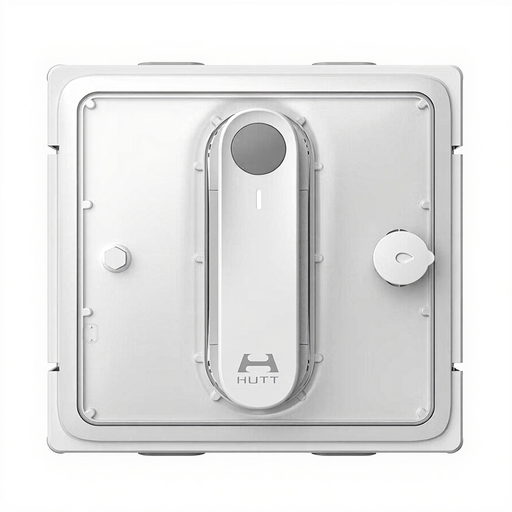
Why this product suits this type of user: This model combines a 150 ml tank with edge and obstacle detection, plus an optional remote control, making it a good introduction to automatic window cleaning.
The stated tank capacity, detection features and control options make it easier to understand what the robot offers than a general claim that it works automatically.
150 ml water tank, returns to its starting point according to the description, and a remote control.
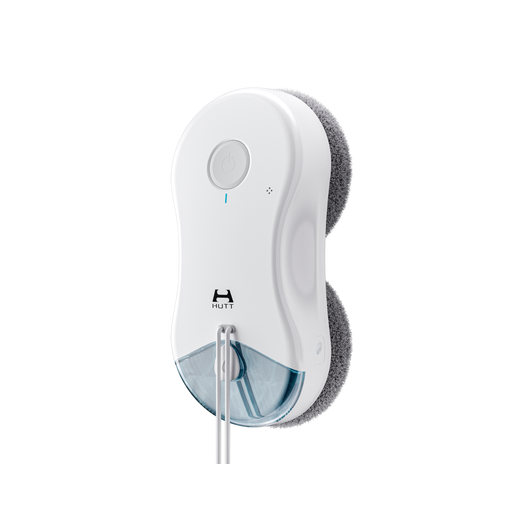
Why this product suits this type of user: For mirrors, tiles, shower glass and standard window panes, the controls on the robot or remote control are handy if you’d rather not use an app.
The manufacturer recommends a maximum incline of 60 degrees. This means sloping roof windows are not suitable and shouldn’t be used as a test.
Suction power of up to 5,400 Pa, an 80 ml tank, edge cleaning and a stated operating noise level of 68 dB.

Why this product suits this type of user: If you don’t need an electric glass-cleaning robot, this manual option can be used on windows, frames and mirrors, as well as in hard-to-reach spots.
There’s no battery, grip or power-cut issue to consider. However, reach depends on your height and a Click System extension pole, which is sold separately.
32 cm silicone squeegee, washable microfibre cover and three adjustable cleaning angles.
We’ve put together a complete, regularly updated list of products that meet these strict selection criteria and fully comply with the safety regulations in force in the EU.
Before starting a window cleaning robot, you should:
For delicate or small surfaces, a window squeegee or window cleaner may be the simpler option. If you have very tall windows, also check that the robot is approved for the specific height, angle and glass surface.
Place the robot on a suitable, smooth surface and attach the safety rope to a stable anchor point. Depending on the model, it may need to be connected to a power supply. Before starting, check the cleaning pad, tank, cable and grip.
Its lifespan depends on how often it’s used, how well it’s maintained, and the condition of its cleaning pads, battery and motor. It wouldn’t be reliable to give a fixed lifespan without a specific claim from the manufacturer. Regularly cleaning the contact surfaces and storing the robot as directed can help keep it safe to use.
Depending on the model, you may need to budget for electricity, cleaning solution and replacement pads, on top of the purchase price. Models with larger tanks may need refilling less often. Also check whether replacement parts such as cleaning pads, nozzles and batteries are available.