
Lieferung heute & morgen

Qualitätsgarantie

Willkommens-Angebote freischalten: KOSTENLOSE Lieferung | Bis zu 80 % RABATT | Kostenlose 30-Tage-JoyPlus-Testphase
App herunterladen
Large windows, conservatories and hard-to-reach exterior surfaces can be cleaned more conveniently with a window-cleaning robot than with a bucket, ladder and window wiper. However, not every model is suitable for every glass surface. High suction power alone says little about whether a device will adhere securely, detect edges or work with the available power supply.
The Joybuy Product Recommendation Officer filters the most important product details and highlights what households, offices and tech-savvy shoppers should look for when buying.
Figures such as 5,400, 7,500 or 8,000 Pa may sound meaningful. In practice, however, adhesion also depends on clean, smooth glass, the seal, the surface and the power supply. A window-cleaning robot is generally not designed for cracked, damaged, uneven or unsuitable surfaces.
Even the highest stated suction power does not replace safety precautions. A safety rope must be attached to a secure anchor point, particularly when cleaning exterior windows and glass surfaces at height.
A window-cleaning robot with a spray function can distribute cleaning fluid while operating. However, this does not automatically mean that heavy dirt can be removed without preparation. Dust, sand and larger particles can put strain on the cleaning cloths or leave marks on the glass.
The tank capacity, the type of nozzles and the availability of suitable cleaning solutions are therefore important. Product specifications may list tanks with capacities of 50, 60, 80 or 150 ml, for example. The actual coverage depends on the spray mode and the size of the window.
A glass-cleaning robot can travel right up to the edge of a pane. This does not automatically clean the window frame. A window-frame cleaner or a separate microfibre cloth is still useful for frames, seals and corners.
Before buying, you should therefore check whether the robot only cleans glass surfaces or whether manual finishing will also be required.
The window-cleaning robot should be used on suitable, smooth glass surfaces. Check the following before starting:
Some models use the integrated battery solely as a backup power supply. According to the product description, certain PuRuiKai devices require a power supply while in use. In these models, the internal battery provides protection in the event of an interruption.
Systematic route planning reduces irregular travel paths. ECOVACS lists WIN-SLAM 4.0 or WIN-SLAM 5.0 navigation for several WINBOT models. The WINBOT Mini 2 also features an ultrasonic dual nozzle and edge cleaning.
You should also check the minimum glass-surface size. According to the product specifications, the HUTT DDC55 Pro is designed for surfaces measuring at least 30 × 30 cm and has a maximum recommended incline of 60 degrees. Sloping roof windows are excluded for this model.
Depending on the model, app control lets you select different cleaning modes and monitor the process. A remote control may be more practical if you do not want to set up an app. Check whether the cleaning cloths are washable and which replacement parts are available.
Noise levels are often stated in decibels. The HUTT DDC55 Pro, for example, is specified at 68 dB. This provides an objective benchmark, but does not replace your own assessment of how it sounds in a living space.
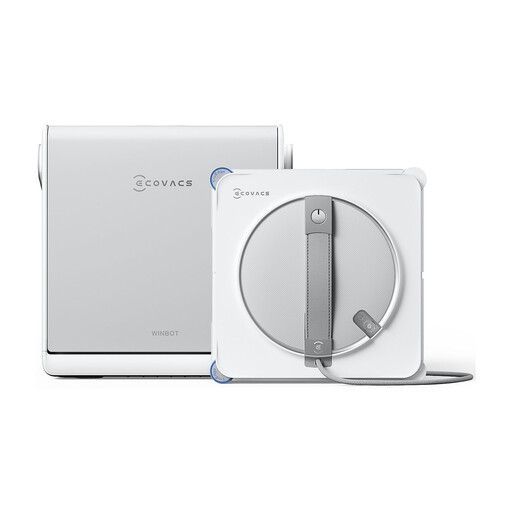
Why this product suits the profile: Ideal for large glass surfaces and users looking for multiple cleaning modes, app control and a multifunctional station.
The product specifications list 12 safety levels, a 5.5-m safety cable and automatic edge detection. The safety cable remains essential.
Stated suction power of 8,000 Pa, up to 110 minutes of runtime and TruEdge edge cleaning according to the product description.
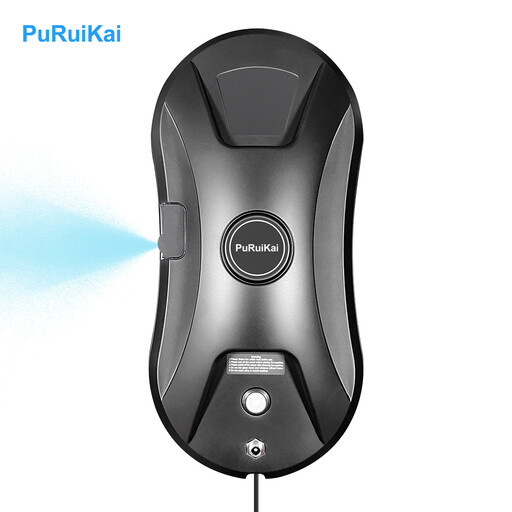
Why this product suits the profile: An option for smooth glass surfaces when automatic cleaning with stated suction power of 5,600 Pa is the main priority.
Its use is limited to smooth glass surfaces. Before buying, you should check the window shape, power connection and safety equipment.
Automatic operation on smooth glass surfaces and clearly stated suction power according to the product name.
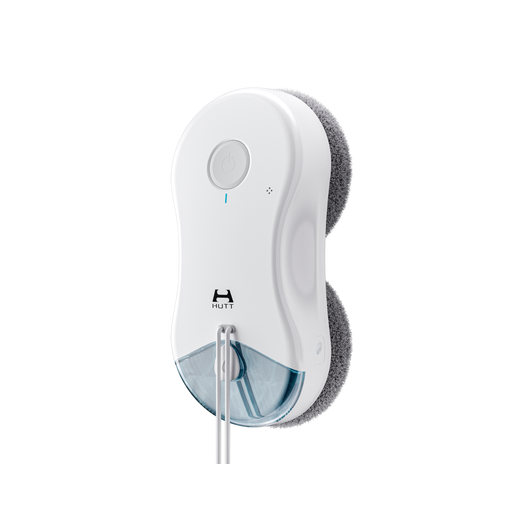
Why this product suits the profile: Suitable for users who want to clean glass, mirrors and tiles and prefer a remote control to an app.
The maximum recommended incline of 60 degrees and minimum surface area of 30 × 30 cm clearly define its intended use.
Stated suction power of 5,400 Pa, 80-ml water tank and 4.5-m safety rope according to the product data.
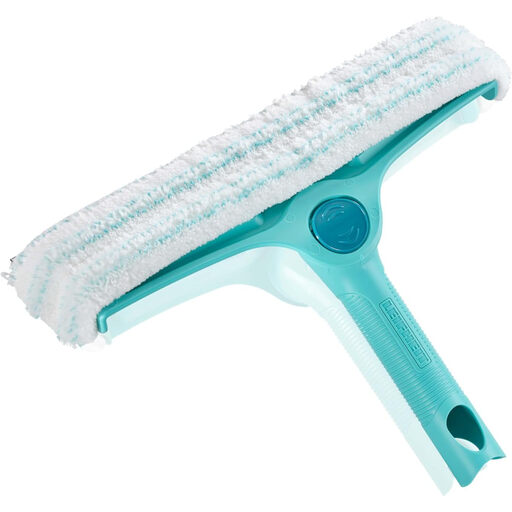
Why this product suits the profile: For smaller windows, frames and mirrors, and households that want to clean without a battery, app or safety rope.
The device is operated manually, so it does not depend on adhesion, a power supply or app compatibility.
32-cm silicone squeegee, microfibre cover for frames and three adjustable cleaning angles according to the description.
We have put together a complete, regularly updated list of products that fully meet these strict selection criteria and the safety regulations applicable in the EU.
First, clean the glass surface and check it for damage. Then position the robot as instructed, connect it to the power cable and attach the safety rope to a secure internal anchor point. Only start the cleaning process once adhesion has been confirmed. Children and pets should keep their distance while the device is operating.
It is not possible to give a general fixed lifespan. This depends on how often the robot is used, how well it is maintained, wear on the cleaning cloths, the condition of the seals and battery ageing. After each cleaning session, care for the pads and housing as instructed and store the device in a dry place. Damaged cables or unusual noises are reasons to stop using the device.
In addition to the purchase price, depending on the model you may incur costs for electricity, cleaning solution, replacement pads and, where applicable, batteries or accessories. Models with smaller tanks may need to be refilled more often. Manual alternatives such as a window wiper do not use electricity, but require more physical effort. The right choice therefore depends on the size of the windows, how often they are cleaned and how easy they are to reach.