
Lieferung heute & morgen

Qualitätsgarantie

Willkommens-Angebote freischalten: KOSTENLOSE Lieferung | Bis zu 80 % RABATT | Kostenlose 30-Tage-JoyPlus-Testphase
App herunterladen
Cleaning windows, especially on upper floors or for large glass fronts like conservatories, is often tedious and risky. A window cleaning robot promises to make this task significantly easier. However, the market is filled with devices whose advertised capabilities don't always match reality. As your Joybuy Product Recommendation Officer, I'll help you identify the crucial features and avoid common purchasing traps, so you can make an informed decision.
Many devices promise fully automatic and perfect cleaning, but their weaknesses often show in practice. Pay close attention to these three points to avoid disappointment:
To avoid a bad purchase, you should base your selection on objective technical features. A good window robot is characterized by the following three core capabilities:
Suction power, measured in Pascal (Pa), is the most important criterion for safety and cleaning performance. It ensures the robot adheres firmly to the vertical glass surface, even if it's not perfectly smooth.
A smart glass cleaner should systematically cover the entire surface to be cleaned.
A window cleaning robot for high windows must have multiple layers of protection.
Based on the criteria mentioned, we have identified a few products that are suitable for different user profiles and applications.
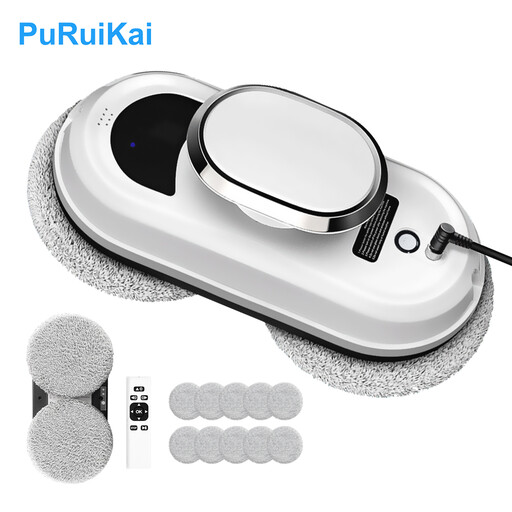
Why This Fits Their Persona: This model provides a solid foundation for users seeking an automated solution for standard windows in apartments or single-family homes. It combines the necessary core functions without unnecessary frills.
With automatic edge detection and intelligent route planning, it avoids the pitfall of inefficient cleaning. The backup battery (20 min.) and safety rope provide the necessary protection against falls.
The suction power of 2800 Pa is sufficient for most vertical glass and tile surfaces. The remote control allows for easy operation.
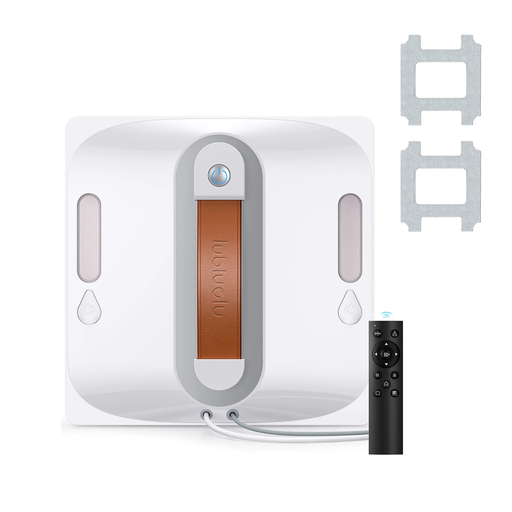
Why This Fits Their Persona: Ideal for homeowners with large, hard-to-reach glass surfaces (e.g., conservatories, galleries) or small businesses where safety and thoroughness are the top priority.
Directly addresses the problem of edge cleaning with a special "Edge Cleaning" mode. The 8-layer safety system, including automatic suction power adjustment and a 30-minute backup battery, minimizes the risk of falling.
The very high suction power of 6,500 Pa ensures an extremely secure grip. Multiple specialized cleaning modes (Deep Cleaning, Edge Cleaning) offer flexibility for different levels of dirt.
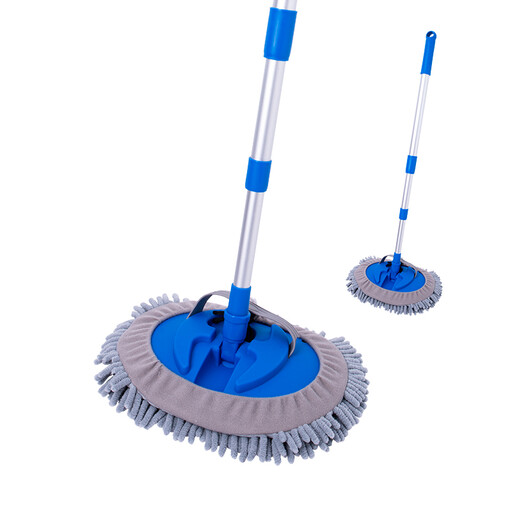
Why This Fits Their Persona: A pragmatic supplement or alternative to a robot. Perfect for users who need a manual solution for hard-to-reach spots or want to touch up corners and edges after the robot has finished.
As a manual tool, it gives you full control, thus bypassing the typical weaknesses of automatic systems like missed corners or inefficient navigation. You decide where and how intensively to clean.
The telescopic aluminum pole (51.5-110 cm) allows for safe cleaning of higher windows from the ground. The washable chenille microfiber head cleans effectively and streak-free.
If the models presented here don't exactly meet your requirements, you can find a wider selection of cleaning tools in our main category.
The safety of a window cleaning robot depends on a combination of several factors. High suction power (>2,500 Pa) forms the foundation. A backup battery that keeps the device on the window for at least 20 minutes during a power outage is a must. However, the most important element is the physical safety rope, which must be properly secured. When these criteria are met and the device is used correctly, operation is very safe.
Due to their design (round or square with rounded edges), most window cleaning robots do not reach the outermost corners 100%. The uncleaned area is usually only a few millimeters wide. Models with special edge-cleaning modes or a square shape achieve better results here. For a perfect result, it may be necessary to briefly wipe the corners manually on some windows.
Most cleaning pads are made of microfiber and are designed for multiple uses. They can typically be washed in a washing machine after each use and, depending on use and care, will last for many cleaning cycles. They should be replaced when their absorbency or cleaning performance diminishes. Replacement pads are usually available directly from the manufacturer or from specialized retailers.