
Lieferung heute & morgen

Qualitätsgarantie

Willkommens-Angebote freischalten: KOSTENLOSE Lieferung | Bis zu 80 % RABATT | Kostenlose 30-Tage-JoyPlus-Testphase
App herunterladen
A window-cleaning robot can make it easier to clean large glass surfaces. It moves independently across windows, balcony and patio doors or mirrors, and depending on the model, it can wipe surfaces and apply cleaning fluid. However, an automatic window cleaner does not replace checking the glass surface, securing the safety line and carrying out occasional touch-ups.
Anyone who focuses only on high suction power or app control may overlook important details. Three common buying misconceptions are particularly likely to lead to disappointment:
A glass-cleaning robot is generally held against the pane by negative pressure. The specified suction power in Pa is a technical comparison value, but it is not the only indicator of safety. The following are also important:
The safety line must be attached to a stable, suitable anchor point before every use. When cleaning high windows, the robot must never be operated without this additional safety measure. Some battery-powered models work partly without cables, while others need to remain connected to a socket throughout the cleaning process. The product description should therefore be checked carefully for details such as 220–240 V, cable length and emergency power duration.
Only use the robot on suitable, smooth glass surfaces. Damaged, cracked, heavily uneven or unsuitable coated glass can affect adhesion. Moisture, grease and coarse dust can also reduce grip or hinder movement.
Reliable edge detection is particularly important for frameless windows. Optical sensors or special algorithms are designed to detect when the pane ends. For window-cleaning robots used on high windows, route planning is also important: a systematic travel pattern reduces missed areas and makes checking the result easier.
Look for specific information about:
A compact design is useful when window handles, security grilles or narrow glass panels are in the way. According to the manufacturer, the ECOVACS WINBOT MINI has a height of 55 millimetres and a one-sided length of 215 millimetres. This can be useful in confined areas, but it does not replace checking the actual window dimensions.
A window-cleaning robot with a spray function distributes water or a suitable cleaning solution directly before wiping. Ultrasonic or multiple nozzles create a fine spray mist. Tank capacity is important for coverage: small tanks need to be refilled more often when cleaning several large panes.
The cleaning cloth is just as important. It picks up dust and liquid, but must be washed or replaced regularly. Before buying, check:
The actual running costs consist of electricity, cleaning solution and consumables. With frequent use, replacement pads may cost more than the electricity consumed.
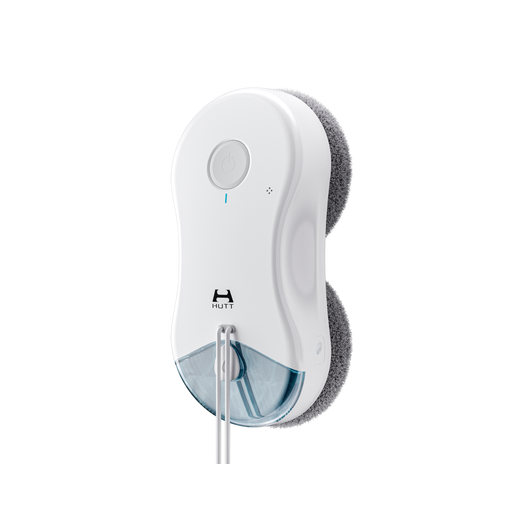
Why this product suits this profile: It can be operated on the device or by remote control, with no app required. With an 80-ml water tank and stated suction power of up to 5,400 Pa, the model is designed for smooth glass surfaces, mirrors and tiles.
The product details state a 30-minute power-cut protection function and a 4.5 m safety line. This reduces reliance on an app, but does not replace correct attachment.
Remote control, automatic edge detection and a stated cleaning area starting at 30 × 30 cm.
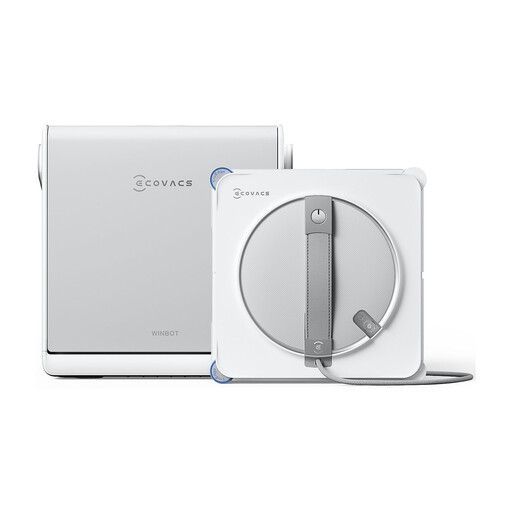
Why this product suits this profile: Its features are aimed at households with large glass surfaces and several cleaning modes. According to the product details, it offers TruEdge edge cleaning, WIN-SLAM 4.0 and a multifunctional station.
The specifications list 12 safety levels, optical edge detection and automatic pressure regulation. These are verifiable features, but they do not mean the robot can be operated without a safety line.
Up to 8,000 Pa according to the manufacturer, an 80-ml tank, up to 110 minutes of runtime and modes for fast, thorough, spot and near-edge cleaning.
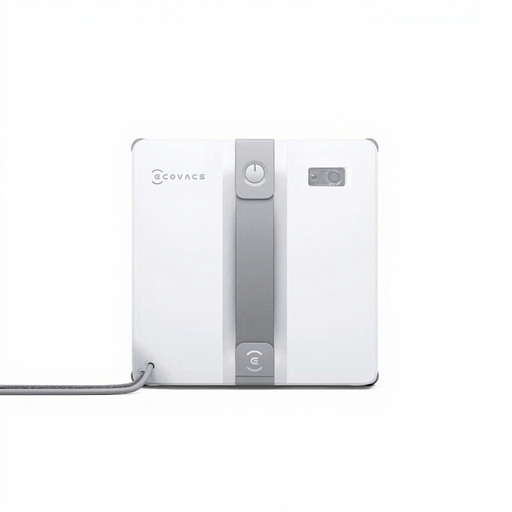
Why this product suits this profile: Its compact design is useful for narrow windows, areas beside handles or hard-to-reach glass surfaces. According to the product description, the ECOVACS-HOME app allows you to select different cleaning modes.
Its low height can help it negotiate obstacles such as window handles more effectively. Before buying, check the minimum dimensions and whether it is suitable for frameless windows in the instructions.
55 mm profile height, stated suction power of 7,500 Pa, ultrasonic spray technology and WIN-SLAM-3.0 navigation.
We have put together a complete, regularly updated list of products that fully meet these strict selection criteria and the safety regulations applicable in the EU.
Before using a window-cleaning robot for the first time, remove coarse dust from the pane with a dry cloth. Then attach the cleaning cloth correctly, fill the tank only with the approved liquid and check the cable and safety line.
For operation, the following sequence is recommended:
Do not clean exterior surfaces in rain, frost or high humidity. Children and pets should keep their distance while the robot is operating. A window-cleaning robot is not a toy and must not be used on damaged glass or unsuitable materials such as wood and metal.
Its lifespan depends on how often it is used, maintenance, cloth replacement and storage. Clean the sensors and cloths regularly, avoid unsuitable cleaning products and store the device in a dry place. If you notice visible cable damage, cracks in the housing or unusual noises, stop using the device.
Many models feature edge detection and, according to the manufacturer, are designed for suitable frameless glass surfaces. This does not apply universally to every device. Before buying, check the information on frameless windows, minimum size, type of glass and distance from the edge. The safety line is still required when cleaning frameless panes.
In addition to electricity, you will need to pay for cleaning solution and replacement or washable cloths. A larger tank can reduce the number of refills when cleaning many windows. It is also important to check whether suitable cloths and manufacturer-approved liquids will remain available. These points give you a better indication of ongoing costs than the purchase price alone.