
Lieferung heute & morgen

Qualitätsgarantie

Willkommens-Angebote freischalten: KOSTENLOSE Lieferung | Bis zu 80 % RABATT | Kostenlose 30-Tage-JoyPlus-Testphase
App herunterladen
Large window panes, conservatories, or hard-to-reach skylights bring light and a sense of space into living areas, but they also present a significant cleaning challenge. Manual cleaning is often time-consuming, physically demanding, and involves safety risks when working at heights. A window cleaning robot can be a practical solution to restore a streak-free, clear view.
This article serves as a guide. It explains the key technical features to consider when choosing a model and presents several options to provide you with a solid basis for making an informed decision.
Selecting the right device depends on your individual needs. Three key criteria will help you objectively compare the features of different models.
The efficiency of a window cleaning robot is largely determined by its navigation and cleaning method. Models with systematic path planning (often referred to as "intelligent navigation" or "SLAM technology") work their way across the glass surface methodically, ensuring no spots are missed. Simpler devices move in a more random pattern.
Suction power, measured in Pascals (Pa), is crucial for a secure grip on the window and the ability to effectively pick up dirt particles. Higher suction power generally offers greater safety, especially on vertical surfaces. Also, pay attention to edge detection, which allows the device to manoeuvre safely along the edges of frameless windows.
A window cleaning robot with a spray function automatically applies cleaning fluid to the pane. This ensures even moisture distribution and can enhance cleaning performance. Some models feature single or dual spray nozzles, often using ultrasonic technology to create a fine mist. Devices without this feature require you to manually moisten the cleaning pad beforehand or spray the window yourself.
Many automatic window cleaners are suitable not only for glass but also for other smooth, vertical surfaces like tiled walls, shower enclosures, or mirrors. Check the manufacturer's specifications to ensure suitability for your intended applications.
Safety is a top priority for devices that operate at heights. An integrated backup battery (UPS – Uninterruptible Power Supply) ensures that the robot remains attached to the window for a limited time (usually 20–30 minutes) and triggers an alarm during a power outage. An additional safety rope, secured indoors, is an essential feature to prevent a fall.
Depending on the model, control is managed via buttons on the device, an included remote control, or a smartphone app. A smart window cleaner with app control often offers advanced features, such as selecting specific cleaning modes or monitoring cleaning progress.
Based on the criteria mentioned above, we have compiled a selection of models with different feature sets.

Why this model stands out The PuRuiKai robot combines an automatic dual spray function with laser sensors for edge detection. This enables thorough and autonomous cleaning of glass surfaces. The device is designed for mains operation, with the internal battery serving exclusively as a backup power supply.
Pros
Who is it for? This model is a great choice for users looking for a fully automatic solution with a spray function for standard windows and glass surfaces, who also value simple operation via remote control.
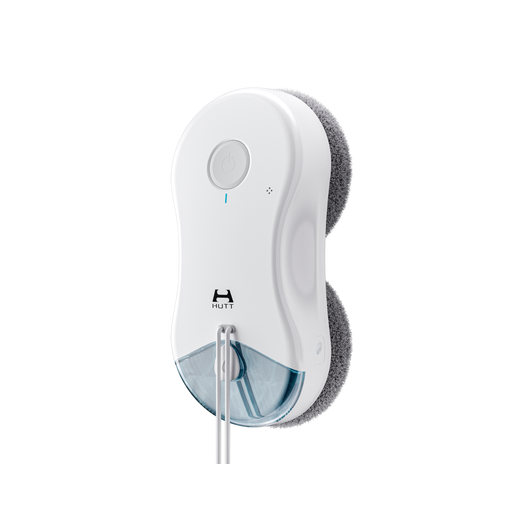
Why this model stands out The HUTT DDC55 Pro is distinguished by its high suction power of up to 5,400 Pa, which automatically adjusts to the level of dirt. It's ready to use out of the box, as it operates without an app and is controlled directly via the remote. Its design is optimised for reliable edge cleaning.
Pros
Who is it for? Ideal for users who need a powerful window robot for large windows and other smooth surfaces and prefer straightforward, app-free operation.

Why this model stands out According to the manufacturer, the ECOVACS WINBOT Mini 2 offers very high suction power of 7,500 Pa and advanced navigation technology (WIN-SLAM 5.0). The dual ultrasonic spray system distributes fluid finely and efficiently. This offer is for a 'Like New' product that has been inspected and refurbished.
Pros
Who is it for? This model is aimed at tech-savvy users who appreciate high cleaning performance, precise navigation, and app control for their smart window cleaner.
The models featured here offer a glimpse into the available technologies. If you want to compare more devices or search for specific solutions for your needs, you can find additional alternatives in our broader product category.
? Discover more products for Windows & Glass
1. How good is the cleaning performance of a window cleaning robot? An automatic window cleaner is primarily designed to remove everyday grime like dust, pollen, fingerprints, and light water spots. The cleaning performance is generally good and significantly reduces your workload. For stubborn or heavily dried-on dirt (e.g., bird droppings or paint splatters), manual pre-treatment or follow-up may be necessary. For optimal results, it's often recommended to run a first pass dry (to remove dust) and a second pass wet.
2. Can window cleaning robots also clean frameless windows? Yes, most modern devices are suitable for frameless glass surfaces. They use sensors (e.g., infrared or laser sensors) to detect the edge of the pane and change direction in time. This allows for safe use on glass railings, shower walls, or frameless mirrors. However, it's important to check the manufacturer's specifications, as the reliability of edge detection can vary between models.
3. How safe is it to use on high or hard-to-reach windows? Safety is ensured through several mechanisms. The high suction power provides a firm grip on the vertical surface. An integrated backup battery (UPS) prevents an immediate fall during a power outage by maintaining suction for a few minutes. The most important safety feature is the included safety rope, which must always be attached to a stable point indoors (e.g., a radiator or a heavy piece of furniture). When used correctly, operation is safe.