
Lieferung heute & morgen

Qualitätsgarantie

Willkommens-Angebote freischalten: KOSTENLOSE Lieferung | Bis zu 80 % RABATT | Kostenlose 30-Tage-JoyPlus-Testphase
App herunterladen
The idea is tempting: a small robot glides autonomously across your window panes, leaving behind a streak-free shine while you use your time for more important things. A window cleaning robot seems like the perfect solution, especially for hard-to-reach windows on upper floors, large conservatory glass fronts, or for individuals who find manual cleaning difficult.
However, the market is filled with models whose marketing promises often shine brighter than the devices themselves. Before you make a purchasing decision, it's crucial to understand the common pitfalls that can lead to disappointment and an unsatisfactory result.
To avoid these problems, you should base your choice on objective technical features rather than being swayed by marketing slogans.
A functional automatic window cleaner is not defined by a single metric, but by the interplay of several core components. Pay attention to the following three aspects before buying.
The way a robot for window cleaning moves determines the thoroughness of the result. Basic models often just bump into the window frame and then change direction (random pattern). Higher-quality devices use systematic cleaning paths (e.g., in Z- or N-patterns) to cover the entire surface without gaps.
For households with frameless glass surfaces (e.g., glass showers or balustrades), precise edge detection using laser or infrared sensors is essential. This technology ensures that the robot detects the edge of the glass surface and does not drive beyond it.
Safety is non-negotiable, especially when cleaning exterior windows. Two components are crucial here:
The actual cleaning process is carried out by rotating or square pads with microfiber cloths. Square models often clean better in corners, while rotating pads can effectively polish away stubborn dirt with their movement.
The quality of the microfiber pads is equally important. They must be able to absorb dirt and water instead of just spreading them around on the pane. Models with a dual or automatic spray function that evenly moisten the cleaning cloth often achieve better results than devices where the cloth must be sprayed manually. Such an electric window cleaner can make the job significantly easier.
Instead of making a one-size-fits-all recommendation, we have identified models that meet specific requirements and avoid the pitfalls mentioned earlier.
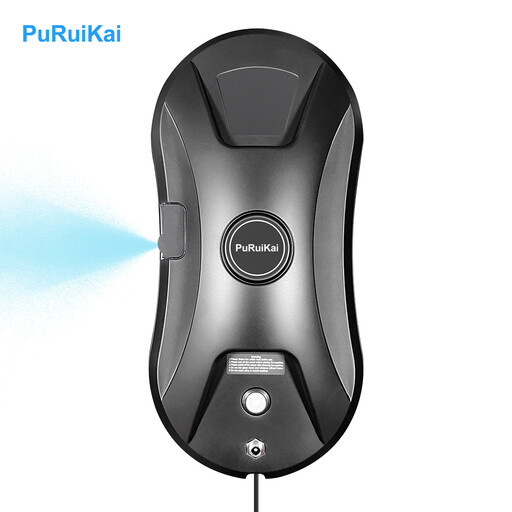
Why this model is a good fit: It offers solid core functionality with high suction power for a secure grip, without stretching the budget for complex extra features. Ideal for standard apartment windows where reliable and safe automation is the priority.
This model bypasses the pitfall of inadequate safety by integrating a UPS (backup battery) and a safety rope, despite its accessible price. The high suction power of 5600 Pa isn't just an empty promise here; it's the foundation for its adhesion.
The high suction power ensures a reliable grip even on standard window glass. Operation via the remote control is straightforward and requires no app installation.

Why this model is a good fit: The dual spray function and intelligent memory feature enable more efficient and autonomous cleaning of large or hard-to-reach areas like conservatories or tall window fronts. Ideal for users who want maximum automation and a thorough result.
The dual-sided, automatic ultrasonic spray function solves the problem of ineffective, single-sided systems that often leave streaks. The laser sensor for edge detection also addresses the pitfall of incomplete cleaning along edges and on frameless windows.
The combination of dual spray nozzles and intelligent route planning ensures even moistening and systematic, gap-free coverage of the entire glass surface.
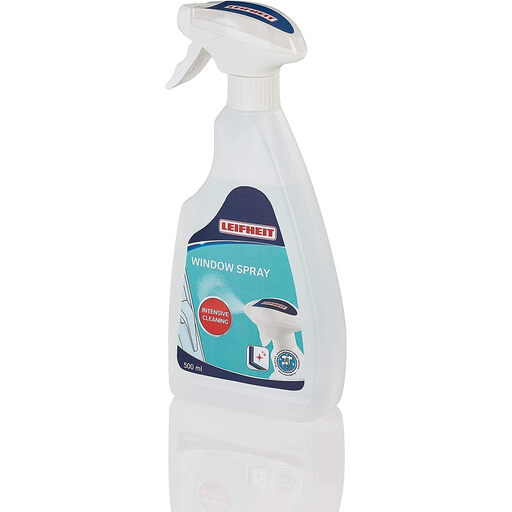
Why this product is a good fit: Ideal for pre-treating heavily soiled spots before using the robot or for quick, manual cleaning of smaller surfaces like mirrors. It's also perfect for follow-up cleaning if the robot missed an area.
Instead of relying on the often mediocre performance of robots on stubborn dirt, targeted pre-treatment with a specialised cleaner ensures a better final result. This avoids the disappointment of leftover spots.
The concentrated formula is designed for a streak-free clean. The bottle is refillable, making it a more sustainable choice. Another proven product is the Frosch Spiritus Glass Cleaner.
For manual cleaning or to complement your robot, we have compiled a selection of glass cleaners tested for their streak-free performance.
The battery in a window cleaning robot is not for cordless operation; it functions as an uninterruptible power supply (UPS). The devices must remain connected to the power outlet throughout the entire cleaning process. In the event of a power outage, the battery keeps the robot secured to the window via suction for about 20 to 30 minutes, preventing a fall.
Yes, many modern models are designed for this. They use special sensors (often laser or infrared) to detect the edges of the glass surface. This allows them to stop in time before moving over the edge. When buying, you should specifically look for the "edge detection for frameless windows" feature.
It is recommended to use either only distilled water or a cleaning solution explicitly approved by the manufacturer. Conventional glass cleaners from the supermarket can foam up or leave sticky residues that can clog the robot's delicate ultrasonic spray nozzles. For manual pre-cleaning or post-cleaning of stubborn spots, proven specialised cleaners are suitable.