
Lieferung heute & morgen

Qualitätsgarantie

Willkommens-Angebote freischalten: KOSTENLOSE Lieferung | Bis zu 80 % RABATT | Kostenlose 30-Tage-JoyPlus-Testphase
App herunterladen
Cleaning large or hard-to-reach windows can quickly become a tedious and time-consuming task. A window cleaning robot promises a solution, but the market is flooded with models whose real-world performance often fails to live up to their advertising claims. As your Joybuy Product Recommendation Officer, I'll help you identify the crucial features and avoid common purchasing pitfalls.
Many buyers invest in a device only to find that it leaves streaks, misses corners, or loses suction power after a short time. Before you make a decision, you should be aware of the three most common traps:
To avoid a bad purchase, don't be dazzled by marketing buzzwords; instead, focus on verifiable technical specifications. When you read a window cleaning robot review, check if these parameters have been objectively evaluated.
Suction power, measured in Pascals (Pa), is the most critical criterion for the device's adhesion and safety. A value of 2800 Pa is considered a solid starting point for a reliable grip on smooth surfaces. Higher-end models offer variable suction power that adapts to the surface. An automatic window cleaner must also have a two-stage safety system:
The efficiency of a glass cleaning robot depends on its ability to systematically cover the surface. Look for intelligent path planning and automatic edge detection. These sensors ensure the robot navigates safely even on frameless glass surfaces or balcony railings without falling. This is also crucial if you plan to use a window robot for tiles in the bathroom.
Basic models require you to manually spray the cleaning pad or the windowpane with a cleaning solution before starting. This often leads to uneven distribution and streaking. A window cleaning robot with a water tank offers a clear advantage here: it automatically dispenses the liquid through a nozzle, ensuring a consistently damp cleaning pad and a more uniform result.
Based on these objective criteria, we have identified a few models that represent a smart choice for different user profiles.
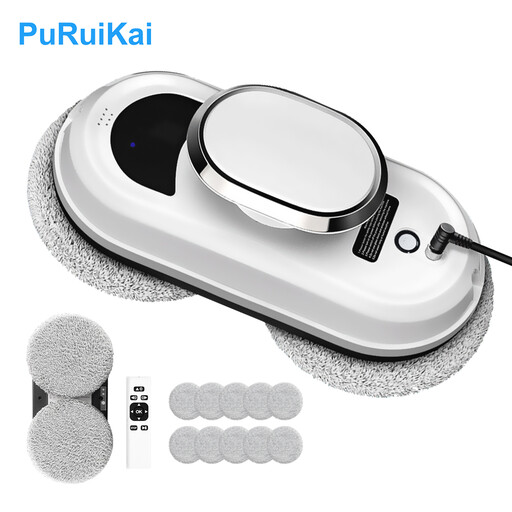
Why This Fits Their Persona: Ideal for users looking for a straightforward and cost-effective solution for standard windows. Its operation is intentionally simple and requires no technical expertise.
This model bypasses the app-dependency trap with a simple remote control. The suction power of 2800 Pa per motor provides a solid and secure grip for basic cleaning.
Reliable basic functions with intelligent path planning. Equipped with a UPS battery and safety rope for secure operation.
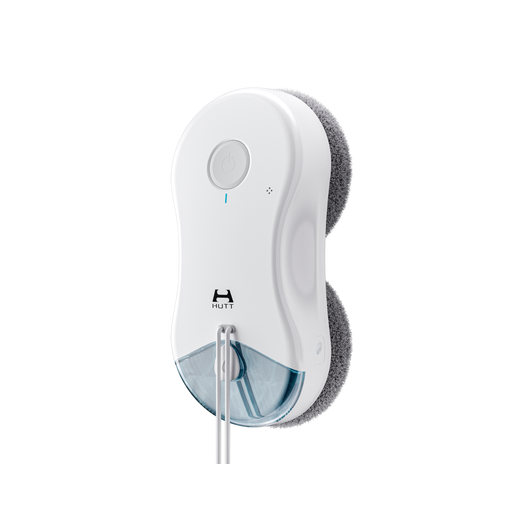
Why This Fits Their Persona: Perfect for users who value a thorough clean right into the corners and appreciate the convenience of an integrated water tank. It is also suitable for other smooth surfaces like large mirrors or tiled walls.
It addresses the poor edge cleaning trap with its special design. The 80 ml water tank ensures even moistening and prevents streaks caused by manual spraying.
Variable suction power up to 5,400 Pa for a strong grip and a 30-minute UPS buffer time. It can be controlled either directly on the device or via the remote control.
We have compiled a complete, up-to-date list of products that meet these strict selection criteria and safety standards.
Modern window cleaning robots are secured by a multi-level system. The primary safeguard is the strong suction power that holds the device to the glass. Additionally, an integrated battery (UPS) ensures that the robot doesn't immediately lose its grip during a power outage, instead remaining on the window for 20-30 minutes while emitting a warning signal. As a final failsafe, it is essential to use the included, tear-resistant safety rope, which is fastened indoors.
Yes, most devices with automatic edge detection are suitable for this. The sensors detect the end of the surface and prompt the robot to change direction. This allows for use on frameless glass surfaces, shower enclosures, or large-format tiles in the bathroom. Models like the HUTT DDC55 Pro are explicitly designed for such applications.
It is strongly recommended to use only distilled water or the cleaning solution explicitly approved by the manufacturer. Tap water contains lime and minerals that can clog the device's fine spray nozzles and lead to damage. Aggressive or foaming cleaning agents can also damage the mechanics and the cleaning pads.