
Lieferung heute & morgen

Qualitätsgarantie

Willkommens-Angebote freischalten: KOSTENLOSE Lieferung | Bis zu 80 % RABATT | Kostenlose 30-Tage-JoyPlus-Testphase
App herunterladen
A window-cleaning robot can reduce the manual effort involved in cleaning large windows, balcony doors, mirrors and shower glass. However, it does not eliminate the need for preparation and is not suitable for every glass surface. Focusing solely on high suction power or fully automatic cleaning means overlooking important buying criteria.
Typical poor purchasing decisions arise from three common marketing traps:
A suction-cup window-cleaning robot adheres to the glass using negative pressure. Ratings such as 5,400, 6,500 or 8,000 Pa are only one part of the overall safety assessment. You should also check for:
Some of the models in our selection offer protection against power failure for up to 30 minutes. This does not permit unattended operation; it is an additional safety feature for emergencies.
A window-cleaning robot with edge-cleaning functionality should be able to detect window frames, glass edges and obstacles. Optical sensors, collision sensors and route-planning algorithms help it follow a systematic cleaning path.
For frameless windows, it is particularly important that the manufacturer explicitly approves this type of use. Window handles, glazing bars, uneven transitions and damaged glass can also affect navigation. A window-cleaning robot for frameless windows is therefore not automatically suitable for every frameless design.
In addition to adhesion, the cleaning system determines how useful the robot is in practice. Check the following:
An automatic window cleaner usually operates with a power cable. Some newer devices also feature a mobile station or integrated battery. This can be practical for hard-to-reach panes, but often increases the weight, amount of accessories and purchase price.

Why this product suits this profile: For small to medium-sized smooth glass surfaces, this model can be operated on the device itself or by remote control, with a comparatively straightforward range of functions.
The specifications state 6,500 Pa suction power, 18 sensors, a 4.5 m safety rope and a minimum working area of 30 × 30 cm. Recommended use is limited to vertical surfaces of up to 60 degrees.
80 ml water tank, two cleaning modes and a stated cleaning efficiency of under three minutes per square metre.
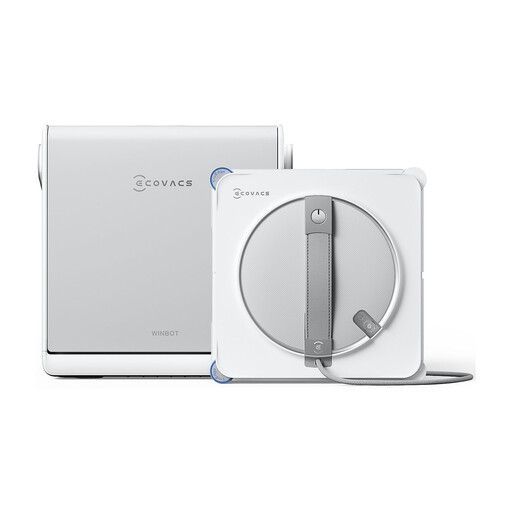
Why this product suits this profile: For households with many or large glass surfaces, multiple cleaning modes, a mobile multifunctional station and app or system features are especially useful.
The features go beyond a single Pa rating: TruEdge edge cleaning, WIN-SLAM-4.0 route planning, a 12-stage safety system and optical edge detection are all explicitly listed.
8,000 Pa suction power, up to 110 minutes of runtime, a maximum cleaning area of up to 65 m² in quick mode and several specialised modes.
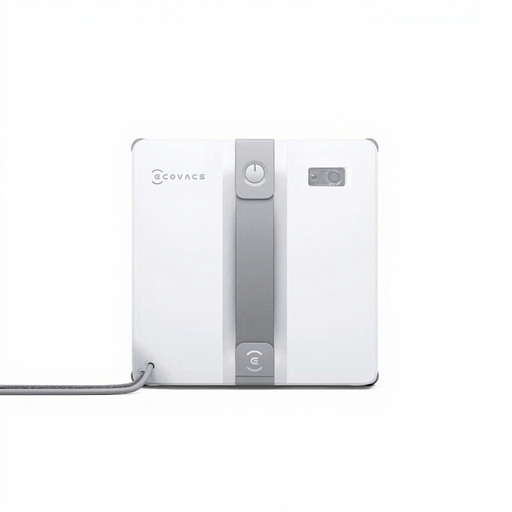
Why this product suits this profile: Its compact design is well suited to narrow windows, confined areas and hard-to-reach glass surfaces.
The model is 55 mm high and, according to the product specifications, uses sensors to detect slipping and frameless edges. Even so, the specific glass surfaces must be checked before use.
Ultrasonic spray technology, 7,500 Pa suction power, WIN-SLAM-3.0 route planning and control via the ECOVACS HOME app.
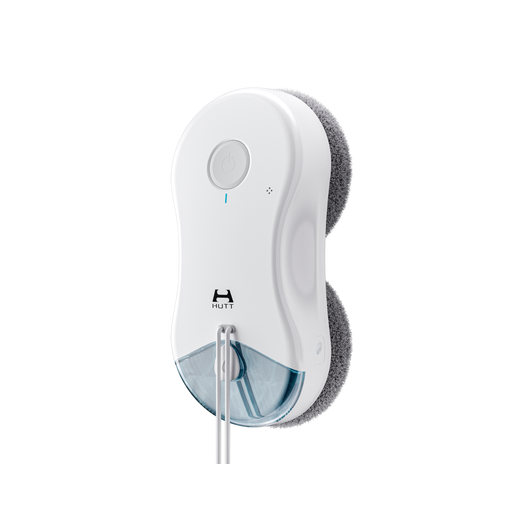
Why this product suits this profile: Anyone looking to set up a window-cleaning robot for glass, mirrors and tiles without an app can operate it on the device itself or by remote control.
The product specifications list edge cleaning, 5,400 Pa suction power, a 4.5 m safety rope and a minimum area of 30 × 30 cm. According to the specifications, use on sloping roof windows is not permitted.
80 ml water tank, stated cleaning efficiency of under three minutes per square metre and 30 minutes of protection against power failure.
Before every cleaning session, remove coarse dust, sand and loose dirt from the pane. These particles can place unnecessary strain on the cleaning cloths and glass surface. Attach the safety rope to a secure point and check the power cable, cloth and tank.
Also bear the following in mind:
A glass-cleaning robot can reduce streaks when the cloth, amount of cleaning solution and level of dirt are properly matched. Heavily dried-on deposits may require an additional manual cleaning step.
We have compiled a complete, regularly updated list of products that fully meet these strict selection criteria and the safety regulations applicable in the EU.
It depends on the model. Suitable edge sensors and explicit approval from the manufacturer are essential. You should also check the type of glass, pane thickness and minimum working area in the instruction manual.
There is no one-size-fits-all answer. Its lifespan depends on how often it is used, maintenance, cleaning of the cloths, storage, and the condition of the cable, sensors and seals. Regular maintenance and the use of suitable cleaning products can help limit wear.
In addition to electricity consumption, the main ongoing costs are for cleaning cloths, spare parts and suitable cleaning solution. For devices that require a special liquid, you should check the manufacturer’s approval. A suitable product such as ECOVACS WINBOT Cleaning Solution is intended for certain WINBOT models; compatibility should be checked before purchase.