
Lieferung heute & morgen

Qualitätsgarantie

Willkommens-Angebote freischalten: KOSTENLOSE Lieferung | Bis zu 80 % RABATT | Kostenlose 30-Tage-JoyPlus-Testphase
App herunterladen
A window-cleaning robot can make it easier to clean glass surfaces—especially large windows, balcony doors, mirrors or hard-to-reach exterior areas. However, the device does not eliminate the need for safe preparation and is not suitable for every window. Focusing solely on high suction power or an automatic spray function often means overlooking important details.
This buying guide from the Joybuy product recommendations team explains which technical specifications matter, which advertising claims should be critically evaluated and which window-cleaning robot suits different usage scenarios.
Specifications such as 5,400, 6,500 or 8,000 Pa indicate the stated suction power. However, they do not by themselves show how reliably a robot will adhere to every glass surface. Dust, grease, moisture, damaged seals or textured surfaces can all affect adhesion.
A window-cleaning robot should therefore only be used on smooth surfaces approved for this purpose. Cracked, wet, heavily soiled or uneven glass may reduce adhesion.
Many devices require a mains connection while operating. In such cases, the integrated battery serves solely as an emergency power supply, allowing the device to remain attached to the glass temporarily in the event of a power failure. The PuRuiKai PRK-18 and PRK-21B models, for example, explicitly state that they must be connected to the mains during operation.
Before buying, check the following:
A window robot with edge-cleaning functionality can navigate along frame areas more systematically. This does not automatically mean that every corner will be cleaned completely without additional work. Window frames, silicone joints, protruding handles and uneven transitions can affect navigation.
If consistently clean edges are important, look for edge detection, the specified minimum window size and specific cleaning modes such as “Edge” or “TruEdge”.
Suction power is measured in pascals. It is a useful technical comparison value, but it should always be considered alongside the safety system. This includes:
A window-cleaning robot with a safety rope must be attached to a stable, suitable anchoring point before every use. The rope is an additional safeguard—not a substitute for checking the glass, cable and contact surface.
A window-cleaning robot with a spray function distributes water or a compatible cleaning solution during operation. Tank capacities of 50 to 150 ml are common among the devices mentioned. A larger tank can allow for longer cleaning intervals, but it generally also increases the device’s weight.
The cleaning solution must be compatible with the device. For WINBOT devices, for example, the Ecovacs WINBOT Cleaning Solution 1 l is specified. According to the product information, it is suitable for the W1 PRO, W2 and W2 OMNI models and does not need to be diluted with water. The relevant user manual always takes precedence. Other solutions may clog the nozzles or affect the adhesion of the cleaning pads.
Compact models are a sensible choice for small or narrow windows. For large glass surfaces, cable length, operating time, navigation system and cleaning speed become more important. The control method also varies:
An automatic window cleaner is not automatically approved for tiles, mirrors or shower glass. Such uses should be explicitly stated in the manufacturer’s specifications.

Why it’s a good fit: For households looking for a window-cleaning robot with a spray function and remote control for smooth glass surfaces.
The product information clearly specifies mains operation, a safety rope and emergency power protection. This prevents the battery from being mistaken for fully cordless operation.
Stated suction power of 2,500 Pa, 50 ml tank, automatic edge detection and 4.5 m safety rope.
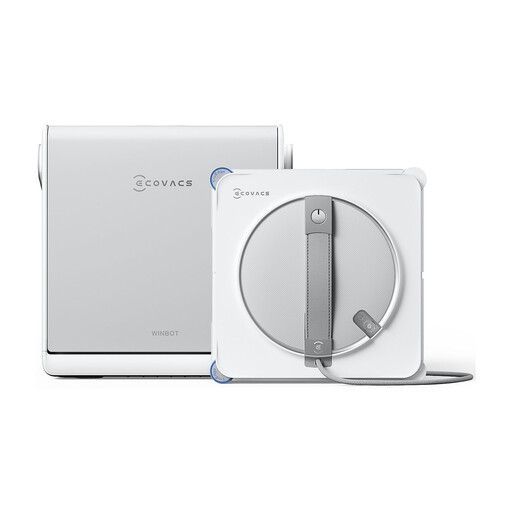
Why it’s a good fit: For homeowners with larger glass surfaces who value multiple cleaning modes, app control and a dedicated station.
The runtime of up to 110 minutes and maximum cable length of 5.5 m are clearly specified. Use is also limited to suitable, undamaged glass.
8,000 Pa according to the product information, TruEdge edge cleaning to within 1.1 cm, 80 ml tank, WIN-SLAM 4.0 and a 12-stage safety system.

Why it’s a good fit: For homes with narrow windows, mirrors, balcony doors or other smooth surfaces.
The minimum working area of 30 × 30 cm and recommended maximum angle of 60 degrees clearly define the device’s range of suitable applications.
Up to 6,500 Pa, 80 ml tank, 18 sensors, remote control and 4.5 m safety rope according to the product data.
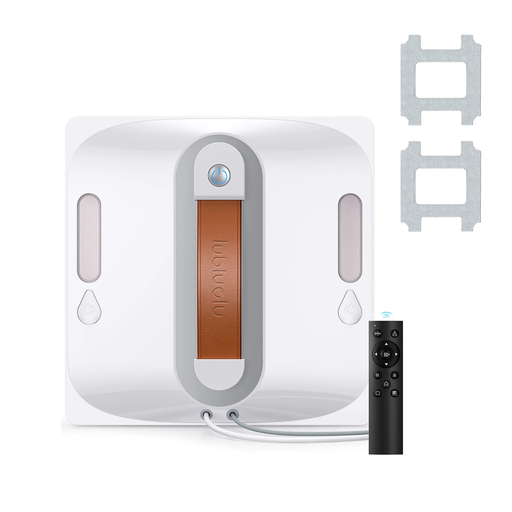
Why it’s a good fit: For users who need different modes for light soiling, edge areas and more intensive cleaning cycles.
The specifications list eight layers of protection, eight collision sensors, four drop sensors and a 5 m safety rope. This makes it easier to verify the available safety features.
Stated suction power of 6,500 Pa, automatic route planning, plus Quick, Deep, Edge and combined cleaning modes.
Before starting, remove coarse dust from the glass surface, cleaning pads and suction opening. A heavily soiled window can first be cleaned dry. This reduces the risk of dragging particles of dirt across the surface.
Ongoing costs include replacement pads, and where applicable, filters or nozzles, as well as cleaning solution. For a WINBOT window-cleaning robot, the compatible one-litre Ecovacs solution is a predictable accessory expense. Cleaning solution should be used sparingly and exclusively in accordance with the manufacturer’s instructions.
The safety rope, power cable and emergency battery should be checked regularly for signs of damage. The device must not be operated unattended in areas where people or animals could be at risk beneath the glass surface.
The category features a regularly updated selection of window-cleaning robots for different glass surfaces, window sizes and control concepts.
No. When working on vertical or hard-to-reach glass surfaces, the supplied safety rope should always be secured according to the instructions. The emergency power supply only provides temporary protection in the event of a power failure and does not replace a mechanical safety measure.
Service life depends on factors including frequency of use, maintenance, pad condition, battery care and proper storage. It is not possible to provide a reliable general figure in years. Before every use, check the pads, cables, rope and suction surface.
The decisive factor is approval from the respective manufacturer. Ecovacs WINBOT Cleaning Solution is intended for selected WINBOT models. Other solutions should not be used if they are not approved according to the user manual. This helps prevent clogged spray nozzles, material damage and impaired adhesion.