
Lieferung heute & morgen

Qualitätsgarantie

Willkommens-Angebote freischalten: KOSTENLOSE Lieferung | Bis zu 80 % RABATT | Kostenlose 30-Tage-JoyPlus-Testphase
App herunterladen
Fingerprints, water spots and dust on windows, balcony doors or patio doors can be tackled more conveniently with a window cleaning robot. These devices adhere to smooth glass surfaces using suction, move in a predefined pattern and wipe with cleaning pads. For hard-to-reach windows, they can be a practical supplement to manual cleaning.
However, a window cleaning robot does not eliminate the need to inspect the glass surface, prepare the area and monitor the device during operation. Focusing solely on high Pascal ratings or marketing claims such as “fully automatic” can mean overlooking important limitations.
Suction power is usually specified in Pa. A higher figure may indicate stronger adhesion, but on its own it says nothing about suitability for every surface. Dust, grease, moisture, damaged seals or textured materials can all affect adhesion.
Many devices are designed for smooth, undamaged glass surfaces. Wood, metal, heavily uneven glass and cracked or chipped panes are explicitly excluded in some product specifications.
An automatic window cleaner generally requires a power supply, a properly secured safety rope and a suitable starting position. The integrated backup power function is typically designed to keep the device attached to the pane temporarily in the event of a power cut. It does not make the device completely independent of the mains.
Before starting, check the cable routing, carabiner, safety rope and condition of the window. Supervision during cleaning is advisable, particularly for exterior surfaces at height.
A window cleaning robot with a spray function can apply liquid in controlled doses. On heavily soiled panes, coarse dust still often needs to be removed beforehand to prevent particles from being dragged across the glass. Not every cleaning solution is suitable for every robot either.
For example, according to the product information, ECOVACS cleaning solution is recommended for specific WINBOT models such as the W1 PRO, W2 and W2 OMNI. The manufacturer’s instructions for the respective device should always take precedence. Using the wrong liquid can clog nozzles or impair adhesion.
Pay attention to three separate safety components:
The safety rope must be attached to a stable, suitable point indoors. When cleaning exterior windows on upper floors, additional caution and local conditions must be taken into account.
For small windows, check the minimum working area. The HUTT 10 is specified for a minimum area of 30 × 30 centimetres. For narrow windows, compact models with a smaller housing width may be more practical.
A window robot for frameless windows requires reliable edge detection and sensors capable of identifying the edge of the glass. Even so, compatibility with the specific window shape should be confirmed in the operating instructions. Sloped surfaces and traditional conservatory roofs may be excluded. For the HUTT 10 and HUTT DDC55 Pro, for example, a maximum recommended vertical cleaning angle of 60 degrees is specified.
Systematic navigation reduces the risk of missed areas. Depending on the model, devices use sensors, optical edge detection or proprietary systems such as WIN-SLAM 4.0 and WIN-SLAM 5.0.
Buyers have different requirements when it comes to control:
Washable cleaning cloths should be cleaned after every use and allowed to dry completely. Dirty pads can leave streaks or spread grime further.

Why it’s a good fit: For households with small to medium-sized smooth windows, as well as mirrors or shower glass. It can be operated on the device itself or with the remote control.
The minimum working area of 30 × 30 cm and the recommended angle of up to 60 degrees make the operating limits clear.
Up to 6,500 Pa of suction power, an 80 ml water tank, 18 sensors and up to 30 minutes of power-failure protection according to the product specifications.
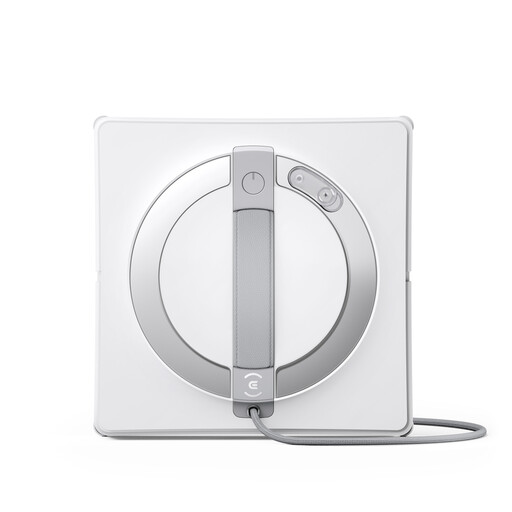
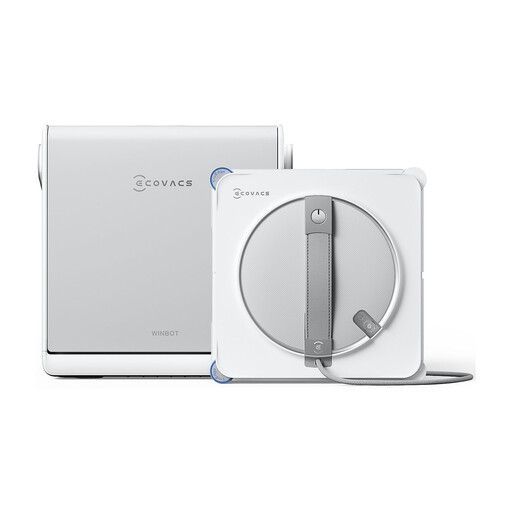
Why it’s a good fit: For users who prefer app control, a mobile multifunction station and automatic spraying.
Use is limited to suitable glass surfaces, a secure station and the properly attached 5.5 m safety rope.
Three-nozzle spray head, WIN-SLAM 4.0 navigation, 12-stage safety features and control via the ECOVACS HOME app, according to the manufacturer.

Why it’s a good fit: For smaller homes, narrow glass surfaces and users looking for a compact device with app control.
Before buying, compare the width, depth and edge clearances of your own window with the compact housing dimensions.
Specifications include 7,500 Pa of suction power, an ultrasonic dual nozzle, WIN-SLAM 5.0 and app control.
Why it’s a good fit: For households with numerous large windows, balcony glazing or regular cleaning schedules.
The stated coverage depends on the cleaning mode. As with this model, the safety rope, suitable glass surface and operating instructions remain essential.
8,000 Pa, WIN-SLAM 4.0, TruEdge edge cleaning, a 12-stage safety system and up to 110 minutes of runtime, according to the product description.
We have put together an up-to-date selection of window cleaning devices that can be compared based on controls, safety features, surface compatibility and cleaning functions.
In addition to the purchase price, you will incur costs for cleaning solution, replacement pads and, where applicable, accessories. Washable pads reduce ongoing consumable costs, but they must be cleaned regularly and replaced when worn. For devices with a tank or spray nozzles, cleaning the fluid system is also important.
Before placing your order, check the following:
That depends on the model. Devices with edge sensors or optical edge detection may be designed for frameless windows. However, automatic detection is not blanket approval for every glass surface. The manufacturer’s specifications regarding edges, minimum size and surface characteristics must be followed.
Service life depends on factors including frequency of use, maintenance, pad condition, battery health and cable care. After every use, clean the pads, housing and sensor areas in accordance with the instructions. Store the device in a dry place and never use it with a damaged cable or safety rope.
Power consumption depends on the device’s performance and cleaning duration. With spray models, tank capacity, operating mode and the level of soiling affect liquid consumption. Use only water or a solution approved by the manufacturer. A larger tank is not automatically more economical; it primarily allows the device to run longer without refilling.