Handmade sellers who care about colour
If you regularly photograph your own decorations for listings, using the same artificial lighting makes it easier to compare colours and framing.


A compact camera is enough for photographing window decorations in their entirety if you want to avoid changing lenses and its close-up performance suits your subjects. An interchangeable-lens mirrorless camera offers more flexibility for subjects of different sizes and small details, but you’ll need to choose the lens carefully. With either type of camera, lighting, camera position and a tripod all affect the shot. Also check how you can adjust the white balance for your artificial lighting.
If you regularly photograph your own decorations for listings, using the same artificial lighting makes it easier to compare colours and framing.
For small material textures or fixings, you’ll need to consider the lens too: the camera body alone won’t tell you how large a detail will appear in the image.
If you want to show the decoration in place at the window, plan the light source, background and camera position as well as the camera itself.
A good fit if: you want to capture full views and occasional details without changing lenses.
The trade-off: You can’t swap the fixed lens for another one later, and the focusing distance may change depending on the zoom setting.
A good fit if: you photograph decorations of different sizes and want to vary the framing.
The trade-off: A standard zoom isn’t automatically suited to capturing the smallest details. Check which lens is included and its close-up specifications.
A good fit if: you regularly want to fill the frame with small textures, edges or fixings.
The trade-off: The lens must be compatible with the camera body, and it adds to your kit.
| What matters | What to check when buying | Who it matters most to |
|---|---|---|
| Colours in artificial light | Check whether the white balance and RAW shooting options suit your workflow, and whether you can keep the light source consistent. | When I photograph a series of decorations, I want to assess colour casts and keep the lighting as consistent as possible. Around 33% of consumers would prioritise colour reproduction under artificial light. |
| Fine textures | Compare the focusing distance and close-up performance of the specific lens at the zoom setting you plan to use. | When small embellishments or fixings need to be clearly visible, the lens I use is what matters most. Around 27% of consumers would make fine details their top buying priority. |
| Full view of the decoration at the window | Check the field of view of the included lens and whether you can position the camera and lighting in the space available. | When I want to show the decoration in context at the window, I want to plan the framing and lighting together. Around 27% of consumers would prioritise a full view of the decoration at the window. |
| Easy setup | Compare a compact camera with a complete camera-and-lens kit, and check what each package includes. | When I want to get started with as little fuss as possible, a straightforward setup matters to me. Around 13% of consumers would prioritise ease of use. |
For small embellishments, the framing you can achieve also depends on the lens you actually use. A standard zoom isn’t automatically designed for very close subjects.
Compare the exact kit names and the close-up specifications of the included lens with the size of your smallest subjects.
If the kit can’t capture your details, you may need an additional compatible lens.
Stabilisation, white balance and measures to prevent flicker address different shooting conditions. A stabilised camera can’t replace suitable lighting or colour adjustment.
Check separately what stabilisation the specific camera body or lens offers, how you can adjust the white balance, and whether your lights cause banding.
For the Sony RX100 VII A, Sony lists different focusing distances: approximately 8 cm at the wide-angle end and approximately 100 cm at the telephoto end.
Check the detail framing you want at the zoom setting you’ll actually use.
The EOS R50 with an RF-S standard zoom is an option if you’re looking to get started with an interchangeable-lens system and variable framing.
The Z50II kit with a 16–50 mm VR zoom is an interchangeable-lens camera option for subjects of different sizes.
The RX100 VII A lets you take photos without changing lenses; the Alpha 6400, by contrast, is an interchangeable-lens camera.
The X-S20 is an interchangeable-lens camera option if RAW and in-body stabilisation are useful for other types of photography too.
The LUMIX G100D kit combines a compact interchangeable-lens camera body with a specifically named lens.
The following Joybuy products are compact digital cameras. Compare their resolution, zoom and handling specifications with the size of your decorations and the level of detail you need to capture.
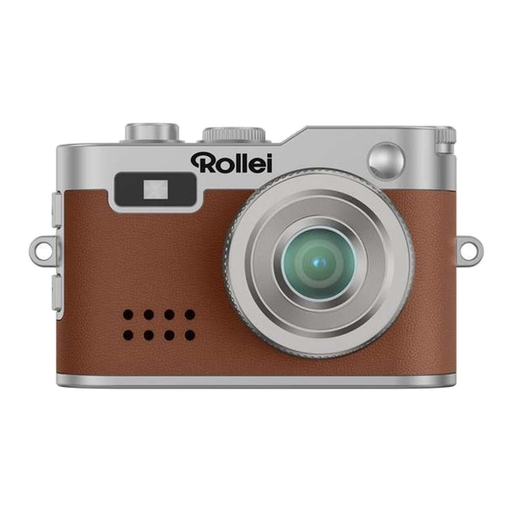 No image available
The mini model is worth considering if you want an especially compact setup. Its stated photo resolution of 2 MP is a limitation to bear in mind if you need to capture very fine textures.
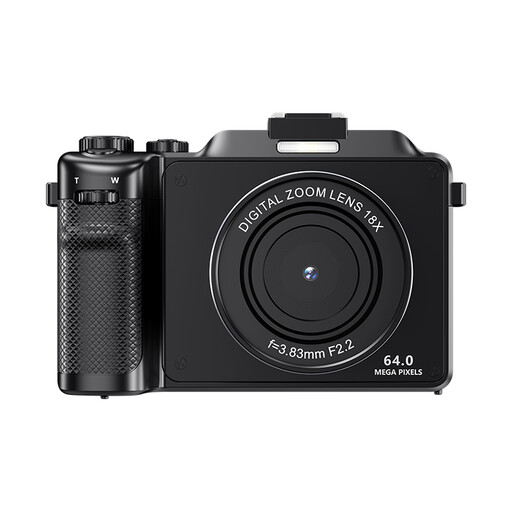 No image available
The product title lists autofocus, flash and 18x zoom. Check whether you can achieve the framing you want at a usable zoom setting and the focusing distance you need.
 No image available
The product title describes a point-and-shoot camera with 18x zoom. For full views at the window and small details, check that the field of view and focusing distance suit your subject.
Keep the main light source as consistent as possible and check the white balance. With a camera that supports RAW, you can adjust the colours afterwards. With mixed light sources, though, a single setting may not work for every part of the image.
Yes. Keeping the camera in a fixed position makes it easier to achieve consistent framing when photographing several decorations. Still, plan the light source and camera position together so the shots show the window view you want.
First, check which features your specific camera model offers. Sony Support lists a mechanical shutter or an adjusted shutter speed as possible measures for supported models. For regions with a 50 Hz mains supply, 1/50 or 1/100 second are suggested as starting points, not as a guarantee for every light.
For a consumer purchase in the EU, the statutory two-year legal guarantee applies to your contract with the seller, not the manufacturer. An additional commercial guarantee does not replace these rights, so keep your proof of purchase and delivery.
As a general rule, § 22 KunstUrhG requires the consent of people shown in an image if it is distributed or displayed publicly. § 23 sets out exceptions, which must be assessed on a case-by-case basis. For a product-only photo with no person shown, these provisions do not raise the question of consent for the use of someone’s image.