
Lieferung heute & morgen

Qualitätsgarantie

Willkommens-Angebote freischalten: KOSTENLOSE Lieferung | Bis zu 80 % RABATT | Kostenlose 30-Tage-JoyPlus-Testphase
App herunterladen
The right window dressing should provide privacy, regulate the amount of light coming in and complement your room. In practice, however, poor purchases are often down to unclear measurements, unsuitable fittings or unrealistic expectations about how sheer or light-blocking a product will be.
Whether you live in a rented flat, own your home or are furnishing a new office, it’s worth checking three common pitfalls before you buy.
A pleated blind doesn’t necessarily need to be the same width as the window pane. With clip-on models, the right size depends on the fitting method and the manufacturer’s recommendations. For the Dream-seeker pleated blind in 55 × 120 cm, for example, the recommendation is to measure the glass width and add around 4 cm. The height should match the full height of the window, including the opening sash.
Other pleated blinds may require a different allowance. That’s why the measurements on the product page are more useful than a general rule of thumb.
A light-filtering pleated blind diffuses or filters daylight, but it won’t make a room completely dark. During the day, it may provide enough privacy for your windows. However, when the lights are on inside and it’s dark outside, shapes may still be visible.
Depending on how you use the room, blackout curtains, opaque curtains or fabrics that block out more light may be better for bedrooms. Check the specific product description for terms such as “Blackout”, “Room Darkening” and “opaque”, as they don’t always mean the same thing.
A no-drill pleated blind with clip-on brackets is a practical choice for renters, but it needs to be compatible with your window frame. The brackets must suit the frame thickness and shouldn’t get in the way when you close the window. For adhesive brackets, the surface should be clean, dry and free from grease.
Curtains, on the other hand, need a securely fitted curtain pole or track. Heavy thermal curtains and layered arrangements may need particularly sturdy fixings. If you have children at home, keep cords and controls out of their reach.
When measuring for pleated blinds, start with:
A clip-on pleated blind is best suited to straight, easily accessible windows. According to the product description, the Dream-seeker models mentioned aren’t suitable for sloping roof windows. For balcony or patio doors, also check that the controls won’t clash with the door handle.
A semi-sheer pleated blind can let daylight into living spaces and home offices while reducing direct views in from outside. This combination is often useful in kitchens, children’s rooms and offices.
For bedrooms or rooms where you work at a screen, opaque curtains or blackout curtains may be more suitable. Depending on the style, the PONY DANCE blackout models are described as reducing light by 60–75% or 85–95%. These figures come from the individual product descriptions and shouldn’t be taken to mean that no light will get through at all.
Polyester is widely used for pleated blinds and curtains because it can be shape-retaining and easy to care for. The Dream-seeker pleated blind is made from woven polyester and described as moisture-resistant, but not waterproof. It shouldn’t be in prolonged contact with water.
Linen curtains and linen-look curtains work well with natural interior styles. One model is made from 30% linen and 70% polyester, while another has a linen-look finish in 100% polyester. If a particular material content matters to you, check the full composition.
The heading style also affects the finished look: pencil-pleat curtains need suitable hooks, rings or gliders. For a set of two curtains, check the width of each individual panel, not just the total width.
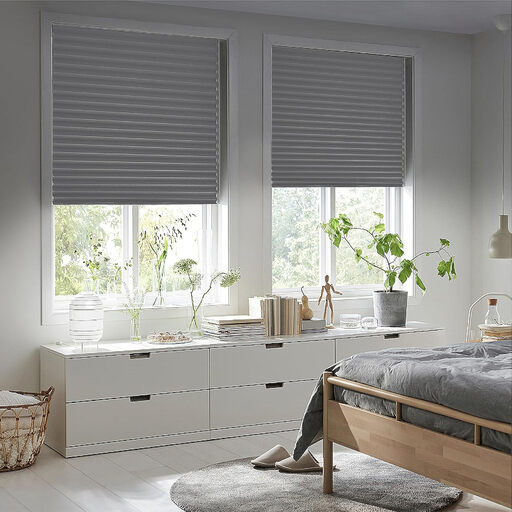
Why it’s a good match: This model can be fitted to the window frame without drilling, using clip-on or adhesive brackets, and is described as suitable for a range of living spaces.
The sizing guidance provided takes the glass width and an extra 4 cm into account. It also clearly states that the fabric isn’t waterproof.
Light-filtering polyester fabric, adjustable positioning and four adhesive brackets included.
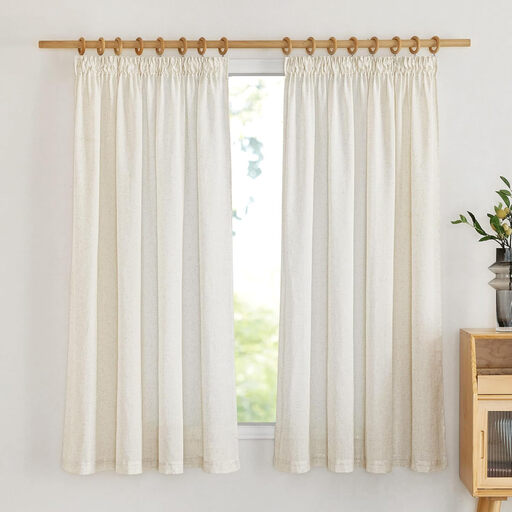
Why it’s a good match: Made from 30% linen and 70% polyester, these curtains bring a textured look to living rooms and bedrooms while still letting daylight in.
The exact fabric blend is clearly stated, so you can distinguish it from pure linen or a polyester fabric with a linen-look finish.
Two panels, each measuring 140 × 145 cm, with pencil pleats and several hanging options for a pole or track.
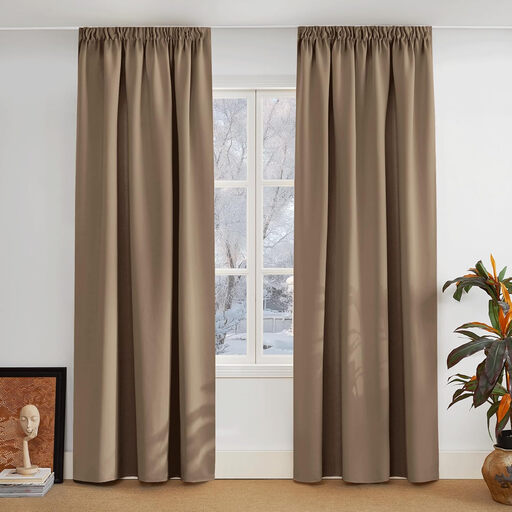
Why it’s a good match: With two panels, each measuring 140 × 245 cm, this set is designed for larger windows in bedrooms or living rooms.
The product description gives a light reduction of 60–75%, rather than making a blanket claim that the curtains will block out all light.
230 g/m² polyester fabric, pencil pleats and fittings for use with a curtain pole, track or wire system.
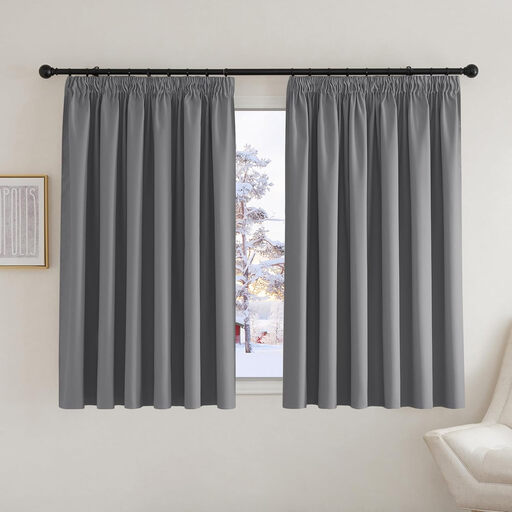
Why it’s a good match: This set includes two panels, each measuring 228.6 × 137.16 cm, and is described as reducing light by 85–95%.
The stated percentage gives you a clearer idea of how much light the curtains will block. The pole or track will still need to be securely fitted.
Triple-weave fabric, pencil pleats and care instructions for cold machine washing.
We’ve put together a complete, regularly updated list of products that meet these strict selection criteria and the safety regulations in force in the EU.
For rented homes, no-drill pleated blinds with clip-on brackets are a practical option, as long as the brackets are compatible with the window frame. Adhesive brackets need a clean, dry surface. Curtains, on the other hand, usually require a curtain pole or track to be fitted.
Measure the width of the glass and the height of the full window sash. Only add a specific amount to the glass width if the product description recommends it. Depending on the model, the recommended allowance may be 2–4 cm or another amount.
No. Thermal curtains may be made from heavier fabric and help reduce the amount of light or heat coming in, but how much you can see through them depends on the weave, colour, coating and finish. For a bedroom, check the specific information about light reduction and the fabric construction.