If most of your flat’s windows are small and easy to reach, a handheld window vacuum is usually a good middle ground: you guide it over the glass yourself, but you don’t have to remove all the water by hand. A window robot is more suitable if you have several individual panes that are large enough, as you’ll need to position and secure it, then move it from one pane to the next. For just a few windows, a washer and squeegee are still a sensible choice if you don’t mind doing the work by hand.
Which cleaning method is right for you?
Homes with lots of easy-to-reach windows
If you regularly clean several smooth panes and would like a machine to do the work of moving across the glass, a window robot could be worth considering. Check the minimum size for each pane required by the specific model, as well as its frame and any obstacles.
Homes with small or divided windows
For short panes and windows with several opening sections, you can guide a window vacuum by hand across each suitable surface. You’ll still need to wet the glass and guide the appliance yourself.
Homes with only a few windows to clean now and then
If your windows are easy to reach and you’re happy to do everything by hand, a washer and squeegee are all you need. There’s no need for a battery-powered appliance or a robot.
What should you consider when choosing?
For flat windows, first check each individual pane to see whether a robot can be used at all. Then think about how much manual work you’d be willing to swap for the preparation and effort involved in using an appliance.
Window robot
A good choice if: You want to clean several suitable, connected glass surfaces regularly.
The trade-off: You won’t need to guide it across the glass, but you’ll still need to position, secure and move the robot, and occasionally step in.
Window vacuum
A good choice if: You want to clean small or divided windows quickly by hand and vacuum up the water as you go.
The trade-off: You’ll still need to wet the glass and guide the appliance yourself.
Washer and squeegee
A good choice if: You only have a few easy-to-reach windows to clean and would rather not use an electrical appliance.
The trade-off: Wetting, squeegeeing and drying the windows all remain manual tasks.
| Criteria | What to check before buying | Most important for |
|---|
| Size and shape of the glass panes |
Measure the smallest connected pane and compare its width and height with the robot’s minimum requirements. Also check for glazing bars, handles and seals. |
With narrow window sections or divided panes, I don’t want to choose an appliance that can’t be used on every individual pane. That’s why around 40% of consumers prioritise a good fit. |
| How much work it saves |
As well as the robot’s movement across the glass, consider the time needed to position, secure and move it. With a window vacuum, you’ll still need to wet the glass and guide the appliance by hand. |
If I clean lots of windows regularly, I want to know which tasks the appliance will actually take off my hands and what extra preparation is involved. For around 40% of consumers, this is the main consideration. |
| Appliance and accessory requirements |
Compare what’s included and which replacement parts you’ll need, such as pads, covers or squeegee blades, with your cleaning routine. |
For my few easy-to-reach windows, I want to minimise charging, storage and replacement parts, and I’m happy to do some of the work by hand. Around 20% of consumers prioritise keeping appliance requirements to a minimum. |
Which mistakes can you avoid?
-
Measuring only the whole window
For a robot, it’s the size of each individual connected pane that matters. Kärcher says the RCW 2 requires a minimum of 35 × 35 cm, while the RCW 4 requires at least 40 × 40 cm per window pane.
Measure each opening section or pane you want to clean separately, then check the measurements against the instructions for your chosen model.
-
Assuming automated means unattended
A window robot still needs to be prepared, positioned and secured. ECOVACS’ support guidance covers issues including obstacles, reactions at the edges and areas that haven’t been fully cleaned.
Before buying, think through how you’ll use it on your windows: where will you position it, how will you secure it and how often will you need to move it?
-
Overlooking accessories and maintenance
Robots may need cleaning pads and cleaning solution; with window vacuums, covers and squeegee blades are part of the cleaning routine. Which parts are compatible depends on the exact model.
Check what’s included and which replacement parts are compatible with the model you’re planning to buy.
Cleaning, drying and storing the parts you’ve used also add to the work involved after washing your windows.
-
Putting an old appliance in the household bin
Germany’s Federal Environment Agency advises that old electrical appliances must be collected separately from unsorted household waste.
Take an old window robot or window vacuum to a suitable take-back point or collection centre.
Brands to help you choose
Kärcher
Kärcher offers both handheld window vacuums and window robots. The details below apply to the models named, not the entire range.
- Kärcher quotes a 100-minute battery life and a 280-mm suction nozzle for the WV 6 Plus.
- According to Kärcher, the RCW 2 and RCW 4 require a minimum window pane size of 35 × 35 cm and 40 × 40 cm respectively.
ECOVACS
ECOVACS offers window robots in different sizes, including the WINBOT MINI.
- ECOVACS lists the WINBOT MINI as 215 mm long on each side and 55 mm high. These dimensions can help you narrow down your options for narrow spaces.
- The size of the casing doesn’t confirm whether a particular pane is suitable. ECOVACS’ support guidance also describes possible reactions at the edges and areas that haven’t been fully cleaned.
HOBOT
HOBOT says the S7 Pro has sensors designed to deal with frames, seals and frameless edges.
- According to HOBOT, the S7 Pro’s ELB sensors respond to air leaks around seals and frameless edges.
- This description from the manufacturer doesn’t replace checking whether the model is suitable for your panes and their edges.
Vileda
Vileda offers tools for traditional, hand-guided window cleaning.
- A window squeegee with a rubber blade removes water from smooth glass without needing a battery to be charged.
- You’ll do all the wetting and squeegeeing yourself, so make sure the rubber blade is in good condition.
Window robots for suitable glass surfaces at Joybuy
These models are all window robots. For small or divided flat windows, whether a particular model is suitable depends on the size of each individual pane. Check this against the model’s instructions before buying.
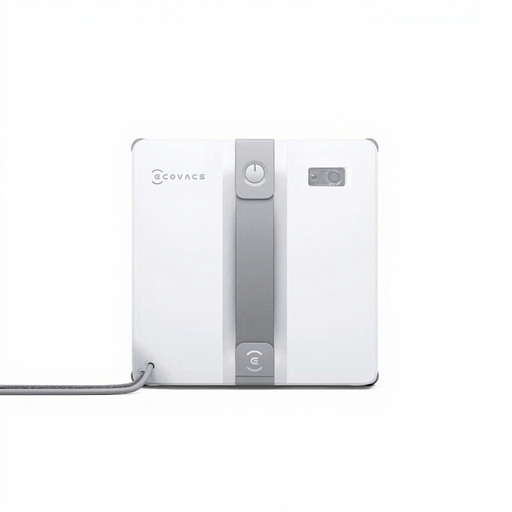 Image unavailable
ECOVACS WINBOT MINI, Grey
This compact window robot is an option if you want narrow areas of glass cleaned automatically. ECOVACS lists it as 215 mm long on each side and 55 mm high. Also check the minimum size required for each pane and whether the robot is suitable for its frames.
View at Joybuy
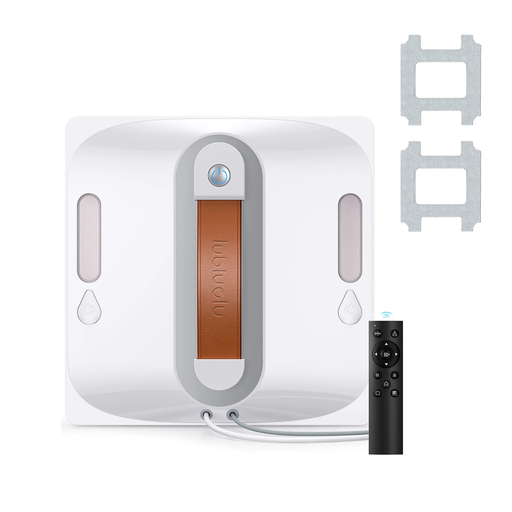 Image unavailable
Lubluelu CHYW201 window robot
This robot model could be suitable for cleaning appropriate glass surfaces regularly. The product name states a suction power of 6500 Pa, but this doesn’t tell you whether it’s suitable for small or divided panes. Check the minimum size and the CHYW201’s requirements for frames and obstacles.
View at Joybuy
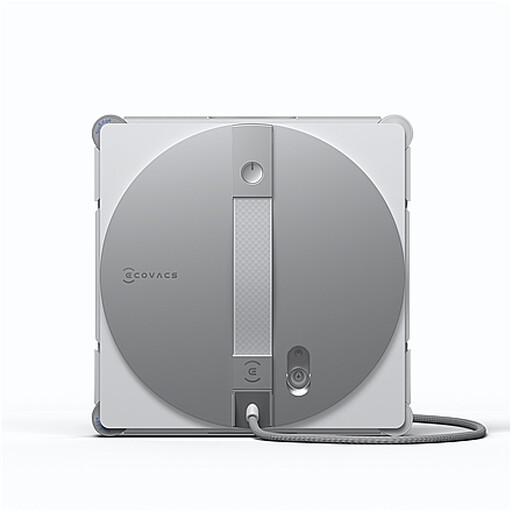 Image unavailable
ECOVACS WINBOT W3 OMNI, White/Silver
This window robot is designed for use on suitable glass surfaces. The product name lists WIN-SLAM 5.0 and a runtime of up to 70 minutes. Before buying, check how it operates, along with the minimum pane size and any requirements relating to frames and obstacles.
View at Joybuy
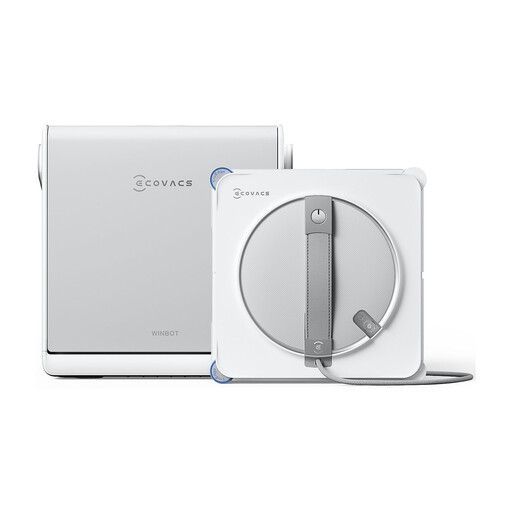 Image unavailable
ECOVACS WINBOT W2S OMNI, White/Silver
This model with a multifunctional station could be suitable for regular cleaning of appropriate glass surfaces. The product name lists WIN-SLAM 4.0 and a runtime of 110 minutes. Check the measurements of each pane, along with its frames and any obstacles, against the model’s requirements.
View at Joybuy
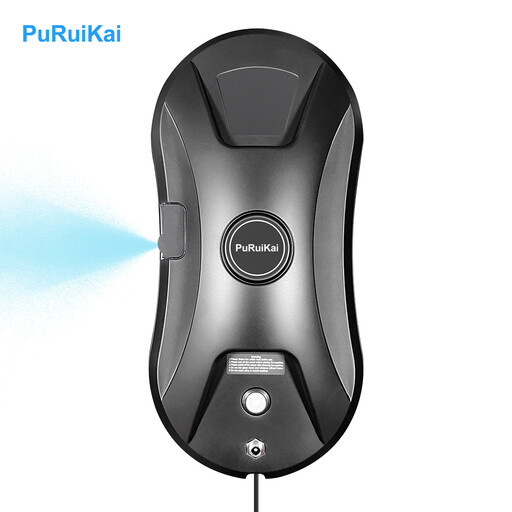 Image unavailable
PuRuiKai window robot, 5600 Pa
This window robot is an option for suitable smooth panes if you want to automate the cleaning process. The product name states a suction power of 5600 Pa. Separately, check the minimum size of each pane and any requirements for frames, divided panes and obstacles.
View at Joybuy
Frequently asked questions
Can a window robot clean small flat windows?
Yes, as long as the individual connected pane meets the requirements of the specific model. Kärcher lists a minimum of 35 × 35 cm for the RCW 2 and 40 × 40 cm for the RCW 4. If your windows are divided, measure each pane separately rather than just measuring the whole frame.
Can I leave a window robot to run unattended?
Don’t plan to leave the robot to clean entirely unattended. ECOVACS’ support guidance describes situations involving obstacles, problems at the edges or areas that haven’t been fully cleaned, which may need your attention. Follow the safety and operating instructions for the specific model.
Can I use a window vacuum on mirrors and shower screens?
Yes, on suitable smooth surfaces: Kärcher lists mirrors and shower screens as suitable for its cordless window vacuums. For delicate or coated surfaces, check their care instructions too.
How do I dispose of an old window robot or window vacuum in Germany?
Take the old electrical appliance to a suitable take-back point or collection centre, separately from other waste. According to Germany’s Federal Environment Agency, old electrical appliances must be collected separately from unsorted household waste, so they shouldn’t go in the household bin.


