Households with narrow glass panels
Measure the clear width of the glass and check that the nozzle will fit between the frame and fittings. The nozzle widths listed by Leifheit and Bosch vary by set and model.


A window vacuum can be worthwhile if you regularly wet-clean glazed internal doors and want to collect the water straight away. For a few small panes, a manual squeegee and cloth may be all you need. Before buying, measure the clear width of the glass and check that the nozzle and body of the appliance will clear the frame and fittings. Remove any visible grit with clean tools before wiping, so you don’t drag it across the glass.
Measure the clear width of the glass and check that the nozzle will fit between the frame and fittings. The nozzle widths listed by Leifheit and Bosch vary by set and model.
A window vacuum can be handy if you want to collect the water when wet-cleaning a doorway. Kärcher specifies a dirty water tank for the WV 6 Plus; with a manual squeegee, you’ll need to collect the water by hand.
If you regularly clean other suitable smooth surfaces as well as your internal doors, battery life, tank capacity and ease of use may matter more. Kärcher lists a 100-minute runtime and a 150-ml tank for the WV 6 Plus.
First, measure the narrowest clear gap between the glass frame and the fittings. Check the actual door glass to see whether there are any dirt particles on it.
| What you need | What to check before buying | Who is this important to? |
|---|---|---|
| A nozzle for narrow glass panels | Compare the clear width of the glass with the nozzle width and the contents of the specific set. | If I need to clean narrow panels between frames or fittings, I make sure the nozzle will fit. Around 36% of consumers prioritise finding the right nozzle width. |
| Collecting water at a doorway | Check the tank and whether you can reach the bottom edge of the glass by the door frame. | When wet-cleaning frequently, I don’t want to have to mop up drips at the doorway with a cloth. Around 29% of consumers focus above all on collecting water around the door. |
| Removing particles before wiping | Inspect the glass before cleaning and keep the cloth and squeegee blade clean. | If there are actually grit particles on the glass, I don’t want to drag them across the surface with a cloth or squeegee blade. Around 21% of consumers prioritise taking care around particles. |
| Cleaning lots of other glass surfaces | Compare the runtime, tank capacity, weight and emptying process of the specific model. | If I regularly clean lots of other glass surfaces as well as doors, the effort involved in longer cleaning sessions matters to me. Around 14% of consumers prioritise these additional surfaces. |
A nozzle designed for a larger window may not fit between narrow frames or fittings. Leifheit lists a 28-cm suction width for the Dry & Clean 51000 base unit. The 17-cm nozzle is available separately, while set 51016 lists both widths.
Measure the clear width of the glass, including any narrow points around the fittings, then check the exact product and set number.
If you need a narrow nozzle, you may have to buy it as an additional accessory for the base unit.
Expert guidance from GLASWELT explains that grains of sand, dirty cloths or too little water can cause scratches. This matters if there are actually particles on the glass; shoes in the doorway alone don’t prove that the glass is dirty.
Check the surface before wiping. Carefully remove any particles and use clean tools that are sufficiently damp.
A long runtime is mainly a consideration if you regularly clean lots of other suitable glass surfaces. The F.A.Z. Kaufkompass gives the Kärcher WV 6 Plus a positive review in its own test, but also describes it as heavy.
Start by considering the width of the glass panels and how often you clean them. Weigh up runtime, weight and tank capacity in relation to the surfaces you actually want to clean.
The Dry & Clean and Nemo ranges differ in design and features, so the exact model number is key.
The GlassVAC Complete Set 06039G6000 is an option if you need different nozzle widths for your door and other glass surfaces.
The WV 6 Plus can be a useful comparison model for households that clean larger glass surfaces as well as door glass.
Washing and squeegeeing by hand is an alternative if you only clean a few small panels occasionally.
This selection includes manual window-cleaning sets and window vacuums for wet-cleaning internal doors and other smooth glass surfaces.
 No image available
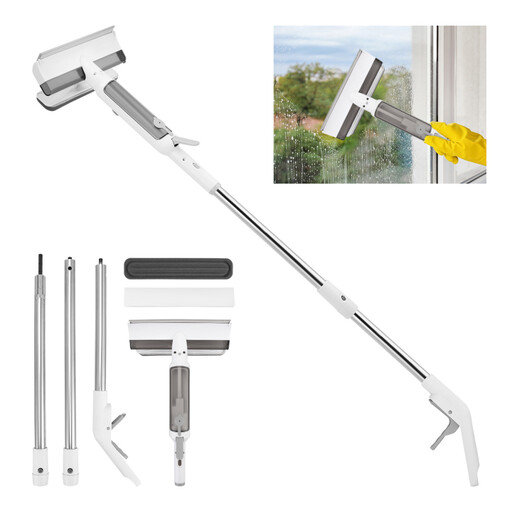
A manual alternative if you want to wet-clean glass surfaces and squeegee the water off yourself afterwards.
The title lists a 147-cm handle, a spray function, a dirty water tank and a silicone squeegee. The product description also lists a microfibre pad and a removable, rotating head.
 No image available
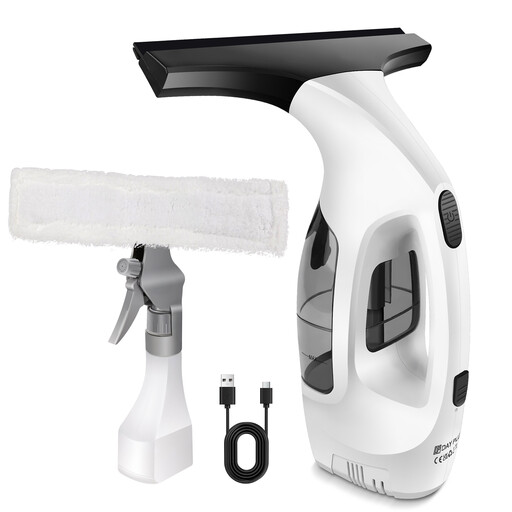
An option if you want to wet-clean glass and then collect the water with a window vacuum.
The product description lists a 28-cm rubber blade, a 150-ml tank and up to 50 minutes of cordless use. A spray bottle and microfibre cloth are also included.
 No image available
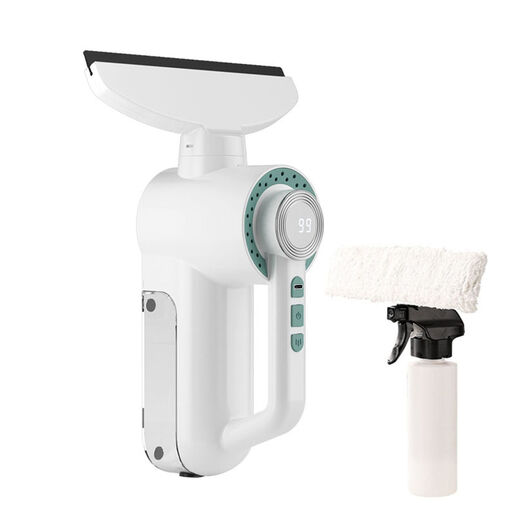
For wet-cleaning followed by water collection. Before buying, check that the body and nozzle will fit around your door fittings.
The product title lists 1200 Pa, two suction settings, a 150-ml tank, an LED display and a 3000-mAh battery. The product description gives a runtime of up to 30 minutes.
For a standard wet clean, wash the glass first, then use the window vacuum to collect the water. Check for particles on the glass beforehand, and keep the cloth and squeegee blade clean.
No. According to Leifheit, the 17-cm nozzle is available separately for the 51000 base unit, while it is included with set 51016. Before buying, compare the full product number with the clear width of your glass.
After use, you’ll need to empty the tank and clean any accessible parts. Leifheit lists a narrow nozzle as a separate purchase for the 51000 base unit; Kärcher describes the WV 6 Plus as having a removable, washable squeegee blade. Any other maintenance depends on the model and accessories you choose.
No. The German Federal Environment Ministry explains that waste electrical equipment must be collected separately and taken to an authorised collection point or a retailer required to take it back. The amendment to the Electrical and Electronic Equipment Act (ElektroG) came into force on 1 January 2026. Whether a retailer has to take back an old appliance depends, among other things, on the retailer, the appliance’s dimensions and whether you are buying a corresponding new appliance.