
Lieferung heute & morgen

Qualitätsgarantie

Willkommens-Angebote freischalten: KOSTENLOSE Lieferung | Bis zu 80 % RABATT | Kostenlose 30-Tage-JoyPlus-Testphase
App herunterladen
Fingerprints on the balcony door, limescale on the shower screen or dust on hard-to-reach exterior surfaces: A window-cleaning robot can reduce the cleaning workload at home. However, window-cleaning robots vary considerably in terms of adhesion, navigation, operation and the types of glass surfaces they can handle.
Focusing solely on a high Pa rating or fully automated functions can result in buying a device that is unsuitable for your windows. The following criteria help you assess marketing claims and choose a suitable automatic window cleaner for your home.
Suction power is often specified in pascals. A higher figure may support adhesion, but on its own it says little about the cleaning result. The following factors are equally important:
A window-cleaning robot with suction power should therefore not be selected solely by its Pa rating. A model with 8,000 Pa may be suitable for certain applications, while compact dimensions are more important for smaller interior windows.
Even a glass-cleaning robot requires preparation and monitoring. The window must be suitable for use, free from cracks and sufficiently smooth. The power cable and safety rope must be attached correctly. For exterior windows, weather conditions and moisture must also be taken into account.
A window-cleaning robot with a safety rope is not designed to be operated without following the manufacturer’s instructions. The rope provides an additional safeguard, but it does not replace correct installation.
Large windows, narrow transom windows, mirrors and shower doors all present different requirements. Some devices need a minimum working area, while others are designed to be particularly compact. Window handles, muntins, frames and minor unevenness can also restrict freedom of movement.
Before buying, you should therefore check the actual dimensions of the glass surfaces. A window-cleaning robot for large windows may be too wide for a very narrow window; conversely, a smaller model may require more repositioning on expansive glass surfaces.
For mains-powered devices, adhesion is generally created by negative pressure. The nominal suction power is not the only important factor: automatic pressure adjustment and a backup power function also matter. In the event of a power cut, the integrated battery can maintain adhesion for a limited period.
Pay attention to:
Specifications vary by model. The HUTT 10, for example, is advertised with up to 6,500 Pa, a 4.5-metre safety rope and power-failure protection for up to 30 minutes. According to the product specifications, the device is designed for working surfaces measuring at least 30 × 30 cm.
Reliable edge detection is important when windows are frameless or the robot is expected to clean right up to the edge. Depending on the model, sensors detect frames, glass boundaries or obstacles. Route-planning algorithms are designed to enable systematic cleaning paths and reduce unnecessary repetition.
However, terms such as WIN-SLAM or Edge Detection are brand-specific feature names. What ultimately matters is whether the product description confirms that the device is suitable for your window configuration. For frameless surfaces, the manufacturer’s usage instructions should be followed explicitly.
A tank with a spray function can apply cleaning solution directly to the surface. Tank capacity determines how often it needs to be refilled. Replacement pads and compatible cleaning solutions should also be readily available.
Depending on the model, app control provides additional cleaning modes and status information. Remote controls or buttons on the device may be more practical for users who do not want to set up an app. Also check whether the robot operates exclusively while connected to the mains. For many devices, the battery serves only as an emergency power source rather than as an independent drive system.

Why it’s a good fit: This model combines on-device controls with a remote control and, according to the product specifications, is suitable for glass surfaces measuring at least 30 × 30 cm. This makes it an interesting option for various indoor surfaces, including mirrors, balcony doors and smaller windows.
The specifications state a minimum surface area, an 80 ml tank, a 4.5-metre safety rope and power-failure protection for up to 30 minutes.
Up to 6,500 Pa of suction power, 18 sensors and a stated cleaning performance of under 3 minutes per square metre.
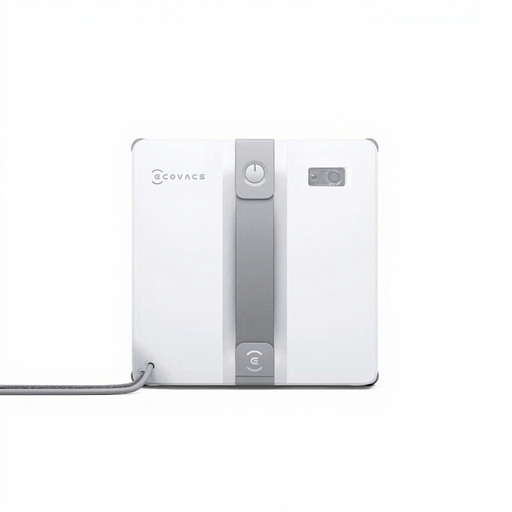
Why it’s a good fit: According to the product description, the device measures 215 mm along one side and is 55 mm high. These compact dimensions are particularly useful for narrow windows and hard-to-reach areas.
The compact design addresses the common problem of standard devices not having enough clearance around handles, grilles or confined areas.
7,500 Pa of suction power, the ECOVACS HOME app and sensors for edges and slipping movements, according to the product description.
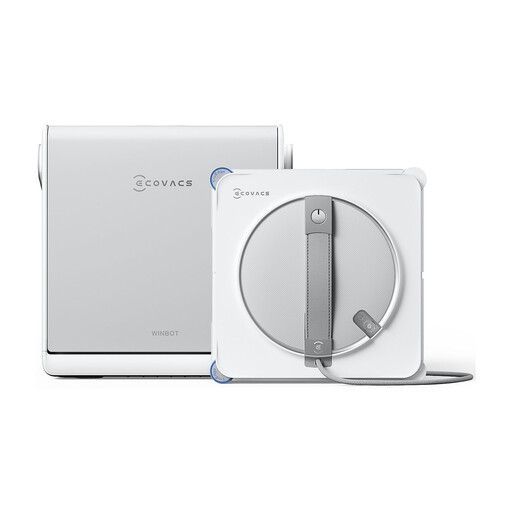
Why it’s a good fit: The multifunction station, multiple cleaning modes and stated runtime of up to 110 minutes make this model appealing to users with larger or multiple glass surfaces.
The selection considers more than just the 8,000 Pa rating. Edge detection, safety features, cleaning modes and station operation are also taken into account.
TruEdge edge cleaning, WIN-SLAM 4.0, a 12-stage safety system and a stated cleaning area of up to 65 m² in fast mode.
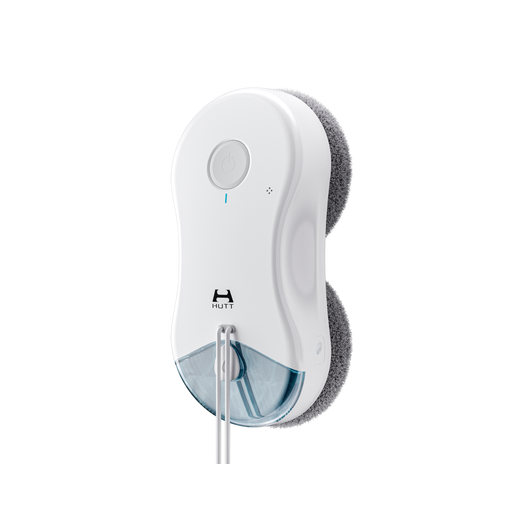
Why it’s a good fit: On-device or remote-control operation is well suited to households that do not need app control and want to clean multiple smooth surfaces.
The product specifications explicitly list suitable surfaces such as glass, mirrors and tiles, along with a recommended maximum angle of inclination of 60 degrees.
Up to 5,400 Pa of suction power, an 80 ml water tank, edge cleaning and stated power-failure protection for up to 30 minutes.
We have compiled a current selection of products that take these criteria and German safety requirements into account.
Yes. Before starting, check the glass surface, power connection, safety rope and adhesion. During cleaning, the device should be monitored in accordance with the operating instructions. Children and pets should be kept at a safe distance.
There is no universal fixed service life. It depends on factors including frequency of use, maintenance, pad condition, storage and compliance with the manufacturer’s instructions. After each use, the cleaning cloths and contact surfaces should be inspected and cleaned.
In addition to the purchase price, you will incur costs for electricity, cleaning solution and replacement pads. Actual consumption depends on the tank capacity, cleaning mode and window area. When choosing a model, you should therefore consider not only the device price but also the availability of suitable accessories.