
Lieferung heute & morgen

Qualitätsgarantie

Willkommens-Angebote freischalten: KOSTENLOSE Lieferung | Bis zu 80 % RABATT | Kostenlose 30-Tage-JoyPlus-Testphase
App herunterladen
Tall windows, large glass fronts and hard-to-reach exterior surfaces cannot always be cleaned conveniently with a window squeegee. A window-cleaning robot can be a practical alternative, particularly if you want to clean windows without a ladder. However, not every window-cleaning device is suitable for every pane.
As a Joybuy Product Recommendation Officer, I assess the most important buying criteria objectively. It is not just about suction power and the spray function, but also about the power supply, safety precautions, glass condition and subsequent care.
Specifications such as “5,600 Pa” may initially seem clear-cut. However, actual adhesion also depends on the smoothness, cleanliness and dryness of the glass surface. Textured glass, heavily soiled panes, damp surfaces or greasy residue can affect adhesion and movement.
A window-cleaning robot with a suction cup or vacuum adhesion should therefore only be used on smooth surfaces that are suitable for this purpose. The Pa figure is a technical reference value, but it is not a guarantee for every installation situation.
On some models, the battery is used exclusively for emergency power. The robot must remain connected to the mains adapter while cleaning. The PuRuiKai PRK-21B specifically states that the device is not intended to be used as a cordless, rechargeable window-cleaning robot.
Anyone expecting a completely cordless device could therefore be disappointed. Before buying, check the length of the mains cable, the position of the socket and how the cable will be routed.
A window-cleaning robot with a spray function can support the cleaning process, but it does not automatically remove heavy dust or sand. If abrasive particles are present on the pane, running the robot over them creates a higher risk of streaks or scratches. For heavily soiled windows, a dry pre-cleaning pass is advisable.
The liquid in the tank must also be suitable. With the model mentioned above, only water or glass-cleaning solutions intended for this purpose should be added, so that the nozzles do not become blocked.
Look for a clear indication of suction power, but pay equal attention to the safety equipment. Key points include:
The PuRuiKai Robot Window Cleaner PRK-21B is specified with 2,500 Pa suction power, automatic edge detection, remote control, a safety rope and an integrated UPS function. According to the product data, the stated emergency power duration is up to 30 minutes. The device must nevertheless remain connected to the mains during operation.
An automatic window cleaner works most reliably on smooth, sufficiently large glass surfaces. Before use, read the instructions and check whether frames, glazing bars or uneven areas could obstruct its movement.
For models with a spray function, the following also applies:
Not every pane needs a glass-cleaning robot. For mirrors, interior windows, car glass or individual rooms, microfibre cloths, squeegees and telescopic poles can be more economical and easier to use. The key considerations are material, working width, reach and washability.
For example, a 32-centimetre-wide silicone blade can clear larger panes in just a few strokes. An extendable pole helps with tall interior windows, but does not replace a safe standing and working position when dealing with hard-to-reach exterior surfaces.
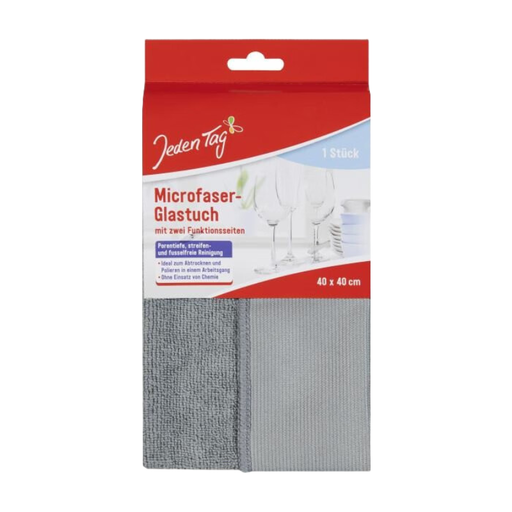
Why this product suits this profile: For smaller glass surfaces, mirrors and finishing after a robot cycle, this reusable cloth offers a simple manual solution.
It requires no battery, socket or adhesion technology. The 40 x 40 cm design, washable at up to 60 °C, is suitable for dry or damp use.
Two-sided design with a cleaning side and a drying side; reusable polyester-polyamide material.
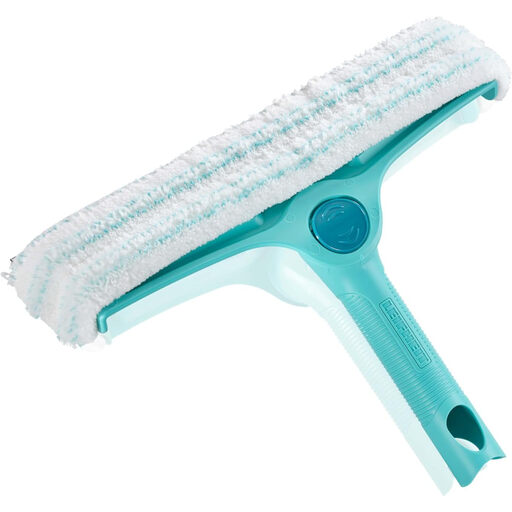
Why this product suits this profile: This manual window-cleaning tool combines frame cleaning, wiping and squeegeeing in one process, making it suitable for regular household cleaning.
The 32 cm-wide silicone blade and removable microfibre cover make the material and care properties clear. An extension pole is required separately.
Three adjustable working angles; Click System compatibility; washable Micro Duo cover.

Why this product suits this profile: For large, smooth glass surfaces and users who want to manage recurring exterior cleaning without a ladder, this window-cleaning robot offers automatic movement and spray modes.
The product specifications state that it has a safety rope, edge detection and UPS emergency power supply. The device still requires a mains connection and must only be used in accordance with the safety instructions.
2,500 Pa suction power according to the product data; 50-ml tank; manual and automatic cleaning plus spray control.
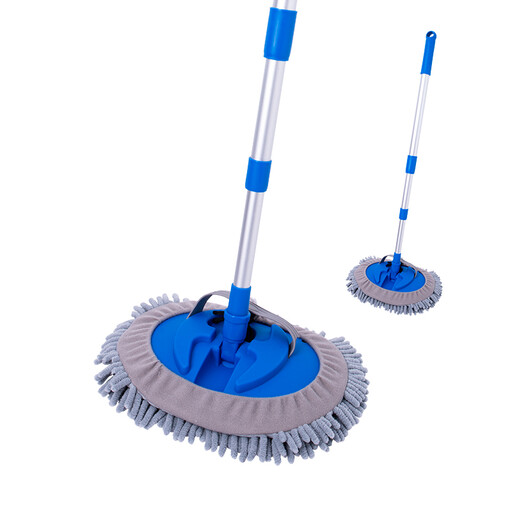
Why this product suits this profile: The extendable pole, which adjusts from 51.5 to 110 cm, is designed for cleaning tall interior windows, glass surfaces and smooth areas from the floor.
The reach is clearly specified with a three-section aluminium pole. Before use, the twist locks must be secured firmly and the working area kept clear.
26 x 17.5 cm chenille cleaning head; suitable for wet and dry cleaning; washable cover.
In addition to the purchase price, a window-cleaning robot may incur ongoing costs for cleaning cloths, replacement pads and suitable cleaning fluid. A model with a spray function also requires regular tank and nozzle maintenance. Before buying, check whether replacement parts are available and how easily the cloths can be removed.
Manual solutions generally require less maintenance. Microfibre cloths can be washed, while silicone squeegees should be rinsed after use. With a glass-cleaning robot, check the pane for sand, grease and moisture before every use.
For car glass and wing mirrors, compact squeegees are often more suitable. According to its product description, the Car Silicone Squeegee is intended for smooth glass and mirror surfaces and must not be used dry or with excessive pressure.
We have put together a complete, regularly updated list of products that fully meet these strict selection criteria and the safety regulations applicable in the EU.
On suitable smooth exterior surfaces, a window-cleaning robot can help with work at height. However, the safety rope must always be secured to a stable point. You must also take the power supply, weather conditions and the manufacturer’s instructions into account. Safety measures must not be omitted completely.
Its service life depends on how often it is used, how the sensors are cleaned, the condition of the cloths and correct storage. It is not possible to give a reliable general lifespan. Before every use, check the cable, safety rope, adhesion surface and cleaning pads.
Ongoing costs mainly include electricity, replacement pads and, where applicable, glass cleaner. With frequent use, washable cloths can help keep consumable costs down. Do not compare only the purchase price; also consider accessories, replacement-part availability and maintenance requirements.