Who might benefit from a window-cleaning robot?

Homes with large expanses of glass

For wide patio doors, full-height windows or glazed balconies, one setup can cover a larger uninterrupted area. The pane dimensions must be suitable, and the robot needs to be attachable from a safe, accessible position.

Homes with lots of individual panes

Multiple window openings, glazing bars or narrow sections mean frequent repositioning. The overall process — attaching the robot, caring for the pads and cleaning the edges afterwards — will determine whether it really saves you work.

Homes with hard-to-reach exterior windows

When windows are high up, safe access comes first. You must be able to attach, secure and remove the robot from a safe position, even if a problem occurs.

What should you look for when buying one?

Window-cleaning robot

Best for: several large, uninterrupted panes that are safely accessible and meet the model’s size requirements.

The trade-off: The robot cleans the surface automatically, but attaching it, moving it between panes and caring for the pads are still manual tasks.

Handheld window vacuum

Best for: lots of narrow or separate panes that need to be cleaned individually anyway.

The trade-off: You guide the device yourself, but you don’t need to attach and secure it to every pane.

Professional cleaning

Best for: exterior windows where a device cannot be attached or retrieved from a safe position.

The trade-off: You won’t be cleaning with your own household appliance; safe access to the window is the key consideration.

CriterionWhat to check before buyingWho it matters to
Large expanses of glass Minimum dimensions for the model variant, and the power or cable setup for where you’ll use it. I don’t want to keep cleaning wide panes by hand. Around 36% of consumers put automatic cleaning of uninterrupted areas first.
Lots of individual panes Size requirements for narrow panes, as well as the effort involved in repositioning the robot and changing its pads. With lots of separate window openings, I don’t want to go through a complicated process for every section. For around 29% of consumers, the effort of repositioning is the main concern.
Exterior windows and access Safety requirements, and whether you can attach and remove the robot without leaning out. I only want to clean a high exterior window if I can handle the device safely. Access is the main concern for around 21% of consumers.
Edges and streaks Model-specific test results for residue around the edges and streaks, as well as guidance on pad care. If I have to go back over the edges and stubborn marks after the robot has finished, automatic cleaning doesn’t offer much benefit. That’s why around 14% of consumers place the greatest importance on the cleaning results.

Common mistakes when choosing

  • Assuming the total glass area is the same as the area the robot can clean

    A large total area may be made up of narrow window sections. For the WINBOT W2S, ECOVACS specifies a width of more than 30 cm for narrow glass surfaces; this is not a general requirement for other models.

    Measure each pane and check its width, frame and edges against the instructions for the model variant you’re considering.

  • Expecting cleaning to be completely hands-free

    Even when the robot cleans the surface automatically, you still need to prepare it, move it between panes and care for the pads. IMTEST also notes that speed, residue around the edges and streaking vary between models.

    Check how to care for the pads and which areas you may need to clean yourself once the robot has finished.

  • Confusing a safety tether with safe access

    You still need to be able to reach the robot to attach and remove it safely. If it stops working on a hard-to-reach exterior window, carrying out these steps can be even more difficult.

    Don’t lean out of the window or use an unsafe foothold. If you can’t handle the window safely, consider professional cleaning.

  • Assuming a test result applies to every window

    CHIP sees window-cleaning robots as better suited to larger areas, while IMTEST assesses specific models under particular test conditions. Neither tells you whether a robot will work well on divided panes or windows with a different shape.

    Once you’ve narrowed down your options, compare the minimum dimensions, edges, power supply and safety features with your window layout and the model’s instructions.

Brands to consider

Ecovacs

The WINBOT range includes compact window-cleaning robots and models with a station. For larger expanses of glass, models differ in features such as power supply and pad care.

  • ECOVACS provides model-specific guidance on minimum dimensions, edges and handling.
  • A test result or size requirement for one WINBOT does not automatically apply to the entire range.

Dreame

Dreame may be worth considering if you’re looking at window-cleaning robots with a station.

  • IMTEST includes the Dreame C1 Station in its test line-up as an alternative with a station.
  • Check the instructions for the specific model you’re considering to make sure it suits your pane dimensions and access requirements.

Hutt

Hutt may be an option if you’re looking for a more compact device rather than a larger station-based system.

  • IMTEST describes the Hutt Window Cleaner 10 as a space-saving option.
  • This assessment doesn’t tell you whether other Hutt models will suit particular edges, panes or exterior windows.

Window-cleaning robots at Joybuy

These window-cleaning robots may be suitable for automatically cleaning uninterrupted expanses of glass. Before choosing one, check the dimensions of each pane and how the device can be handled at every window against the instructions for the model.
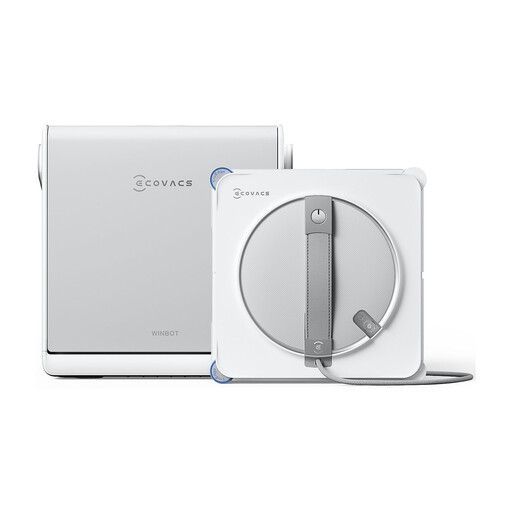
ECOVACS WINBOT W2S OMNI window-cleaning robot

ECOVACS WINBOT W2S OMNI with Multi-Function Station

For larger, uninterrupted panes, the combination of automatic cleaning and a station is worth a closer look. The product title lists 8,000 Pa suction power and a 110-minute runtime; these figures alone don’t prove how well it cleans or whether it’s suitable for your windows. Check the minimum dimensions and make sure you can attach and remove the device safely at the window where you plan to use it.

View at Joybuy
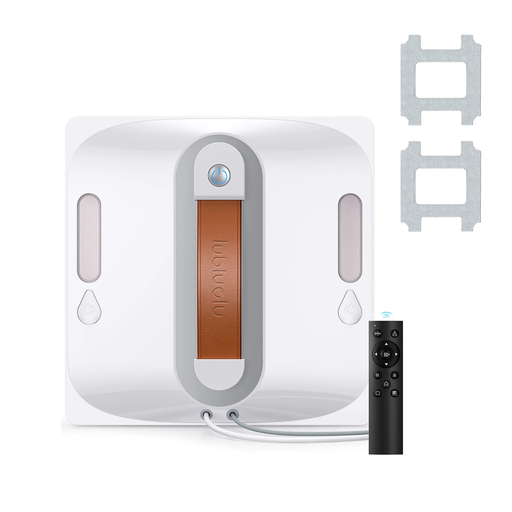
Lubluelu CHYW201 window-cleaning robot

Lubluelu CHYW201 window-cleaning robot

If you’re looking for a robot to clean uninterrupted panes regularly, you can check the CHYW201’s automatic route planning and the cleaning modes described. The product title lists 6,500 Pa suction power, but that doesn’t guarantee a particular cleaning result. Check the pane dimensions, frames and safety features against the model’s instructions.

View at Joybuy
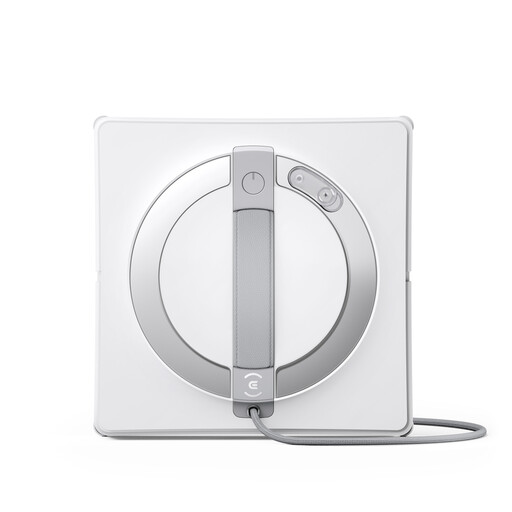
ECOVACS WINBOT W2 PRO Omni window-cleaning robot with station

ECOVACS WINBOT W2 PRO Omni with Multi-Function Station

A model with a station may be a good option for regularly cleaning large panes. The product title says W2 PRO Omni, while the description says W2 OMNI, so confirm the exact variant and what’s included before choosing. You’ll need the correct instructions to check the minimum dimensions and whether the pane’s shape is suitable.

Purchase link unavailable
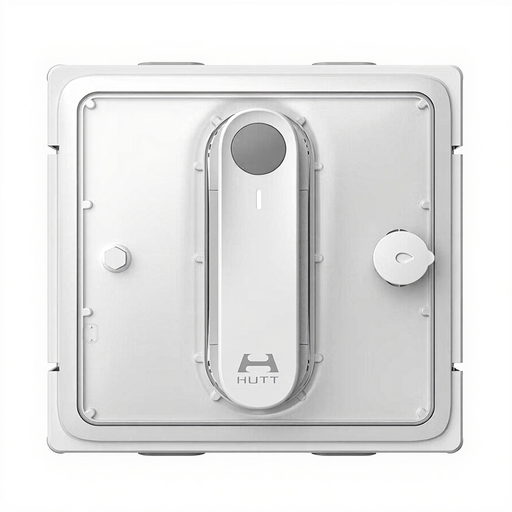
HUTT W9 window-cleaning robot

HUTT W9 window-cleaning robot with 150-ml tank

For uninterrupted panes, the automatic line-by-line cleaning described offers one way to keep the glass clean regularly. The product title lists a 150-ml tank and 3,800 Pa suction power; these figures don’t guarantee a particular cleaning result. In particular, check the permitted pane dimensions and the safety accessories for the way you plan to use it.

View at Joybuy
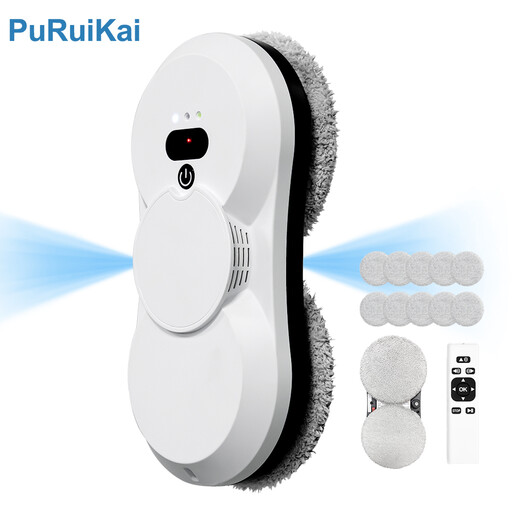
PuRuiKai window-cleaning robot with remote control

PuRuiKai window-cleaning robot with remote control and automatic spray function

The remote control and spray function are useful features for automatically cleaning larger panes. The device needs to be plugged in while in use, so check the cable route and make sure the window will be safely accessible. Before basing your choice on the model’s instructions, also check the pane dimensions, suction power and backup power duration.

View at Joybuy

Frequently asked questions

When can a window-cleaning robot save you work if you have lots of windows?

It’s most useful when one setup lets the robot clean a large, uninterrupted pane that’s safely accessible. If you have lots of individual openings, factor in the time needed to attach the robot, move it between panes, care for the pads and carry out any extra cleaning. Also check the minimum dimensions for the specific model.

Does a window-cleaning robot clean edges and corners completely?

You can’t assume that every model will leave every pane’s edges and corners completely clean. ECOVACS says certain WINBOT technologies can get within 1.1 mm of the edge; however, IMTEST found small amounts of dirt left around the edges on one model it tested. Be prepared to do some extra cleaning.

Can I use a window-cleaning robot on high-up exterior windows?

Only if you can attach, secure, supervise and remove the specific device from a safe position, following the instructions. If you’d need to lean out or use an unsafe foothold, don’t use it that way; consider professional cleaning instead.

Is a window vacuum an alternative if you have lots of windows?

Yes. A handheld window vacuum may be easier to use on lots of narrow or separate panes. It won’t clean the glass by itself, but you won’t need to keep attaching and securing a robot; you’ll still clean each pane by hand.