
Lieferung heute & morgen

Qualitätsgarantie

Willkommens-Angebote freischalten: KOSTENLOSE Lieferung | Bis zu 80 % RABATT | Kostenlose 30-Tage-JoyPlus-Testphase
App herunterladen
A carefully curated wine collection deserves equally careful storage. The wrong temperature or light exposure can compromise the taste and value of your wines. A conventional refrigerator is often too cold and dry, while the ambient temperature in living spaces is subject to significant fluctuations.
This guide is designed to give you clear direction. As your Joybuy Product Recommendation Officer, I will introduce you to various solutions for at-home wine storage—from specialised wine climate cabinets to multifunctional furniture pieces. The goal is to provide you with objective information so you can make an informed decision that suits your needs and your home's style.
Before you decide on a model, several fundamental criteria should be considered. These will help you narrow down the options and find a suitable solution for your collection.
The first consideration is size. How many bottles do you want to store? Do you plan to expand your collection in the future? Carefully measure the available space in your kitchen, living room, or cellar. Freestanding models offer flexibility in placement, while built-in units can be seamlessly integrated into a kitchen counter. Always consider the manufacturer's specified clearances for adequate ventilation.
A crucial feature is the number of temperature zones. A dual-zone wine cooler allows you to store red and white wines simultaneously at their ideal temperatures. Typically, white wine is stored cooler (approx. 7–12°C) and red wine warmer (approx. 12–18°C). If you primarily collect one type of wine, a single-zone unit may be sufficient. For a mixed collection, however, a dual-zone model is the more functional choice.
Proper wine storage protects the wine from harmful environmental factors. Look for the following features:
Here is a selection of different product types that meet various wine storage requirements.
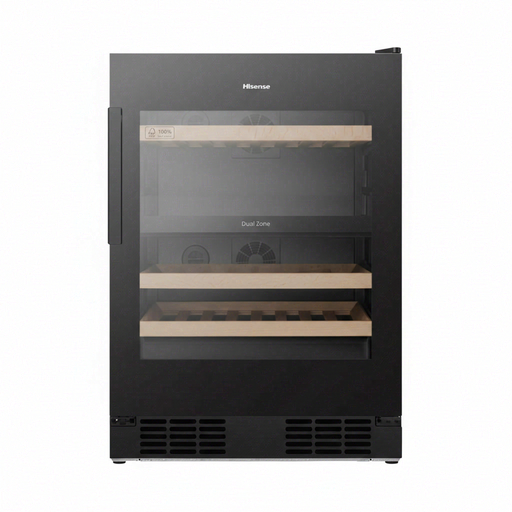
Why It Stands Out: This model is a modern wine climate cabinet that combines precise climate control with smart technology, making it suitable for collectors who store both red and white wines.
Pros:
Who It's For: For wine enthusiasts with a medium-sized, mixed collection who value precise temperature settings, protection from environmental factors, and the convenience of app control.
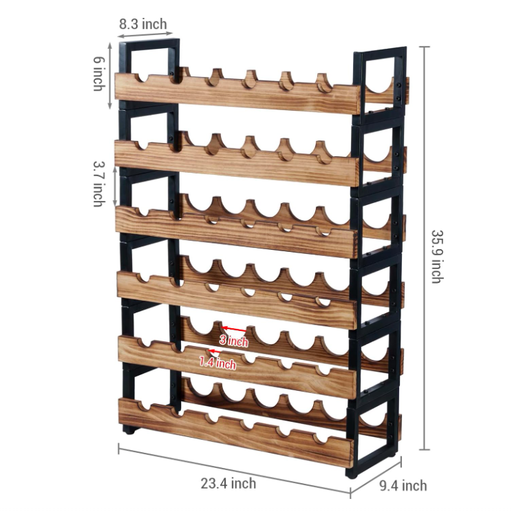
Why It Stands Out: A stylish and sturdy wine rack that combines functionality and design. It serves for both storage and attractive presentation of wine bottles.
Pros:
Who It's For: For wine collectors looking for a decorative and high-capacity storage solution without active cooling. It is ideal for placement in the dining or living room, where wines should be accessible and visible.
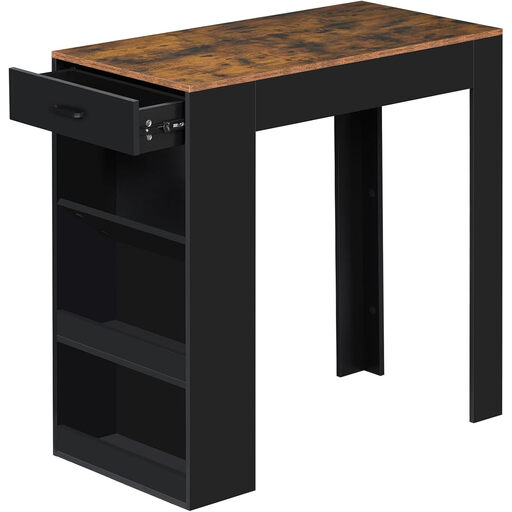
Why It Stands Out: This piece of furniture is a space-saving all-in-one solution, combining a bar table with a wine rack and additional storage.
Pros:
Who It's For: For those looking for a practical and space-saving solution for their home. It is ideal for anyone wanting to create a central hub for serving drinks without sacrificing valuable storage space.
If your ideal solution isn't featured here, don't worry. Our range includes a wide variety of other designs and sizes. For example, explore our selection of models in an elegant [black finish] to find the perfect complement for your decor. Browse our entire collection to find the right solution for your at-home wine storage.
1. What is the difference between a wine cooler and a wine climate cabinet? The terms are often used interchangeably. Technically, a wine climate cabinet is designed for long-term wine storage at a constant, cellar-like temperature. A simple wine cooler is more for short-term chilling to drinking temperature. However, modern devices like the featured Hisense wine cooler combine both functions, allowing for precise settings for both storage and enjoyment.
2. How loud is a wine cooler in operation? The noise level, measured in decibels (dB), is an important factor, especially if the appliance will be placed in a living or dining area. Models with a rating below 40 dB are considered quiet. The Hisense wine cooler, for example, operates at 37 dB(A), which is roughly equivalent to a quiet conversation and is barely noticeable in daily life.
3. Do I really need a dual-zone wine cooler? A dual-zone wine cooler is a sensible choice if you regularly store and serve different types of wine, such as red, white, or sparkling wine, which have different temperature requirements. If your collection focuses exclusively on one type of wine, such as only red wines, a single-zone unit is usually sufficient and more cost-effective.