Joybuy Insights

Wine Cooler Buyer’s Guide: How to Avoid Costly Mistakes

The right temperature is a deciding factor in a wine's tasting experience. But the market for wine coolers is confusing and full of potential pitfalls. Many units promise more than they can deliver, leading to disappointment and unnecessary expense. Before you make a decision, it's crucial to know the most common mistakes buyers make.

This guide will help you separate the wheat from the chaff. We focus on the three most common problems: inadequate cooling technology, misleading capacity claims, and hidden operating costs due to incorrect device specifications.

The 3 Most Common Traps When Buying a Wine Cooler

  1. The Inadequate Cooling Performance Trap: Many budget-friendly models use thermoelectric cooling (Peltier technology). While quiet, their performance is highly dependent on the ambient temperature. On warm summer days or in poorly insulated rooms, these units often fail to maintain a consistently cool temperature, especially for white wine or sparkling wine. The result is lukewarm wine and a device that is constantly running at full power.
  2. The Capacity Illusion: Manufacturer specifications for bottle capacity are almost always based on the standard 0.75-litre Bordeaux bottle. Wider Burgundy, Riesling, or Champagne bottles often don't fit in the designated racks or significantly reduce the total capacity. This leads to frustration when your personal wine collection can't be stored as planned.
  3. The Overlooked Energy Hog: A poorly insulated cabinet, a basic glass door without UV protection, and an unsuitable climate class can turn a wine fridge into an unexpected power drain. The climate class indicates the ambient temperature range in which the appliance operates efficiently. A model not designed for the conditions of its location will consume more energy and wear out faster.

What Really Matters: The Decisive Parameters

To avoid these traps, you should focus on three core technical features. These determine the performance, functionality, and efficiency of your wine cooler.

Cooling Technology: Compressor vs. Thermoelectric

Choosing the cooling technology is the most important decision.

  • Compressor Wine Fridge: These units work similarly to a conventional refrigerator. They offer powerful and consistent cooling performance, regardless of the ambient temperature. This makes them the reliable choice for long-term storage and precise temperature control, even in warmer rooms. Modern compressor units are also low-vibration and, with a noise level below 40 dB, are often barely audible.
  • Thermoelectric Wine Cooler: This electric wine cooler cools using a Peltier element. The advantage lies in its vibration-free and very quiet operation. However, its cooling power is limited and can usually only lower the internal temperature by about 15–18°C below the ambient temperature. This may be sufficient for short-term chilling in a cool cellar, but it is often inadequate for reliable cooling in a living area.

Temperature Zones: One or Two?

The number of temperature zones depends on your wine collection.

  • One Zone: A single-zone wine cooler is ideal if you primarily store one type of wine (e.g., only red or only white) or just want to bring wine to a uniform serving temperature.
  • Dual-Zone Wine Fridge: If you want to store red and white wines simultaneously at their ideal temperatures (e.g., red wine at 15–18°C and white wine at 8–12°C), a model with two separately controllable zones is essential. This offers maximum flexibility for discerning connoisseurs.

Design and Capacity

From compact tabletop units to large freestanding models, there is a suitable size for every need.

  • Wine Cooler Sleeve or Chiller Rod: These passive coolers are not a storage solution but are used to quickly chill a single bottle before serving. They are inexpensive, space-saving, and ideal for occasional use or for picnics.
  • Small Wine Fridge: Models with a capacity of up to 20 bottles are well-suited for beginners or for integration into a kitchen unit. Pay close attention to the internal dimensions here to ensure your favourite bottles will also fit.
  • Large Wine Fridge: Units for 40 bottles and more are intended for collectors who are aiming for long-term, professional storage. Here, features like UV-protective glass, an activated carbon filter against odours, and controlled humidity are important.

Recommended Options for Different Profiles

We have selected products tailored to specific use cases that purposefully avoid the pitfalls mentioned earlier.
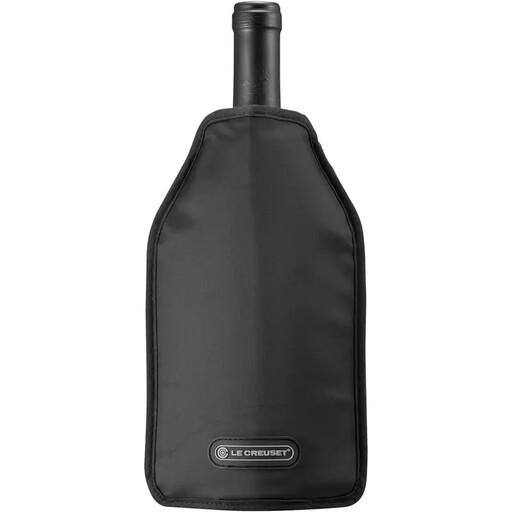
MATCH FOR: The Casual Enthusiast
Le Creuset Active Wine Cooler WA-126 black 59142010006068

Le Creuset Active Wine Cooler WA-126

Why This Fits Their Persona: Ideal for anyone who wants to spontaneously bring a bottle of wine or sparkling wine to the perfect drinking temperature without purchasing a large appliance. Perfect for dinners, parties, or an outdoor picnic.

How It Avoids the Trap

This wine cooler sleeve bypasses the traps of cooling technology and energy costs because it cools passively. Its flexible shape also adapts to many bottle shapes, thus avoiding the capacity trap.

Key Advantage & Pros

Chills a bottle in about 20 minutes. Flexible, durable material for standard 0.75L bottles, including sparkling wine. Only requires space in the freezer.
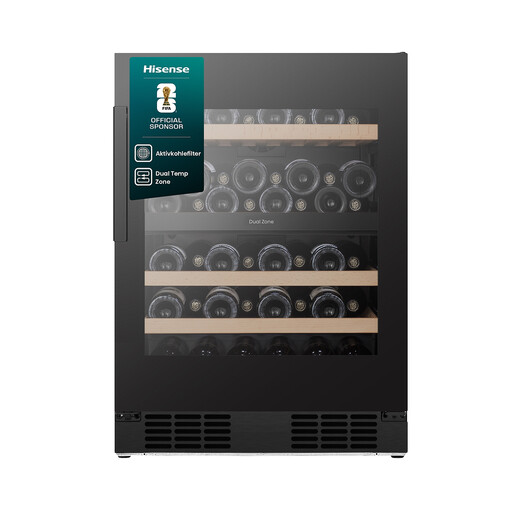
MATCH FOR: The Style-Conscious Host
Hisense 46 Bottle Wine Cooler – Dual Zone Cooling

Hisense 46 Bottle Wine Cooler – Dual Zone

Why This Fits Their Persona: For wine lovers with a medium-sized collection who want to keep both red and white wines perfectly chilled and ready for guests. The modern design and quiet compressor technology allow for placement in the living or dining area.

How It Avoids the Trap

As a dual-zone wine fridge, it solves the problem of different storage temperatures. The compressor technology ensures reliable cooling, and the N-T climate class covers a wide temperature range (16–43°C), making it suitable for living spaces.

Key Advantage & Pros

Two independent temperature zones (5–20°C). Low noise level (37 dB). UV-protective glass and activated carbon filter to protect the wine. Smart control via app.
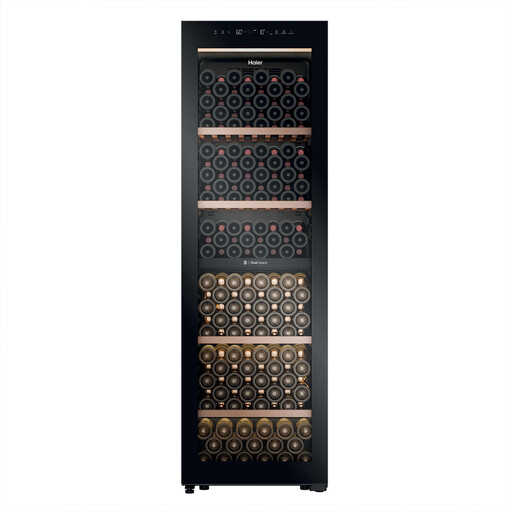
MATCH FOR: The Ambitious Collector
Haier HWS201GDFH1 60 SERIES 7 Wine Cooler

Haier HWS201GDFH1 60 SERIES 7 Wine Cooler

Why This Fits Their Persona: Designed for serious wine collectors who want to store and age a large number of bottles under professional conditions. This unit provides the capacity and technical features for long-term value and quality preservation.

How It Avoids the Trap

The enormous capacity of up to 201 bottles is designed for large collections. Two zones, UV-protective glass, an anti-vibration system, and active humidity control (50–80%) create a cellar-like climate, going far beyond basic functions.

Key Advantage & Pros

Very high capacity. Precise temperature and humidity control. Low-vibration system and UV protection for optimal aging. Sturdy wooden shelves for secure storage.

Looking for More Options?

We have compiled a complete, up-to-date list of products that fully meet these strict selection criteria and UK/EU safety regulations.

Frequently Asked Questions (FAQ)

1. How loud is a wine fridge really?

The noise level of a wine fridge is measured in decibels (dB). Modern compressor models are often very quiet, operating between 35 to 42 dB. This is comparable to a soft whisper or the sound of a modern refrigerator and is hardly noticeable in a normal living environment. While the cooling element of thermoelectric coolers is quieter, their fan can produce a constant humming sound.

2. Do I need a dual-zone wine fridge?

This depends entirely on your drinking habits. If you regularly drink both red and white wine and want to store both ready to serve, a dual-zone wine fridge is a very worthwhile investment. It allows you to store white wines at a cool 8–12°C and red wines at a warmer 15–18°C. If you mainly store wines for the long term at a uniform cellar temperature (approx. 12–14°C), a single-zone unit will suffice.

3. What does the climate class on a wine cooler mean?

The climate class indicates the optimal ambient temperature range in which the appliance operates efficiently and reliably. The most common classes are:

  • SN (Subnormal): +10°C to +32°C
  • N (Normal): +16°C to +32°C
  • ST (Subtropical): +16°C to +38°C
  • T (Tropical): +16°C to +43°C A Class N appliance operated in a cool cellar (below 16°C) or a hot attic (above 32°C) may lose performance and consume more power. Be sure to choose a climate class that matches the installation location. Many devices cover multiple classes (e.g., N-ST).