
Lieferung heute & morgen

Qualitätsgarantie

Willkommens-Angebote freischalten: KOSTENLOSE Lieferung | Bis zu 80 % RABATT | Kostenlose 30-Tage-JoyPlus-Testphase
App herunterladen
A fine wine only reveals its full aroma at the correct temperature. For many enthusiasts, a wine cooler is therefore more than just a luxury item—it's a necessity for preserving value and ensuring perfect enjoyment. However, the market is overwhelming and full of technical pitfalls. Many units promise more than they can deliver, leading to disappointment and poor investments.
As your Joybuy Product Recommendation Officer, I'm here to help you separate the wheat from the chaff. We'll shed light on the three most common buying mistakes and show you which technical details truly matter to ensure your wines are always stored optimally.
Marketing terms often obscure technical shortcomings. Pay close attention to these three points to avoid a bad purchase:
To make the right choice, focus on these three objective criteria. They determine the performance, functionality, and longevity of your appliance.
For reliable cooling that is independent of the ambient temperature, a compressor cooling system is the more robust choice. Similar to a modern refrigerator, it ensures a consistently stable temperature, even when the room gets warmer. Modern compressors are also mounted to be low-vibration, so the wine's maturation process is not disturbed. A wine control cabinet with this technology is a sound investment for long-term storage.
Pay attention to the EU energy label. The scale ranges from A (very efficient) to G (less efficient). An efficient appliance saves on electricity costs in the long run. The noise level, specified in dB(A), is equally crucial, especially for a freestanding wine cooler placed in the living or dining area.
Here are two models tailored to different needs that specifically avoid the pitfalls mentioned.
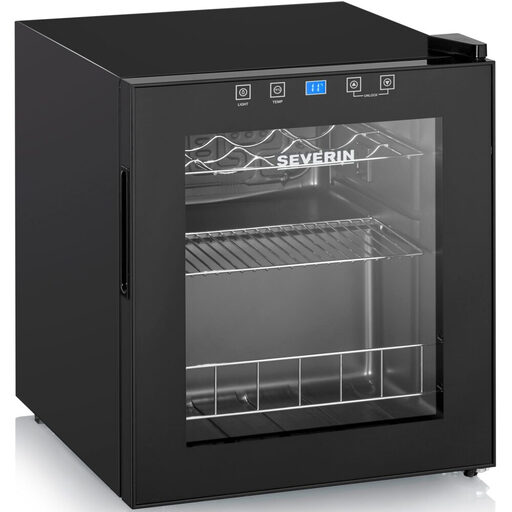
Why This Fits Their Persona: Perfect for those who want to keep a small but select collection of wines ready for immediate enjoyment. Its compact design makes this small wine cooler ideal for integration into a kitchen or living room without taking up much space.
The compressor cooling system ensures stable cooling performance regardless of room temperature, thus bypassing the technology trap of thermoelectric devices. The capacity is clearly defined for 15 standard bottles.
Precise temperature control from 4–18°C via a touch display. At just 42 dB(A), its operation is pleasantly quiet and suitable for living areas. The automatic defrost function minimises maintenance.
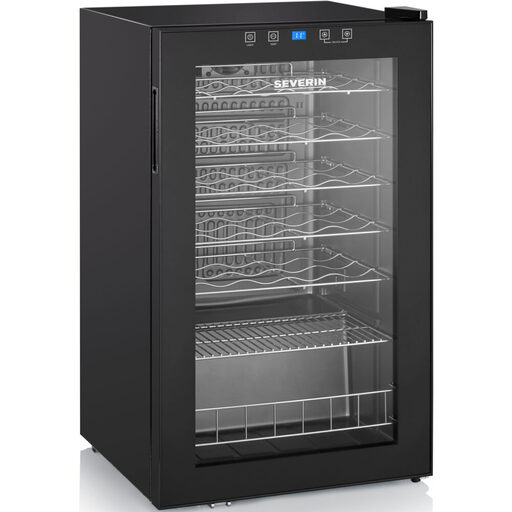
Why This Fits Their Persona: Ideal for wine lovers with a growing collection who value both proper storage and stylish presentation. This Severin wine cooler offers enough space for a diverse selection with room for up to 36 bottles.
The high-performance compressor system guarantees a constant temperature, which is essential for long-term storage. The clearly stated noise level of 42 dB(A) prevents unpleasant surprises when placing it in a living area.
A generous net volume of 95 litres and six chrome-plated shelves allow for flexible organisation. The switchable interior LED lighting and glass door elegantly showcase the collection.
We have compiled a complete, up-to-date list of products that fully meet these strict selection criteria and German safety regulations.
A noise level of 42 decibels (dB) is comparable to the quiet hum of a modern refrigerator or the ambient sound in a quiet library. In most home situations, this level is considered unobtrusive and not disruptive, qualifying such units for placement in open-plan kitchens or living rooms.
Yes, a freestanding wine cooler needs adequate space for ventilation to prevent the compressor from overheating and to ensure energy efficiency. Maintain a clearance of at least 5–10 cm on the sides and especially at the back from walls or other furniture. Also, place the unit on a level, stable surface.
Although the terms are often used interchangeably, there is a technical distinction. A wine cooler (or wine serving cabinet) is primarily used to chill wine to its serving temperature and for short- to medium-term storage, usually with a single temperature zone. A wine climate cabinet more accurately simulates the conditions of a wine cellar, often with multiple zones, constant humidity, and special UV protection, and is designed for the long-term maturation and storage of valuable wines.