
Lieferung heute & morgen

Qualitätsgarantie

Willkommens-Angebote freischalten: KOSTENLOSE Lieferung | Bis zu 80 % RABATT | Kostenlose 30-Tage-JoyPlus-Testphase
App herunterladen
Investing in a wine cooler is a decision that protects the quality and enjoyment of your wine collection. However, the market is overwhelming, and many models fail to deliver on their promises. Before you invest, it's crucial to understand the common pitfalls that often only become apparent after the purchase. Misleading capacity claims, disruptive operating noise, or inadequate protection can diminish the value of your wines instead of preserving it.
This guide will help you identify the critical features and make an informed choice that perfectly matches your needs.
Many purchasing decisions are based on marketing promises that prove problematic in practice. Pay special attention to these three points:
To find the right wine serving cabinet or wine aging cabinet, focus on the technical fundamentals, not marketing slogans.
The type of cooling is decisive for performance and placement.
The choice depends on your collection and your drinking habits.
A freestanding wine cooler offers maximum flexibility in placement. It only requires a power outlet and sufficient clearance from walls for air circulation. Alternatively, there are built-in units that integrate seamlessly into a kitchen design. For purely decorative and accessible storage without cooling, a freestanding wine rack can also be a stylish solution.
Here are some models tailored to specific user profiles that avoid the common pitfalls mentioned.
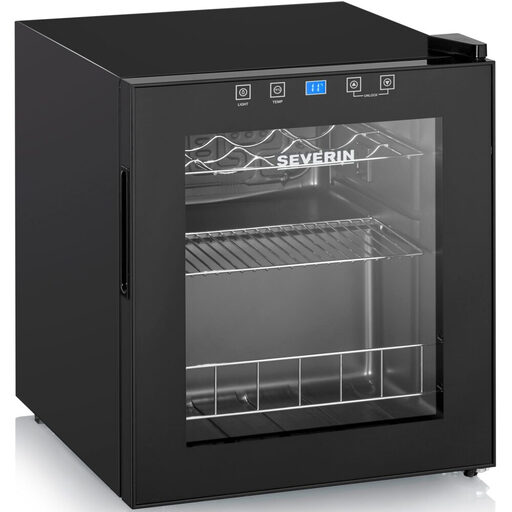
Why This Fits Their Persona: Ideal for wine lovers seeking a compact solution for their home to keep a small selection of wines perfectly chilled. This small wine cooler also fits well in smaller kitchens or living areas.
The capacity is clearly defined for standard bottles. With an operating noise of 42 dB(A), the unit is suitable for living spaces and avoids the noise trap of many budget compressor models.
Precise temperature setting (5-18°C) via a touch display and a compact design. The compressor cooling ensures reliable performance.
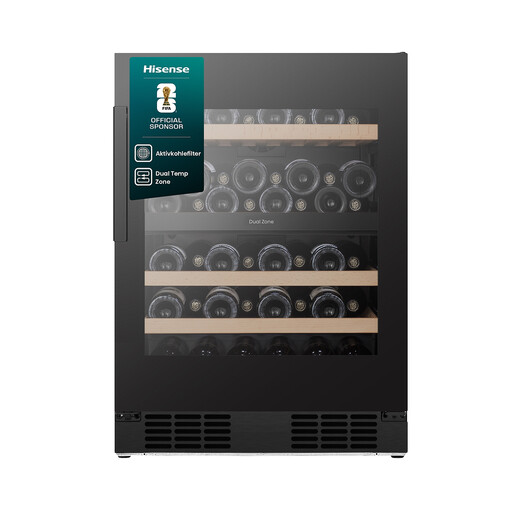
Why This Fits Their Persona: Perfect for connoisseurs with a mixed collection of red and white wines who value flexibility and modern features. The app control allows for management from anywhere.
The door with anti-UV and Low-E glass effectively protects against harmful light. The two independent zones prevent the incorrect storage of different wine types at a single temperature.
Two separately controlled temperature zones (5-20°C). Very quiet at 37 dB(A) and convenient to operate thanks to smart app control (ConnectLife).
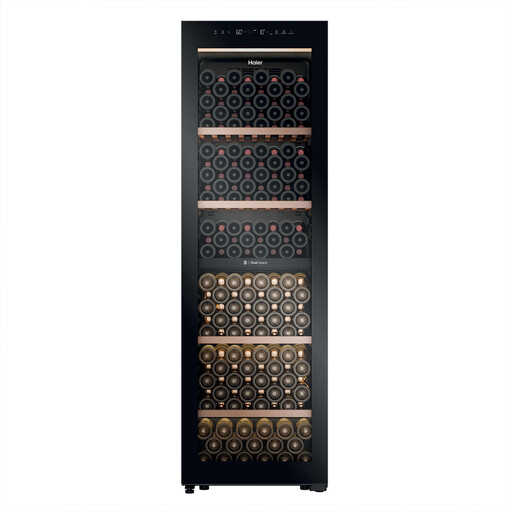
Why This Fits Their Persona: For serious collectors who need a wine aging cabinet for professional maturation and storage of a large collection. This appliance simulates the conditions of a wine cellar.
This model goes beyond basic functions. It offers an anti-vibration system and active humidity control (50-80%) to optimally protect corks and wine—features missing in basic units.
Very large capacity, two temperature zones, and professional storage functions like humidity control and vibration protection. Extremely quiet at approx. 35-37 dB.
We've compiled a complete, up-to-date list of products that fully meet these strict selection criteria and all relevant safety regulations.
A freestanding wine cooler should be placed in a location with a stable ambient temperature (ideally between 16 °C and 32 °C) and out of direct sunlight. Ensure you leave enough space (usually 5-10 cm) on the sides and at the back for air to circulate and heat to dissipate. This is crucial for the efficiency and lifespan of the appliance.
The costs depend on the size, the set temperature, and, most importantly, the energy efficiency class. A Class F appliance will consume more electricity than a Class E one. The annual consumption values (in kWh) are stated on the manufacturer's energy label. A modern cooler for about 40 bottles with a Class F rating typically consumes between 100 and 150 kWh per year.
Pay attention to the noise emission in decibels (dB). Appliances under 40 dB are generally considered quiet and suitable for living areas. Models with ratings around 35-37 dB are barely audible. Compressor coolers with anti-vibration systems are often a good choice here, as they combine quiet operation with high cooling performance. Read the product specifications carefully to ensure the noise level meets your expectations.