
Lieferung heute & morgen

Qualitätsgarantie

Willkommens-Angebote freischalten: KOSTENLOSE Lieferung | Bis zu 80 % RABATT | Kostenlose 30-Tage-JoyPlus-Testphase
App herunterladen
A fine wine only reveals its full aroma at the correct temperature. For many connoisseurs, a wine cooler is therefore more than just a luxury item—it's a necessity for preserving the quality and value of a wine collection. However, the market is overwhelming and filled with claims that don't always deliver. Before you make a decision, it's crucial to understand the common pitfalls that often lead to buyer's remorse.
This guide will help you understand the key features and find an appliance that truly fits your needs.
Many buyers rely on marketing claims that don't hold up in practice. Pay close attention to these three points to avoid disappointment:
To find the right wine cooler, you should focus on technical specifications, not advertising slogans. Here are the three most important criteria for your selection.
The number of temperature zones is perhaps the most important distinguishing feature.
The type of cooling technology impacts performance, noise level, and energy efficiency.
Realistically consider how many bottles you want to store—both now and in the future.
Based on objective criteria, we have identified models that represent a suitable solution for specific user profiles.
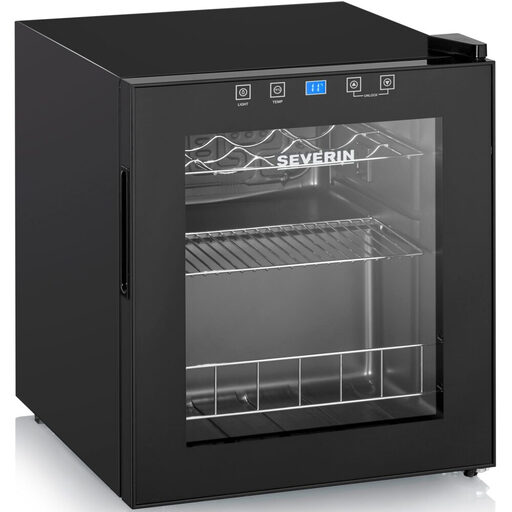
Why This Fits Their Persona: Ideal for wine lovers looking to store their first high-quality wines or seeking a compact solution for the kitchen or living room. The unit provides professional storage conditions in a small footprint.
The capacity is clearly defined for 15 standard bottles, allowing for realistic planning. At 42 dB(A), the operating noise is low for a compressor unit and suitable for living areas.
Precise temperature control from 4°C to 18°C via a touch display. The compressor technology ensures reliable cooling that is independent of the ambient temperature.
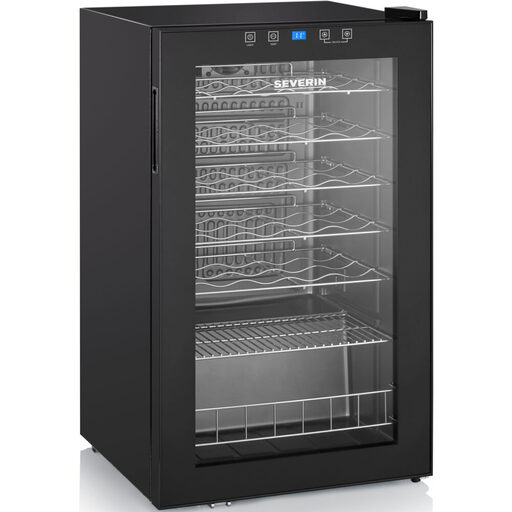
Why This Fits Their Persona: Perfect for collectors whose wine inventory is growing and who need a reliable, larger storage solution. This model offers ample space to keep a diverse selection of wines at their optimal temperature.
With a realistic capacity for 36 bottles, it avoids the common mistake of buying too small. Despite its size, the operating noise remains at a living-space-friendly 42 dB(A).
A generous 95-litre usable capacity and seven chrome-plated shelves provide flexible organisation. The powerful compressor cooling ensures a constant temperature.
A wine cooler is the centrepiece, but the right accessories complete the experience. For stylish presentation and storage, consider solutions like the WOLTU S-Shaped Bar Table, which elegantly combines storage space and bottle holders. For larger collections where not all bottles need to be chilled, a passive rack like the MyGift 36-Bottle Freestanding Wine Rack is a practical addition. And to protect opened bottles from oxidation, a vacuum pump like the Le Creuset Wine Pump WA-137 is a useful tool.
We have compiled a complete, up-to-date list of products that fully meet these strict selection criteria and safety standards.
1. What is the difference between a wine cooler and a wine serving cabinet? The terms are often used interchangeably. In technical jargon, a wine cooler or wine climate cabinet typically refers to an appliance for long-term storage at a constant temperature. A wine serving cabinet is designed to bring wines to their optimal drinking temperature and often has multiple temperature zones. In practice, many modern appliances offer both functions.
2. How loud is a modern wine cooler, really? The noise level is measured in decibels (dB(A)). A value around 40–43 dB(A), as seen in the featured Severin models, is comparable to the low hum of a modern refrigerator or the ambient noise in a quiet library. Thermoelectric cooling units are often even quieter but offer less cooling power. Almost any unit will be too loud for a bedroom, but in a living room or kitchen, levels below 45 dB(A) are generally not an issue.
3. What are the running costs of a wine cooler? The costs depend on the energy efficiency class, size, set temperature, and ambient temperature. The energy efficiency classes were rescaled in 2021 (now A to G). A unit with a class F or G rating is common today. The annual consumption is indicated on the energy label in kilowatt-hours (kWh). For example, the Severin WKS 8907 (15 bottles, Class F) has a stated annual consumption of 97 kWh, while the WKS 8908 (36 bottles, Class G) is rated at 140 kWh. Multiply this value by your electricity price per kWh to estimate the approximate annual costs.