
Lieferung heute & morgen

Qualitätsgarantie

Willkommens-Angebote freischalten: KOSTENLOSE Lieferung | Bis zu 80 % RABATT | Kostenlose 30-Tage-JoyPlus-Testphase
App herunterladen
A fine wine only reveals its full potential at the correct temperature. For many enthusiasts and home entertainers, a wine cooler is therefore a worthwhile investment. However, the market can be overwhelming, and many units fail to live up to their advertising claims. Before making a decision, it's crucial to understand the common pitfalls to avoid a poor investment.
Many buyers rely on marketing promises that often lead to disappointment in practice. Pay close attention to these three points:
To find the right bottle cooler for your needs, you should focus on objective, technical features. These three criteria are essential for making an informed decision.
The operating noise, measured in decibels (dB), is a crucial factor if the appliance will be placed in a living or dining area. Models with compressor technology are powerful and cool reliably even in higher ambient temperatures. Look for ratings below 45 dB to avoid disruptive background noise. Placement on a level surface with sufficient clearance from the wall for ventilation is also important to minimise vibrations and noise.
Instead of relying solely on the maximum bottle count, check the internal dimensions and the adjustability of the shelves. Height-adjustable or removable racks provide the necessary flexibility to optimally store bottles of various shapes and sizes. A small wine cooler might seem sufficient at first, but be realistic about how many bottles you actually plan to chill at once.
For most users who want to keep wine ready at its optimal drinking temperature, a single-zone unit is perfectly adequate. An adjustable temperature range from approximately 5°C to 18°C covers the ideal serving temperatures for white, rosé, and red wines. This allows for proper wine storage for near-term enjoyment. Dual-zone or multi-zone models are only necessary if you intend to store different types of wine for the long term at their respective ideal temperatures while also keeping them ready to serve.
Here are some recommendations tailored to specific user profiles that meet the aforementioned quality criteria.
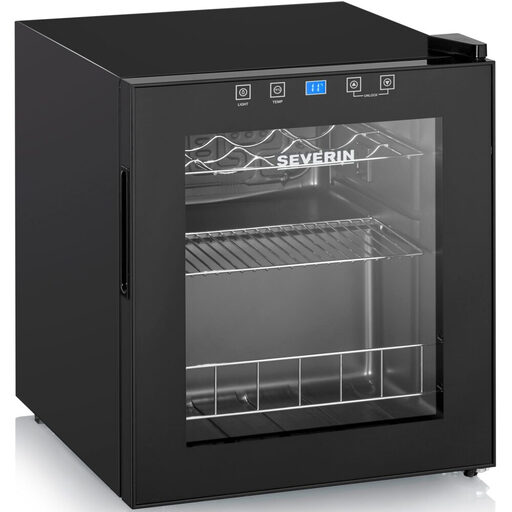
Why This Fits Their Persona: Ideal for wine enthusiasts who want to keep a small but select collection of wines perfectly chilled. Its compact design blends unobtrusively into kitchens or living areas.
With a specified operating noise of just 42 dB(A), this model is explicitly designed for living spaces, bypassing the noise trap. The height-adjustable shelves offer more flexibility than rigid systems.
Precise temperature control (5-18°C) via an external touch display. The automatic defrost function ensures low-maintenance operation.
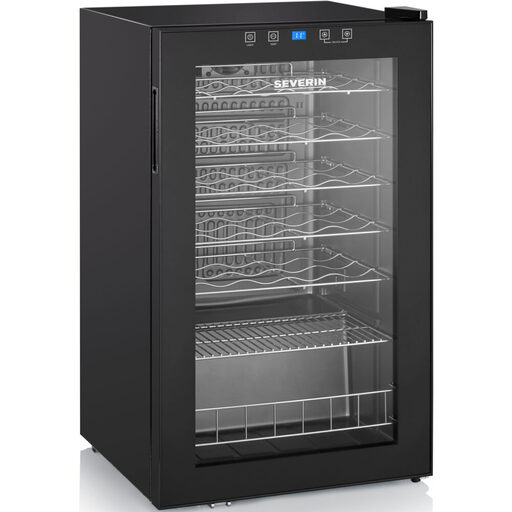
Why This Fits Their Persona: Perfect for those who regularly entertain guests and want to present a larger, more diverse wine selection. It offers ample space without compromising on design or noise level.
Despite its larger capacity, the operating noise remains at a living-space-friendly 42 dB(A). The seven chrome-plated shelves, one of which is height-adjustable, address the issue of varying bottle sizes.
A generous 95-litre usable capacity for an extensive collection. The switchable interior LED lighting and glass door allow for a stylish presentation of the wines.

Why This Fits Their Persona: For collectors who already have a cool cellar or are looking for a stylish, passive storage solution for their living space. The focus is on presentation and proper storage posture.
This rack completely bypasses the technical pitfalls of cooling units. It focuses on one fundamental aspect: horizontal storage, which keeps the cork moist and prevents wine oxidation.
Provides stable and silent storage for 36 bottles. The metal and wood design integrates well with modern interior styles and requires no electricity.
We have compiled a complete, up-to-date list of products that fully meet these strict selection criteria and safety regulations.
The noise level of a wine cooler is measured in decibels (dB). A rating below 45 dB is generally considered quiet enough for use in living areas. However, keep in mind that subjective perception can vary. The type of noise (e.g., a soft hum versus a clicking compressor) and the correct, level placement of the unit also play a significant role in how noise is perceived.
For most wine lovers, a single temperature zone is sufficient. A temperature range of 5°C to 18°C allows you to serve white wines chilled and bring red wines to a pleasant drinking temperature. Dual zones are primarily for serious collectors who want to store different types of wine simultaneously at their respective ideal long-term storage temperatures, which is often unnecessary for everyday use.
Running costs are primarily determined by electricity consumption. Pay attention to the energy efficiency class (on a scale from A to G) and the specified annual energy consumption in kilowatt-hours (kWh) on the device's energy label. For example, the 15-bottle model (Class F) consumes a stated 97 kWh per year, while the 36-bottle model (Class G) is rated at 140 kWh. Multiply this value by your current electricity rate per kWh to estimate the annual costs.