
Lieferung heute & morgen

Qualitätsgarantie

Willkommens-Angebote freischalten: KOSTENLOSE Lieferung | Bis zu 80 % RABATT | Kostenlose 30-Tage-JoyPlus-Testphase
App herunterladen
A wine fridge can store wine, sparkling wine and champagne in a space-saving way while keeping bottles neatly displayed. However, not every appliance suits every household. Small flats need different solutions from a home bar, while a portable wine cooler for on the go serves an entirely different purpose from a large wine storage cabinet.
The stated number usually refers to standard 0.75-litre bottles. Magnum bottles, wide champagne bottles and bottles with unusual shapes require more space. A 15-bottle wine fridge may therefore hold considerably fewer bottles when stocked with a mixture of sizes. Also check whether the shelves can be removed or adjusted in height.
An appliance with temperature control is not automatically equally suitable for every type of wine. Red wine, white wine and sparkling wine are often served at different temperatures. A single-zone model is suitable for storing wine at one consistent temperature. If you want to chill several varieties at the same time, consider a dual-zone wine fridge.
A fridge in the kitchen may seem different at 42 decibels compared with an appliance placed right next to your bed or desk. The energy-efficiency rating alone also does not describe the actual annual cost. The stated consumption in kilowatt hours per year is more informative. You should also take ventilation clearances and the intended ambient temperature into account.
For occasional use and smaller households, a 12-bottle wine fridge may be sufficient. A 15-bottle model offers a little extra capacity without taking up much more floor space. Regular hosts or those with a growing collection may want to consider a 36-bottle wine fridge or a 46-bottle wine fridge.
Pay attention to three measurements:
A wine fridge with temperature control should have an easy-to-read display or clear mechanical controls. For the appliances featured in this selection, the temperature ranges extend from around 4 to 18 °C or from 5 to 20 °C, for example.
Compressor cooling is common in larger appliances and designed for continuous operation. Thermoelectric appliances can be compact, but they are more sensitive to the ambient temperature. A mini fridge with freezer compartment, meanwhile, is primarily intended for food and drinks. It can be a flexible addition, but it does not necessarily replace a wine storage cabinet with a suitable interior layout.
A wine fridge with a glass door makes it easier to choose your bottles. UV protection and effective sealing can help shield the interior from light and temperature fluctuations. LED lighting improves visibility, but it should be switchable if you do not need the display function.
Place the appliance on a stable, level surface and do not block any ventilation openings. Many models are intended for indoor use and are not suitable for unheated garages, damp areas or outdoor use.
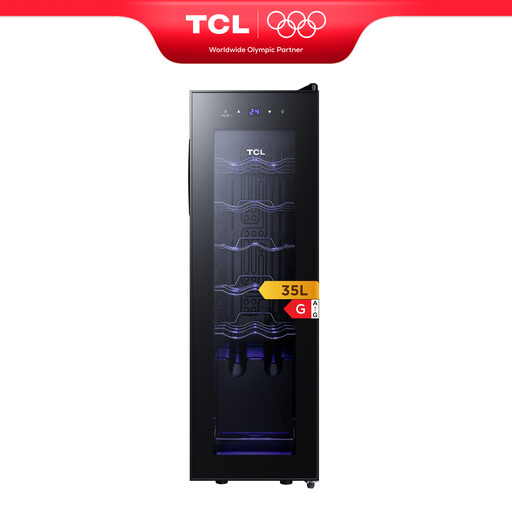
Why this product suits the profile: This compact 35-litre appliance is ideal for anyone who wants to store a small collection separately from their standard fridge.
The stated capacity and compact dimensions make planning easier. Follow the safety instructions regarding a dry environment and unobstructed ventilation openings.
35-litre capacity, glass door and electronic cooling technology for space-saving placement.
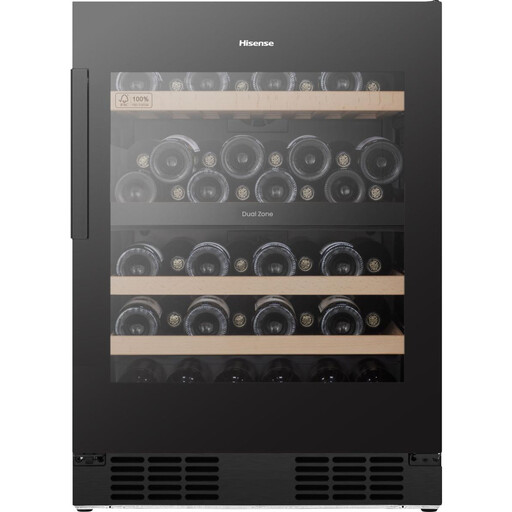
Why this product suits the profile: Two separate temperature zones, app control and UV-protected glass appeal to buyers who want to store and manage their wine in an organised way.
The temperature ranges from 5 to 20 °C can be adjusted independently for each zone. Before buying, compare the stated noise level of 37 dB(A) and annual consumption of 140 kWh with your intended location.
Capacity for around 46 standard bottles, two zones, LED lighting, an activated carbon filter and the ConnectLife app.
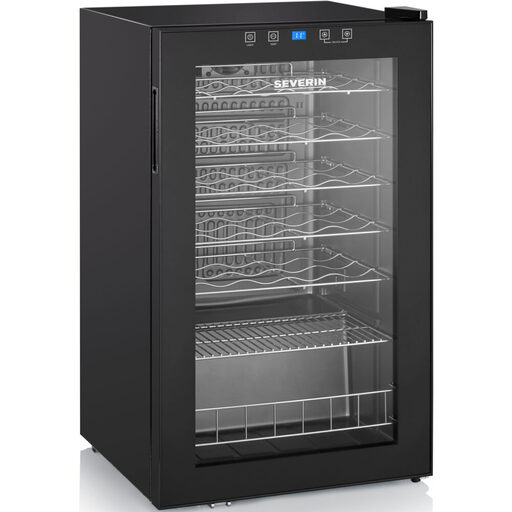
Why this product suits the profile: The generous capacity is suitable for regular hosts, private wine collections and a permanent home bar.
The 95-litre usable capacity and seven shelves provide a clear picture of the actual interior layout. At 42 dB(A), the stated noise level is a useful reference point for comparison in many living areas.
Space for up to 36 standard bottles, temperature selection from 4 to 18 °C, touch display and switchable LED lighting.
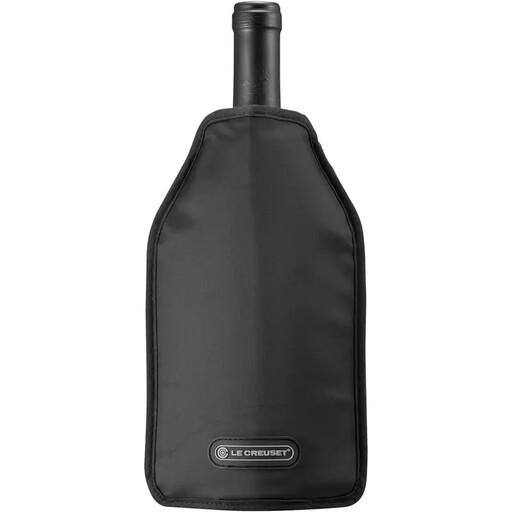
Why this product suits the profile: This reusable wine cooler bag is designed for picnics, garden parties and transporting a standard bottle.
The cover is not designed for continuous cooling: it must be chilled in the freezer compartment beforehand and, according to the product details, fits standard 0.75-litre bottles.
No socket required, water-repellent nylon and a compact design for use on the go.
For drinks and snacks, a drinks fridge or mini fridge may be a more suitable choice. The Bomann KB 7245 offers 45 litres of usable capacity, a 4-litre freezer compartment, temperature selection from 0 to 8 °C and a reversible door. With a stated noise level of 39 dB and consumption of 80 kWh per year, it is designed for offices, kitchens or gaming rooms. The TCL RF60DWE0 also offers 45 litres, a 3-litre freezer compartment, mechanical temperature control and a stated noise level of 40 dB.
For individual bottles, consider a bottle cooler, cooling stick or wine cooler. These solutions take up less space, but they do not maintain the temperature as consistently over longer periods as a permanently installed cooling appliance.
We have put together a complete, regularly updated list of products that fully meet these strict selection criteria and the safety regulations applicable in the EU.
Noise levels are measured in decibels. Models producing around 37 to 42 dB(A) may be suitable for living areas, although how loud they seem depends on their location and any vibrations. A level surface and sufficient clearance from the wall are important.
This depends on the bottles being stored. An adjustable range of around 4 to 18 °C covers many household uses. For different types of wine, an appliance with two zones may be more practical. The precise serving temperature depends on the type of wine and your personal preference.
Compare the stated annual consumption in kWh with your electricity tariff. An appliance using 80 kWh per year would cost around 28 Euro annually in electricity at an electricity price of, for example, 0,35 Euro per kWh. Actual consumption depends on factors including room temperature, how full the appliance is, how often the door is opened and the temperature setting.