
Lieferung heute & morgen

Qualitätsgarantie

Willkommens-Angebote freischalten: KOSTENLOSE Lieferung | Bis zu 80 % RABATT | Kostenlose 30-Tage-JoyPlus-Testphase
App herunterladen
A wine fridge can keep your bottles neatly organised and, depending on the model, chill them to a set temperature. But not every appliance is right for every collection. If you focus only on bottle capacity or an elegant glass door, you could overlook important details such as the actual space it takes up, temperature zones, noise levels and running costs.
Capacity figures are usually based on standard 0.75-litre bottles. Wider Burgundy bottles, Champagne bottles and unusually shaped bottles can take up considerably more space. The usable capacity may also be reduced by a different shelf layout.
So check:
Red, white and sparkling wines are generally served at different temperatures. An appliance with a single zone can therefore make sense if you mainly store one type of wine. For a mixed collection, a two-zone wine fridge offers greater flexibility.
Bear in mind that two zones do not automatically mean every combination of temperatures is possible in every model. The available settings and the instruction manual are what matter.
A wine fridge with a glass door makes it easier to see what’s inside, but sunlight can cause it to heat up more. UV protection, a suitable climate class and adequate ventilation are therefore important specifications to check. Don’t place an appliance in a damp environment or an unheated room if the manufacturer advises against it.
Models holding 6 to 15 bottles are often enough for smaller households or a home bar. Appliances holding 12 to 18 bottles can often be placed under or beside a worktop, but you’ll still need to leave the ventilation clearance specified by the manufacturer.
A medium-sized wine cabinet holding 30 to 46 bottles offers more choice, but you’ll need to check its width, depth and door opening carefully. Private collectors can also find a wine fridge for 12 to 201 bottles. Before buying a large appliance, check the floor’s load-bearing capacity, the delivery route and the electrical connection.
Check the stated temperature range rather than relying on the term ‘wine cooler’. A compressor model may be suitable for larger capacities, while thermoelectric models are often designed for smaller volumes. Ranges such as 4 to 18 °C or 5 to 20 °C give you a useful guide; actual temperature stability also depends on the ambient temperature, how full the fridge is and how often you open the door.
A portable wine cooler works differently. A cooling sleeve, ice pack or cooling stick is designed to chill wine in the short term, not to replace a wine cabinet for long-term storage.
The noise rating in dB(A) helps you assess how suitable an appliance is for living spaces. Even a difference of a few decibels can matter when comparing models, although how noticeable it is depends on the room and the appliance’s operating state.
For electric appliances, check the energy efficiency class, annual energy consumption and climate class too. Automatic defrosting, a digital display, switchable interior lighting and a reversible door can make everyday use easier. If the appliance has a glass door, it’s also worth checking for UV protection and a good-quality seal.
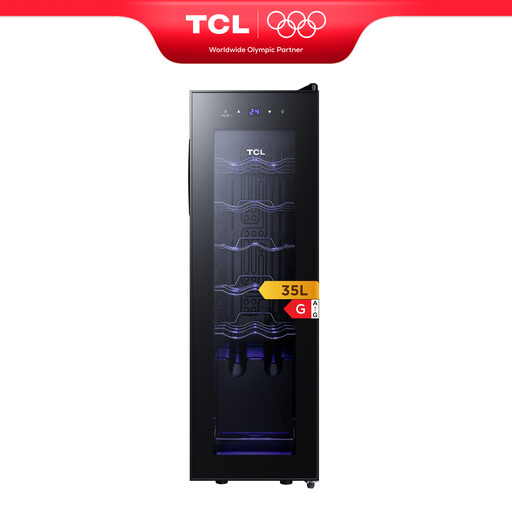
Why this product suits this profile: This compact 35-litre appliance is designed for a small collection and has a glass door. It’s a good choice for households that need to keep the space it takes up to a minimum.
Its stated capacity of 12 standard bottles makes it easier to plan realistically, rather than buying an oversized appliance.
35 litres of usable capacity according to the product details; glass door and compact design.
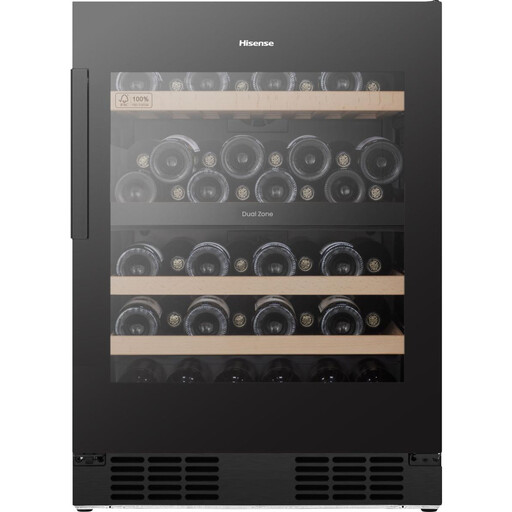
Why this product suits this profile: Its two independently adjustable zones, each ranging from 5 to 20 °C, are designed for households that enjoy both red and white wine. The product details also list a noise rating of 37 dB(A), UV-protected glass and app control.
Separate temperature zones avoid the compromise of using a single setting for different wine styles. Check that climate class N-T is suitable for the room where you plan to put it.
Capacity for 46 bottles according to the manufacturer; two zones, reversible door and activated carbon filter.
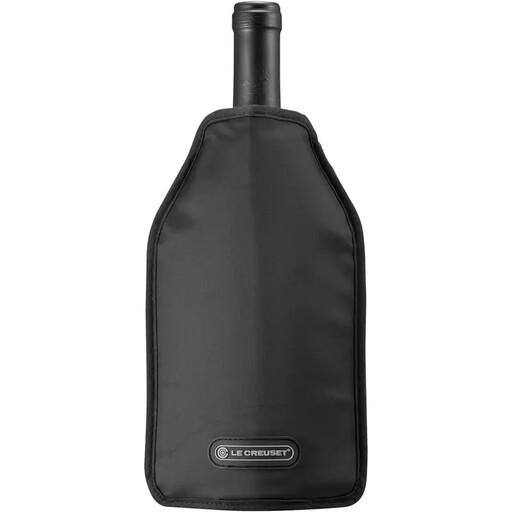
Why this product suits this profile: Chill the cooling sleeve in the freezer before use, then pull it over a standard 0.75-litre bottle. It’s designed for picnics, garden parties and taking wine on the go.
Its intended use makes clear that this is a portable wine cooler, not a wine cabinet for keeping wine at a consistent temperature over the long term.
Portable sleeve for standard bottles; nylon material and hand-wash care according to the product description.
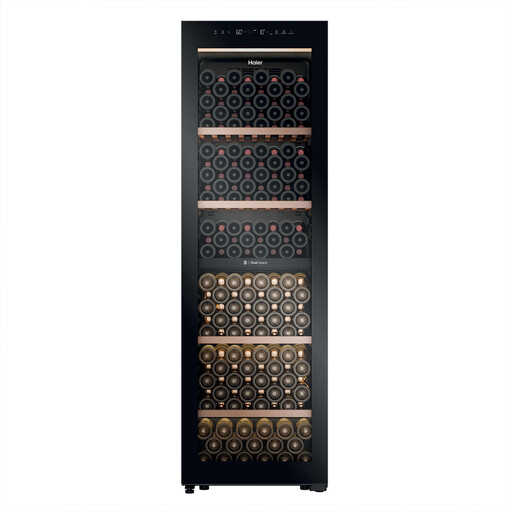
Why this product suits this profile: According to the product details, this freestanding model can hold up to 201 bottles and has two temperature zones. It’s designed for collectors with enough space to accommodate it.
Dimensions of around 597 × 1925 × 594 mm and a weight of approximately 86 kg give you a clear idea of the space and effort needed to position and move it.
Two zones, capacity for 201 bottles, UV-protected glass door and wooden shelves according to the product description.
We’ve put together a complete, regularly updated list of products that meet these strict selection criteria and fully comply with the safety regulations in force in the EU.
A wine fridge should be placed on a level, stable surface. Make sure the ventilation openings are not blocked. After transporting the appliance, wait for the period specified in the relevant manual before plugging it in. Many models recommend waiting at least a few hours to allow the refrigerant to settle.
Spread bottles evenly across the shelves and don’t exceed the stated capacity. Opening the door frequently affects the temperature and energy consumption. A portable wine cooler needs to be used differently: cooling sleeves, ice packs and bottle coolers should only be used as directed in their instructions.
Consumption depends on the size of the appliance, its energy efficiency class, the ambient temperature and how it’s used. You’ll find specific figures on the energy label or in the product information sheet. For example, a 46-litre Severin model is listed at 97 kWh per year and energy efficiency class F; the 95-litre model is listed at 140 kWh and class G. To work out the running cost, multiply the annual consumption by your electricity tariff.
This depends on the type of wine, your personal preference and the manufacturer’s guidance. A model with an adjustable range of 4 to 18 °C gives you more choice than one with a fixed cooling range. With two zones, you can use different settings at the same time. Choose the serving temperature to suit the wine and follow the bottler’s guidance.
There’s no reliable one-size-fits-all answer. Lifespan is affected by factors including cooling technology, location, maintenance and how often the appliance is used. Leave enough space for ventilation, clean the seals and interior regularly, and avoid damp conditions, direct sunlight and unheated rooms unless they fall within the appliance’s climate class.