
Lieferung heute & morgen

Qualitätsgarantie

Willkommens-Angebote freischalten: KOSTENLOSE Lieferung | Bis zu 80 % RABATT | Kostenlose 30-Tage-JoyPlus-Testphase
App herunterladen
Choosing the right wine glasses might seem straightforward at first. However, the range includes red wine glasses, white wine glasses, champagne glasses, crystal glasses, handmade wine glasses and shatterproof options, each with distinctly different characteristics. A striking design alone tells you little about whether a glass will work well in everyday use, at a celebration or in a professional catering environment.
Three common buying mistakes frequently lead to poor decisions:
Classic wine glasses are often made from soda-lime glass. This material is transparent and suitable for home use, but it remains fragile. Products like the Secret de Gourmet Paola or Lina come with product descriptions that warn of sensitivity to thermal shock. Hot water or sudden temperature changes should therefore be avoided.
Crystal glasses can offer exceptional clarity and a fine rim. However, that doesn’t automatically mean greater impact resistance. Handmade wine glasses also have individual characteristics, because certain steps are carried out by hand. With the RIEDEL Fatto a Mano Black Tie Bordeaux Grand Cru, the product description notes that minor variations may occur.
For garden parties, self-service weddings or poolside events, shatterproof wine glasses made from plastic are a practical alternative. The 4-piece set in PP with a 160 ml capacity is described as dishwasher-safe and intended for outdoor use. That said, the tactile and visual experience is different from glass.
The capacity should suit the wine type and your serving style:
Maximum size is not a mark of quality. Large bowls take up more cupboard space, are harder to clean and can feel awkward on small tables.
Before you buy, check whether the glasses are explicitly labelled as dishwasher-safe. Even then, you should load them with enough space between cutlery and other glasses. For gold-plated or metallic-coated surfaces, hand washing is often advisable, because the decoration can be damaged by detergents.
For private dinners, two to six glasses are usually enough. Catering businesses, event planners and hosts should also consider availability for reordering, consistent quantities and storage. A 4-piece set can be suitable for a small household, while individual glasses allow you to add to handmade ranges selectively.
Before every use, check glasses for cracks, chips and sharp edges. Damaged items should not be used. Thin stems and delicate rims need extra care when polishing.
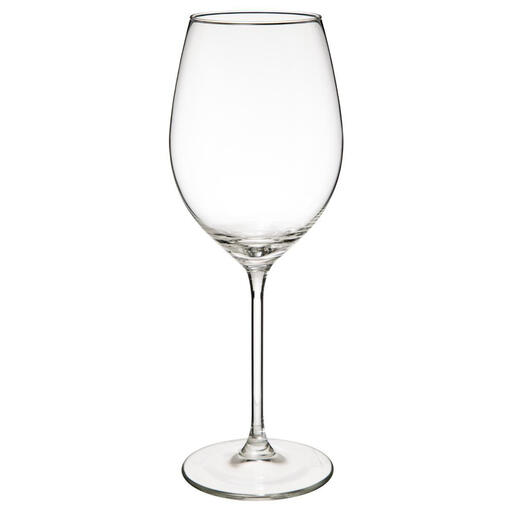
Why this product fits the profile: This transparent glass with a 410 ml capacity is described as suitable for red, white and rosé wine, and can easily be incorporated into everyday use.
The product data clearly states the material, dimensions, volume and dishwasher suitability. This makes it easier to assess everyday practicality before you buy.
410 ml capacity, slim profile and described as dishwasher-safe.

Why this product fits the profile: This handmade crystal glass with a black stem combines a varietal-specific shape for full-bodied red wines with a formal, elegant appearance.
The description distinguishes between the handmade stem and foot and the machine-blown bowl. It also recommends a gentle wash cycle with sufficient spacing, despite the dishwasher-safe label.
950 ml volume, handmade construction and specific care instructions in the product description.
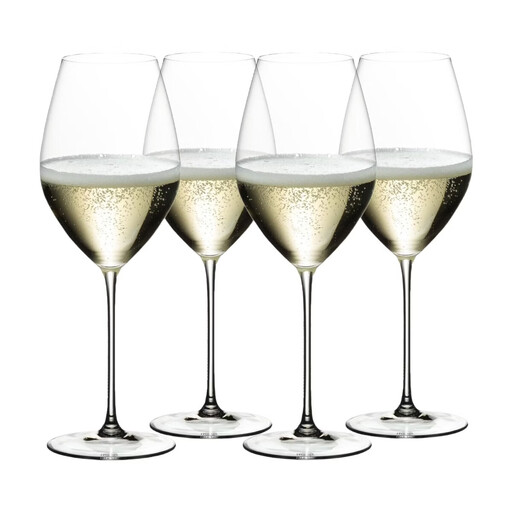
Why this product fits the profile: This 4-piece set is aimed at hosts and event organisers who want to serve champagne, prosecco or sparkling wine from a matching range.
The product description specifies the bowl shape, Sparkling Point, quantity and dishwasher suitability. This makes planning for serving and cleaning much easier.
Four matching crystal glasses, 445 ml volume and an egg-shaped bowl according to the product information.
We’ve put together a complete, regularly updated list of products that fully meet these strict selection criteria and the safety regulations in force across the EU.
Even high-quality wine glasses remain delicate. For consistent care, we recommend:
For full-bodied red wines, larger bowls with a wider opening are often chosen. They provide room for swirling and can enhance the perception of aroma and flavour. For lighter red wines, a medium-sized universal glass is usually sufficient.
For two people, four glasses are practical if you serve several wines one after another. Hosts and small catering businesses often benefit from 6-piece or 12-piece sets. For special occasions, it’s wise to have a few spare glasses on hand.
No. The label simply means the manufacturer has designed the glasses to be cleaned in the dishwasher. It doesn’t automatically protect against knocks, scratches, thermal shock or cloudy residue. Care instructions, spacing and a gentle wash cycle remain important.