
Lieferung heute & morgen

Qualitätsgarantie

Willkommens-Angebote freischalten: KOSTENLOSE Lieferung | Bis zu 80 % RABATT | Kostenlose 30-Tage-JoyPlus-Testphase
App herunterladen
Wine glasses may seem straightforward at first glance. In practice, however, their shape, capacity, material and care requirements all affect how well they work for everyday use. If you choose based only on appearance or a low set price, you may overlook important details.
Three common buying pitfalls are worth looking out for:
First, think about how you’ll use the glasses. Red wine glasses often have a larger bowl, giving full-bodied wines room to move and release their aromas. White wine glasses are often more compact, making it easier to serve smaller portions. For sparkling wine, champagne glasses with a long or gently curved shape are a good option.
The number of glasses should also suit your household:
For the garden, balcony or family celebrations, shatter-resistant polypropylene options can be a practical choice. However, they won’t necessarily offer the same qualities as glass or crystal glass for a traditional wine tasting.
Capacity is usually given in millilitres or centilitres. For example, a 28 cl glass holds 280 ml, while a 36 cl glass holds 360 ml. However, this is the maximum capacity, not the recommended serving size. For many wines, you should fill the bowl well below the rim to leave room for swirling.
Larger Cabernet-Merlot glasses and Bordeaux glasses are available for full-bodied reds such as Cabernet Sauvignon and Merlot. Generously sized Pinot Noir glasses are often recommended for Pinot Noir. These names suggest what the glasses are designed for, but don’t guarantee that they’re suitable only for one grape variety.
Soda-lime glass is a popular material for wine glasses designed for everyday use. It’s transparent and suitable for food, but it can still break. Depending on their design, crystal glass or crystalline glass may offer a different level of clarity, shape or weight distribution. Always check the specific material details for each product.
For outdoor events, shatter-resistant wine glasses made from plastic are available. One example is a set of transparent polypropylene glasses with a capacity of 160 ml. They’re lightweight and practical for families with children or for use on the patio. However, their feel and sound may differ from glass.
Follow the manufacturer’s care instructions for dishwasher-safe wine glasses. A glassware programme or a low-temperature setting can reduce the strain on the glasses. Make sure they’re spaced well apart from crockery and cutlery. Hand-washing with a soft sponge is a gentler option for particularly delicate or handmade crystal wine glasses.
Soda-lime glass and crystalline glass are generally not designed for boiling liquids. Sudden temperature changes can cause stress and lead to breakage. Before each use, check the glasses for cracks, chips or sharp edges.
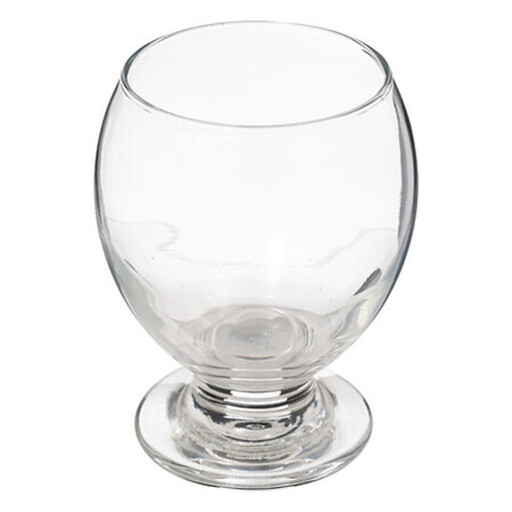
Why this product suits you: This single wine glass has a capacity of 280 ml and makes an easy addition to your glassware collection. It’s suitable for red, white or rosé wine.
The specifications clearly state the material, capacity and dishwasher suitability, making it easier to check whether the glass meets your needs.
280 ml capacity, transparent soda-lime glass, suitable for food and listed as dishwasher-safe in the product details.
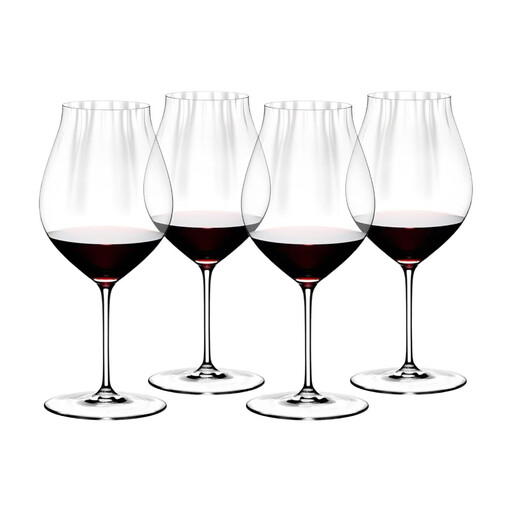
Why this product suits you: This set of 4 crystal glasses is designed for anyone looking for a glass labelled for Pinot Noir and lighter red wines.
The product description specifies the number of glasses, the material, the capacity of around 830 ml and that they’re suitable for the dishwasher.
Set of 4 clear crystal glasses, tulip-shaped design, optical effect on the bowl and listed as dishwasher-safe in the product details.
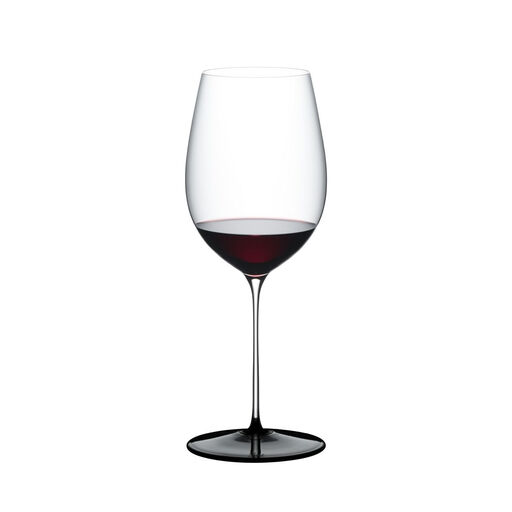
Why this product suits you: This single Bordeaux glass has a capacity of 950 ml and is designed for hosts looking for handmade crystal glassware for special occasions.
The description specifically mentions that the glass is handmade and that minor variations may occur. This helps set clear expectations around its care and design.
950 ml capacity, handmade crystal glass, black stem and listed as dishwasher-safe in the product details.
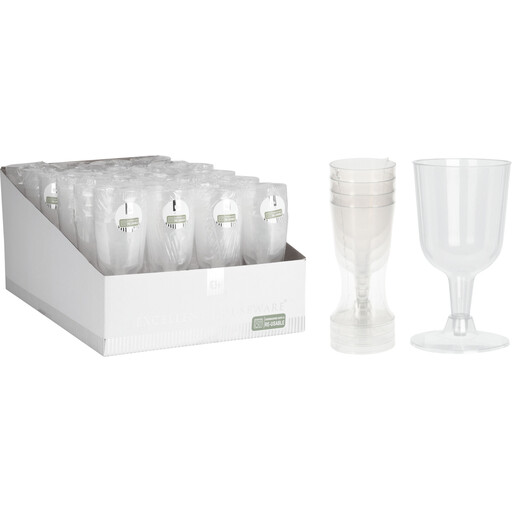
Why this product suits you: This polypropylene set is suitable for outdoor use, family celebrations and any occasion where a lightweight, shatter-resistant option is useful.
The material is clearly listed as PP. You won’t get the same feel as crystal wine glasses, but you’ll have a lighter alternative.
Set of 4, 160 ml capacity, transparent polypropylene, and listed as shatter-resistant and dishwasher-safe in the product details.
We’ve put together a complete, regularly updated list of products that meet these strict selection criteria and fully comply with the safety regulations in force in the EU.
Four glasses are usually enough for two people as a versatile starter set. A set of 6 wine glasses is a good fit if you regularly have guests over. For larger celebrations or hospitality use, a set of 12 wine glasses may be more practical, as you’ll have spares available.
Some crystal wine glasses are listed as dishwasher-safe, while others should be washed by hand. Always follow the care instructions for the individual product. Even a dishwasher-safe glass can become cloudy over time if exposed to high temperatures, loaded incorrectly or washed with an aggressive detergent.
Larger red wine glasses with wide bowls are often recommended for full-bodied reds. Pinot Noir glasses are generally designed for lighter, more acidic red wines, while Cabernet-Merlot and Bordeaux glasses offer more volume. The best choice also depends on your personal preference, how you store your wine and the occasion.